


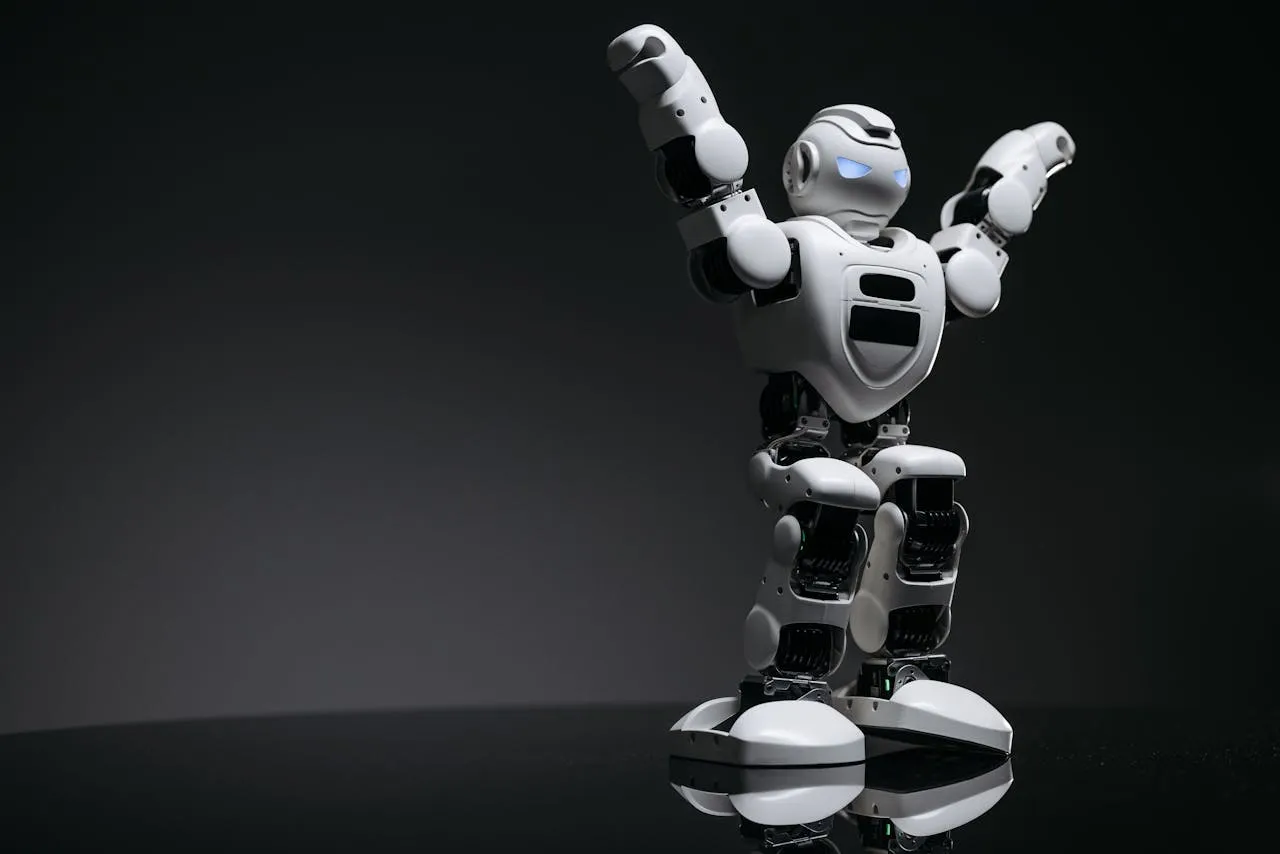
Industrial Robots 2025: AI, Humanoids, and Collaborative Systems Redefine Manufacturing
The “Industrial Robots” report, newly released by, provides an in-depth look at how robotics is moving from automation to autonomy, marking a major inflection point in global manufacturing. The study explores how AI-powered, humanoid, and collaborative robots (cobots) are revolutionizing production, logistics, and assembly—enabling smarter, safer, and more sustainable industrial operations.
Industrial robotics is no longer limited to repetitive, pre-programmed motions inside caged environments. Today’s robots are intelligent, mobile, and interconnected, capable of learning, adapting, and collaborating alongside humans. The report highlights the integration of artificial intelligence, machine vision, digital twins, advanced actuation systems, and reinforcement learning, which together are transforming robotic operations into adaptive, flexible, and connected ecosystems.
Core manufacturing sectors—automotive, electronics, and aerospace—continue to lead adoption, while new frontiers such as healthcare, construction, logistics, and retail are rapidly embracing robotic automation. Companies like BMW, Mercedes-Benz, and Tesla are piloting humanoid robots in factories for assembly and logistics tasks, while ABB, FANUC, and KUKA are advancing modular cobots and AI-enabled robotic arms. Meanwhile, startups such as Figure AI, Agility Robotics, and Apptronik are pioneering new forms of human-robot collaboration and industrial-scale humanoid deployment.
The momentum behind robotics innovation is reflected in a surge of investment and R&D activity. Global deal value in robotics reached $7.3 billion in the first half of 2025, driven by venture capital, private equity, and corporate partnerships targeting humanoid and mobile robotics startups. Patent filings peaked in mid-2024, underscoring major breakthroughs in robotic dexterity, battery efficiency, and reinforcement learning algorithms.
At the same time, workforce trends have shifted—demand for robotics and AI talent has diversified, spreading across established OEMs and emerging startups. This signals a maturing industry that is moving from hype toward real-world deployment and commercial viability.
Industrial robots are now embedded within digital manufacturing ecosystems, automating processes such as welding, inspection, packaging, and 3D printing. These systems enhance not only productivity but also worker safety, energy efficiency, and sustainability.
The report notes that falling hardware costs and the growing maturity of AI systems are lowering adoption barriers, opening the door for small and medium-sized enterprises (SMEs) and expanding applications in retail, mining, agriculture, and healthcare.
Examples of practical deployment include:
1. Intelligent Robotics Deployment Accelerates
Next-generation robots are reshaping production lines through adaptive automation and real-time human-robot collaboration. Adoption is strongest in automotive, electronics, and aerospace but is growing rapidly in logistics and construction.
2. Enabling Technologies Powering the Shift
Breakthroughs in AI, computer vision, IoT connectivity, advanced sensors, and digital twins are enabling context-aware robotic systems capable of autonomous operation in dynamic environments.
3. From Automation to Autonomy
The industry is evolving beyond repetitive workflows to self-learning, reconfigurable systems. Humanoids, exoskeletons, and autonomous mobile robots (AMRs) are redefining workforce interaction, operational flexibility, and safety.
4. Market and Investment Dynamics
With $7.3 billion in robotics deal value recorded in H1 2025 and peak patent activity in 2024, the report signals strong investor confidence in humanoid and AI-driven robotics.
5. Sectoral Transformation
6. Industry Leaders and Emerging Innovators
The competitive landscape includes established players like ABB, FANUC, KUKA, and Universal Robots, alongside disruptors such as Figure AI, Agility Robotics, Boston Dynamics, and Apptronik. These innovators are driving humanoid and collaborative platforms from prototypes to full-scale deployment.
7. Barriers and Enablers
While high capital expenditure (CapEx), legacy system integration, and certification challenges remain obstacles, they are being offset by AI breakthroughs, government incentives, and reshoring-driven automation across North America, Europe, and Asia.
Source Link:https://www.businesswire.com/