
Expanding Robotics Deployment While Inspiring Future Innovators Through Hands-on Demonstrations
Faraday Future Intelligent Electric Inc. has taken another significant step in expanding its footprint in the emerging embodied AI (EAI) ecosystem by advancing both its commercial robotics deployment and educational outreach initiatives. The California-based company recently announced the delivery of its Master robot and the pilot deployment of its Aegis robot to New PBB Auto Inc., a well-established automotive business operating in the Los Angeles metropolitan area. This milestone not only strengthens Faraday Future’s presence in real-world robotics applications but also highlights its growing ambitions to integrate AI-powered solutions across industries.
The partnership between Faraday Future and New PBB Auto Inc. is built on a previously signed binding FX business-to-business (B2B) deposit agreement. Under this agreement, New PBB committed to a non-refundable deposit along with a non-binding pre-order for 600 units of Faraday Future’s upcoming FX model, the Super One MPV (multi-purpose vehicle). This deal reflects strong confidence in the company’s future mobility solutions and reinforces its strategy of combining intelligent vehicles with advanced robotics technologies.
New PBB Auto Inc. has built a solid reputation over nearly a decade in the Los Angeles region, offering a comprehensive range of automotive services. These include new and used car sales, after-sales maintenance, and auto financing solutions. By integrating Faraday Future’s robots into its operations, New PBB is expected to enhance customer experience, streamline service delivery, and explore innovative concierge-style applications powered by AI. The deployment of both the Master and Aegis robots signals a shift toward more interactive, automated, and intelligent service environments in the automotive sector.
In addition to its commercial progress, Faraday Future is also actively investing in educational initiatives aimed at fostering interest in AI, robotics, and future mobility among younger generations. Recently, the company organized an interactive demonstration event in collaboration with the Lynwood Unified School District in Lynwood, California. The event was part of the district’s “Girl STEM Conference,” which focuses on encouraging students—especially young girls—to pursue careers in science, technology, engineering, and mathematics.
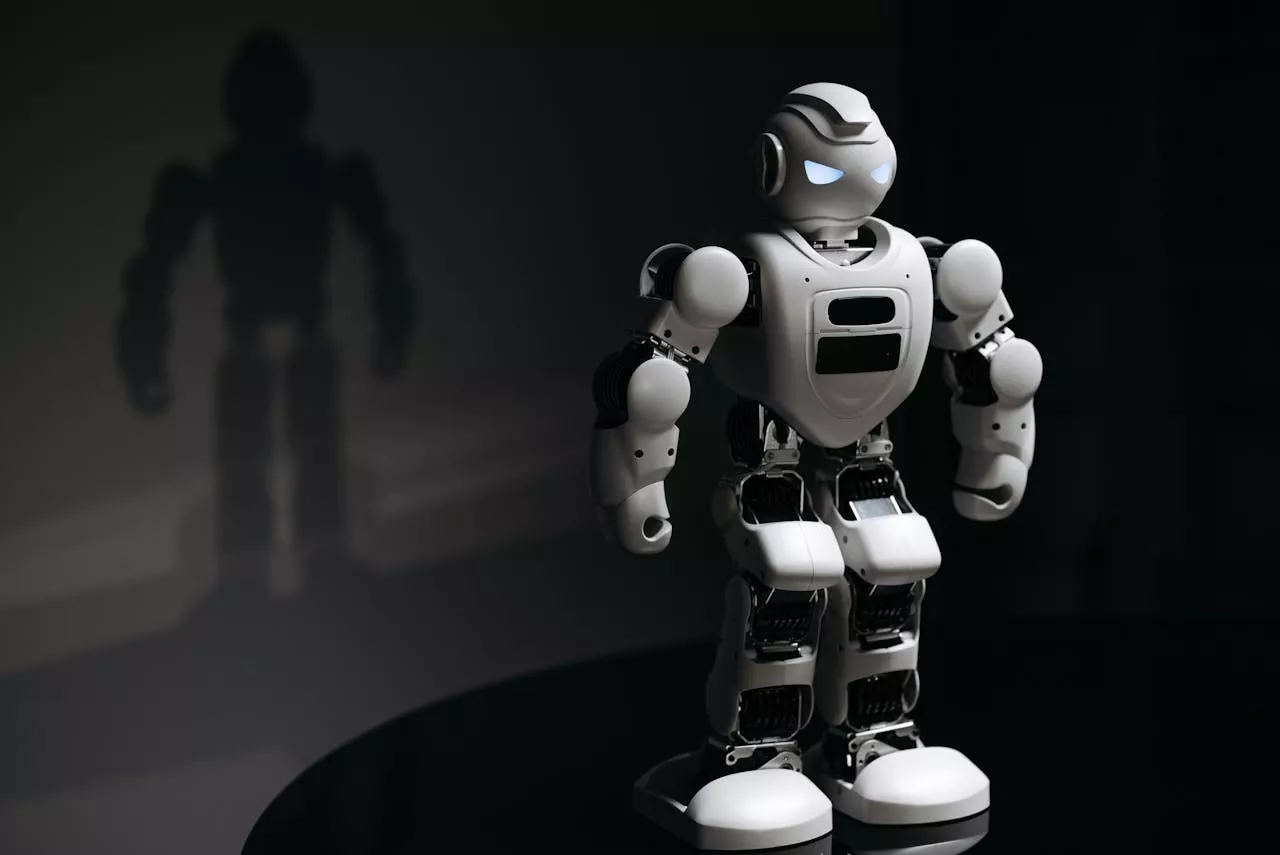
During the event, Faraday Future showcased a range of advanced technologies, including a humanoid robot, a robotic dog, and its FF Super One MPV. Students were given the opportunity to interact directly with these innovations, creating a highly engaging and immersive learning environment. Unlike traditional classroom presentations, this hands-on approach allowed students to experience AI and robotics in action, significantly enhancing their understanding and interest.
The event also featured a keynote presentation by Iris Deng, Senior Director at Faraday Future, who spoke about the future of AI, robotics, and mobility, as well as the growing importance of STEM education. Her presentation provided valuable insights into emerging career opportunities and the transformative impact of technology on various industries.
One of the key takeaways from this initiative was the clear difference in engagement levels between interactive demonstrations and static presentations. Faraday Future observed that students responded far more enthusiastically to hands-on experiences, where they could see, touch, and interact with AI-driven systems. This finding underscores the importance of experiential learning in modern education, particularly in fields that are rapidly evolving and highly technical.
Encouraged by the success of this event, Faraday Future is now exploring opportunities to expand its collaboration with the Lynwood Unified School District and potentially extend similar programs to other schools across Los Angeles County. The company is considering the development of a scalable STEM outreach model that could be replicated in different regions. This model may include structured curricula covering AI fundamentals, robotics basics, and practical applications, thereby providing students with a more comprehensive and accessible introduction to these fields.
The broader vision behind these efforts is to integrate Faraday Future’s EAI robots into educational environments as tools for learning, research, and innovation. In the “Robot & Vehicle + Education” scenario, these robots can serve multiple roles, such as assisting in robotics training, supporting research activities, collecting data, and facilitating interactive lessons. By acting as embodied research trainers, the robots can help students and educators conduct experiments, develop new applications, and gain hands-on experience with cutting-edge technologies.
This approach has significant implications for the future of education, particularly in the K–12 segment, where interest in robotics and AI is growing rapidly. By introducing students to these technologies at an early stage, Faraday Future aims to contribute to the development of a skilled and innovative workforce capable of driving future technological advancements.
Moreover, the company’s initiatives align with global trends toward digital transformation and the increasing integration of AI into everyday life. As industries continue to evolve, the demand for professionals with expertise in AI, robotics, and related fields is expected to rise. By supporting educational programs and fostering early interest in these areas, Faraday Future is positioning itself not only as a technology provider but also as a catalyst for long-term ecosystem growth.
In the industrial context, the deployment of EAI robots in both commercial and educational settings demonstrates their versatility and scalability. From enhancing customer service in automotive businesses to enabling interactive learning experiences in classrooms, these robots are opening up new possibilities across multiple domains. This dual-focus strategy allows Faraday Future to address immediate market needs while also investing in future opportunities.
Overall, Faraday Future’s recent activities highlight a comprehensive approach to innovation that combines advanced technology, strategic partnerships, and community engagement. By bridging the gap between industry and education, the company is contributing to the creation of a more connected and technologically empowered society. As it continues to expand its EAI ecosystem, Faraday Future is likely to play a key role in shaping the future of mobility, robotics, and learning worldwide.