

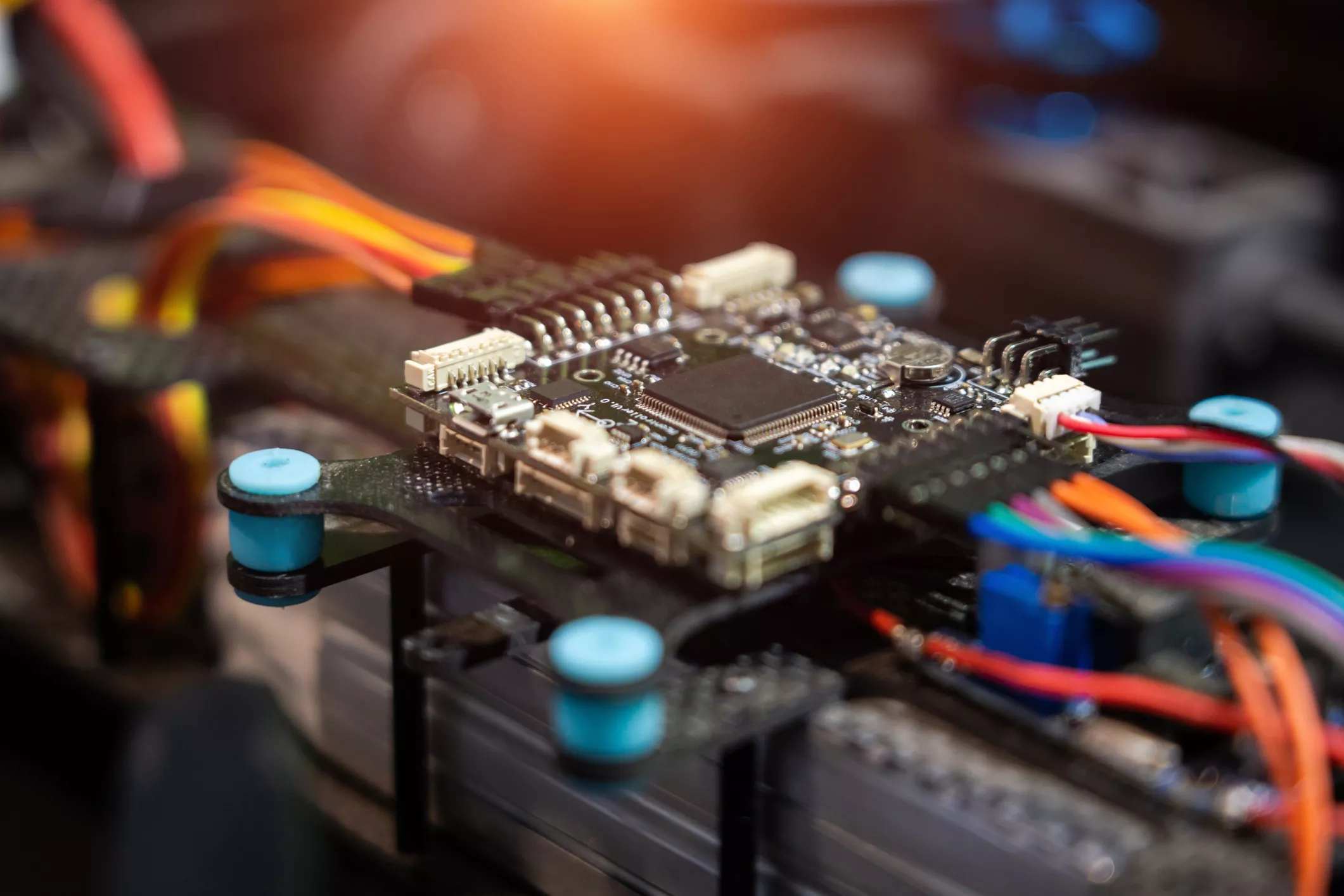
EPC introduces advanced 100V GaN power stages designed to enhance efficiency, control, and reliability in next-generation motor drive applications.
Efficient Power Conversion (EPC), a recognized leader in enhancement-mode gallium nitride (eGaN®) power devices, has unveiled a new generation of 100 V integrated GaN power-stage ICs designed to meet the growing demands of high-performance motion and power systems. The newly introduced devices—EPC23108, EPC23109, EPC23110, and EPC23111—represent a significant advancement in power electronics, particularly for applications such as humanoid robotics, drones, and compact battery-powered platforms where efficiency, power density, and reliability are critical.
These new ePower™ Stage ICs have been engineered to simplify system design while enhancing operational robustness in real-world environments. By integrating multiple essential components into a single compact package, EPC continues to push the boundaries of what is possible with GaN technology. The company’s approach focuses not only on improving raw performance metrics but also on reducing design complexity and ensuring predictable, reliable behavior across a wide range of use cases.
At the core of each device is a monolithic integration of high-side and low-side eGaN® FETs, combined with a gate driver and level-shifting circuitry. This integration is housed within a thermally enhanced QFN package, optimized for efficient heat dissipation and compact system layouts. The devices support operation up to 100 V and offer different current capabilities tailored to various application needs. Specifically, the EPC23108 and EPC23109 can handle load currents up to 35 A, while the EPC23110 and EPC23111 support up to 20 A. This range provides flexibility for engineers designing systems that require high-frequency switching and precise power control.
One of the standout features of this new family is its user-friendly control interface. The ICs include an active-low fast shutdown and standby input with a built-in 65 kΩ pull-up resistor. This design choice allows seamless compatibility with standard industrial logic levels, enabling direct interfacing with common controllers without the need for additional signal conditioning. As a result, engineers can streamline their designs, reduce component count, and ensure consistent behavior across different platforms and operating conditions.
Operational safety and system reliability have been key priorities in the development of these devices. The ICs incorporate deterministic shutdown behavior, which ensures predictable and immediate response during fault conditions. When the standby mode is activated, PWM switching halts instantly, and the driver transitions into a low quiescent current state powered by the VDRV supply. Additionally, in the event of a driver supply failure, an active gate pull-down mechanism ensures that both the high-side and low-side FETs remain turned off. This feature is particularly important in preventing unintended switching events and maintaining control over the system during critical situations.
Another important capability of the new power-stage ICs is their support for continuous 100% duty-cycle operation. This feature is essential for applications requiring full torque and uninterrupted conduction, such as motion control systems and robotics. It allows designers to implement control strategies without the need to modulate duty cycles artificially, thereby simplifying firmware development and improving overall system efficiency. This capability is especially valuable in precision regulation systems where consistent power delivery is crucial.
The product family is also designed to accommodate different control architectures. The EPC23109 and EPC23111 feature a single-pin PWM input with integrated enable logic and fixed dead time, making them ideal for multi-axis systems where simplicity and synchronization are important. In contrast, the EPC23108 and EPC23110 provide conventional dual PWM inputs, allowing for advanced control techniques such as adaptive dead-time modulation. This flexibility enables engineers to choose the most appropriate device based on their specific design requirements and performance goals.
By reducing the need for external components, these integrated GaN power stages significantly lower system complexity. This not only saves board space but also reduces design time and cost. Furthermore, the alignment of device behavior with system-level expectations improves predictability, making it easier for engineers to develop robust and reliable solutions. These advantages are particularly relevant in applications where consistency and performance are non-negotiable, such as robotics, medical equipment, DC-DC converters, and Class-D audio systems.
According to Alex Lidow, the new family of monolithic GaN power stages incorporates features directly influenced by customer feedback, particularly from developers working on humanoid robots and drones. This customer-driven approach highlights EPC’s commitment to addressing real-world challenges faced by engineers. By focusing on practical design improvements, the company aims to deliver solutions that not only perform well in theory but also excel in demanding operational environments.
Marco Palma, Director of Motor Drives Systems and Applications at EPC, emphasized the importance of these devices in enabling more efficient and compact system designs. He noted that modern applications, such as humanoid robot arms, can involve complex multi-axis configurations with up to 24 motors per arm. In such scenarios, the ability to simplify power stage design while maintaining high performance is invaluable.
The availability of engineering samples allows designers to begin evaluating these devices in their own applications. EPC has made the new ICs accessible through its global distribution network and direct sales channels, ensuring that customers can easily integrate them into their development workflows. Leading distributors such as Digi-Key and Mouser Electronics are also offering these products, providing widespread availability for engineers and system designers worldwide.
In summary, EPC’s new generation of 100 V integrated GaN power-stage ICs represents a meaningful step forward in power electronics design. By combining high performance, integration, and ease of use, these devices address the evolving needs of modern applications ranging from robotics and drones to industrial and medical systems. With a strong focus on reliability, efficiency, and design simplicity, EPC continues to solidify its position as a leader in GaN-based power solutions, enabling the next wave of innovation in compact, high-performance electronic systems.