


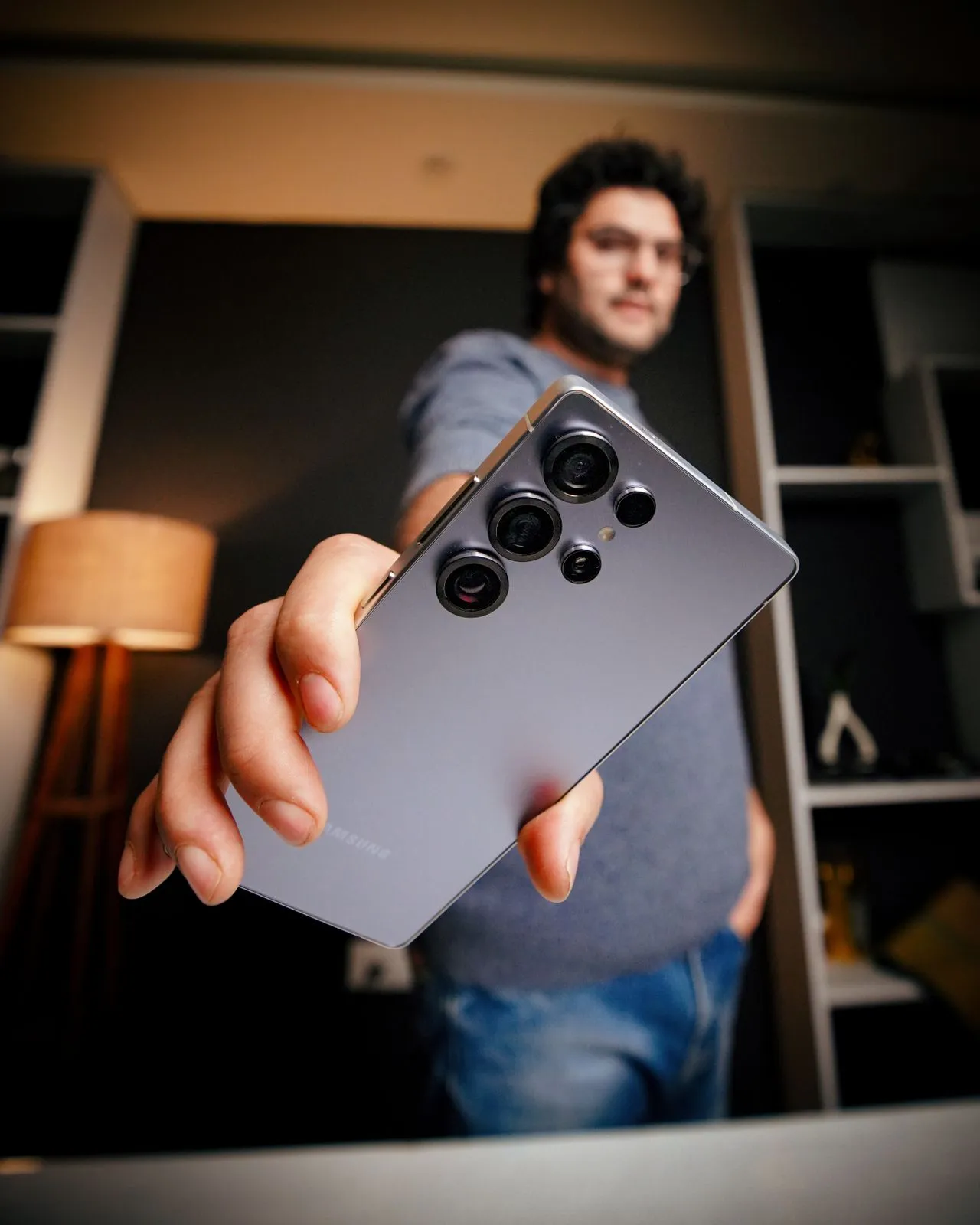
A sharply focused subject set against a softly blurred background has long been associated with professional cameras and large-aperture lenses. The effect creates a sense of depth, draws attention to the subject and gives video a cinematic quality that smartphone users increasingly seek.
With the latest Galaxy Z series, Samsung is bringing this professional-style visual experience to smartphone video through Portrait Video. The feature recreates the depth and distinctive Bokeh of a large-aperture camera lens by combining optical analysis, artificial intelligence and advanced video processing.
To make this possible, Samsung Research analyzed the optical characteristics of professional camera lenses and developed AI-powered processing technology, while Samsung’s Mobile eXperience (MX) Business optimized the technology for use on Galaxy devices.
Samsung Newsroom spoke with YoungGeol Kim of the Visual Technology Team at Samsung Research and Sang-uk Park, who is responsible for camera development at the MX Business, to explore how Portrait Video evolved from a research concept into a practical Galaxy camera feature.
Q. What is Portrait Video, and what has changed with the latest Galaxy Z series?
Park: Portrait Video keeps the main subject sharply in focus while softly blurring the background, creating a cinematic effect that makes the subject stand out.
On the latest Galaxy Z series, the level of background blur changes naturally according to the distance between the subject and the background. Bright points of light in the background can also appear as soft, rounded Bokeh, similar to what users might see when shooting with a large-aperture professional lens.
The result is greater depth and atmosphere in smartphone video without requiring users to carry separate professional camera equipment.
Portrait Video also gives users additional creative control. After recording, they can change the subject that is in focus and adjust the level of background blur, providing more flexibility during the editing process.
Q. What inspired the technology behind Portrait Video?
Kim: Photography has been my hobby for 25 years. That interest naturally led me toward camera technology research and development and gave me a strong appreciation for the distinctive visual characteristics produced by different lenses.
As smartphone cameras advanced, photography gained increasingly sophisticated features and improvements in image quality. Video technology also developed rapidly, but I believed there was still an opportunity to recreate the depth and unique background rendering of professional camera lenses in smartphone video.
We proposed the idea during the research stage, around the same time the MX Business was exploring ways to make professional-looking video creation easier for smartphone users. That common goal became the foundation for our collaboration.
Q. How did Samsung Research and the MX Business work together to turn the concept into a camera feature?
Kim: Existing solutions were not enough to reproduce the natural lens rendering we wanted. At the time, Samsung Research’s technology was still in the research phase, so bringing it directly into a commercial product presented significant challenges.
However, the Galaxy MX Business recognized the technology’s potential and made the decision to pursue commercialization. From there, the teams began extensive testing and refinement on actual devices.
Park: Preparing the technology for real-world use required us to record a huge number of videos under different conditions. Because Portrait Video is primarily designed around people, members of both teams even served as models and filmed one another.
We paid close attention to how naturally subjects were separated from their backgrounds and whether the blur and Bokeh looked convincing at different distances. We would film, review the results together, discuss what needed improvement and repeat the process.
What stands out most is how clearly the results improved as the collaboration progressed.
Q. What technology takes Portrait Video to the next level?
Kim: The core technology recreates the distinctive visual characteristics of a large-aperture professional camera lens in smartphone video. We achieved this by combining AI with detailed optical analysis.
Simply applying a blur effect is not enough to reproduce the appearance of a professional lens. Conventional blur generally softens an image by blending surrounding colors. A large-aperture lens behaves differently.
The amount of blur naturally changes according to the distance between the subject and background. Bright points of light also spread into Bokeh while retaining distinctive shapes and brightness. These characteristics contribute significantly to the visual quality associated with professional photography and videography.
To recreate these effects on a smartphone, we first analyzed how light travels through a real large-aperture lens and how that process produces different Bokeh characteristics. We then converted those optical characteristics into usable data.
The system combines this information with AI-estimated distance data from the scene. By understanding the distance between the subject and background, the technology can determine the appropriate degree of blur and the size and appearance of Bokeh.
Q. What were the biggest technical challenges in creating natural blur and Bokeh?
Kim: One of the most difficult challenges was accurately processing complex boundaries between the subject and background, particularly around details such as hair and eyeglass frames.
AI-estimated distance information alone is not always sufficient to identify these fine boundaries. Even a small error can cause individual strands of hair to become blurred incorrectly or leave portions of the background unnaturally sharp. This can make the subject appear as though it has been cut out from the scene.
To address this issue, we combined AI-based distance information with boundary information extracted from the original video. This allowed us to create a more natural separation between the subject and background, even around fine details.
Park: Consistency across different shooting conditions was another important challenge. We had to make sure the feature performed reliably under different weather conditions, lighting environments, subject movements and distances.
We repeatedly recorded videos under a wide range of scenarios and analyzed the results. When we identified unnatural effects, we addressed them through software optimization and additional AI training data.
The MX Business’s image-quality experts also evaluated the results from a user perspective, helping us refine the technology developed by Samsung Research and turn it into a more polished camera experience.
Q. How did you make such complex video processing practical for Galaxy devices?
Kim: One of the biggest hurdles was reducing power consumption and heat generation without sacrificing image quality.
Video consists of a continuous sequence of images, so processing 4K video in real time requires substantial computing power. We therefore had to carefully prioritize where processing resources were used.
We preserved the processing that was most important to image quality while reducing computation in areas where users would be less likely to notice a difference.
This helped us achieve a balance between natural professional-style lens rendering and efficient real-time processing, allowing users to record video reliably even during longer shooting sessions.
Q. What can users do to make the most of Portrait Video?
Kim: Look for scenes where bright light sources appear against a relatively dark background. Sunlight filtering through leaves, Christmas lights and streetlights at night can produce attractive circular Bokeh and create a more atmospheric look.
When recording people, avoid placing a strong light source directly in front of the subject. Instead, try positioning the light behind or to the side. This can gently illuminate the subject’s hair and contours while making the background Bokeh more noticeable.
Reflected light and ambient sources such as streetlights can also help keep the subject’s face sufficiently illuminated while maintaining a visually appealing background.
Q. What would you like users and creators to experience with Portrait Video?
Park: I hope users, creators and video professionals are surprised by how easily they can create cinematic-looking video with a smartphone. The combination of natural background blur, Bokeh and post-capture editing gives users greater freedom to achieve the visual style they want.
Kim: Ultimately, I hope people feel that they no longer need to carry a separate professional camera for many of their creative projects. We will continue advancing the underlying technologies so users can create cinematic videos using just a smartphone.
Bringing the shallow depth of field and distinctive light rendering of professional camera lenses to smartphone video required extensive research, testing and collaboration. By combining the expertise of Samsung Research with the product development capabilities of the MX Business, Samsung has transformed a research concept into a practical Galaxy camera feature.
With Portrait Video, the Galaxy Z series gives users more control over focus, depth and background rendering, opening new possibilities for smartphone video creation and helping more people bring their creative ideas to life.
Source Link: https://news.samsung.com/