

Grid Dynamics The summit will bring together executives and technology leaders from enterprises, Physical AI startups and investment firms to explore the practical challenges involved in deploying, scaling and operating Physical AI systems in real-world production environments. Under the theme “From World Models to Real-World Control,” the event will focus on how organizations can move Physical AI technologies beyond experimentation and proof-of-concept projects toward reliable, scalable applications.
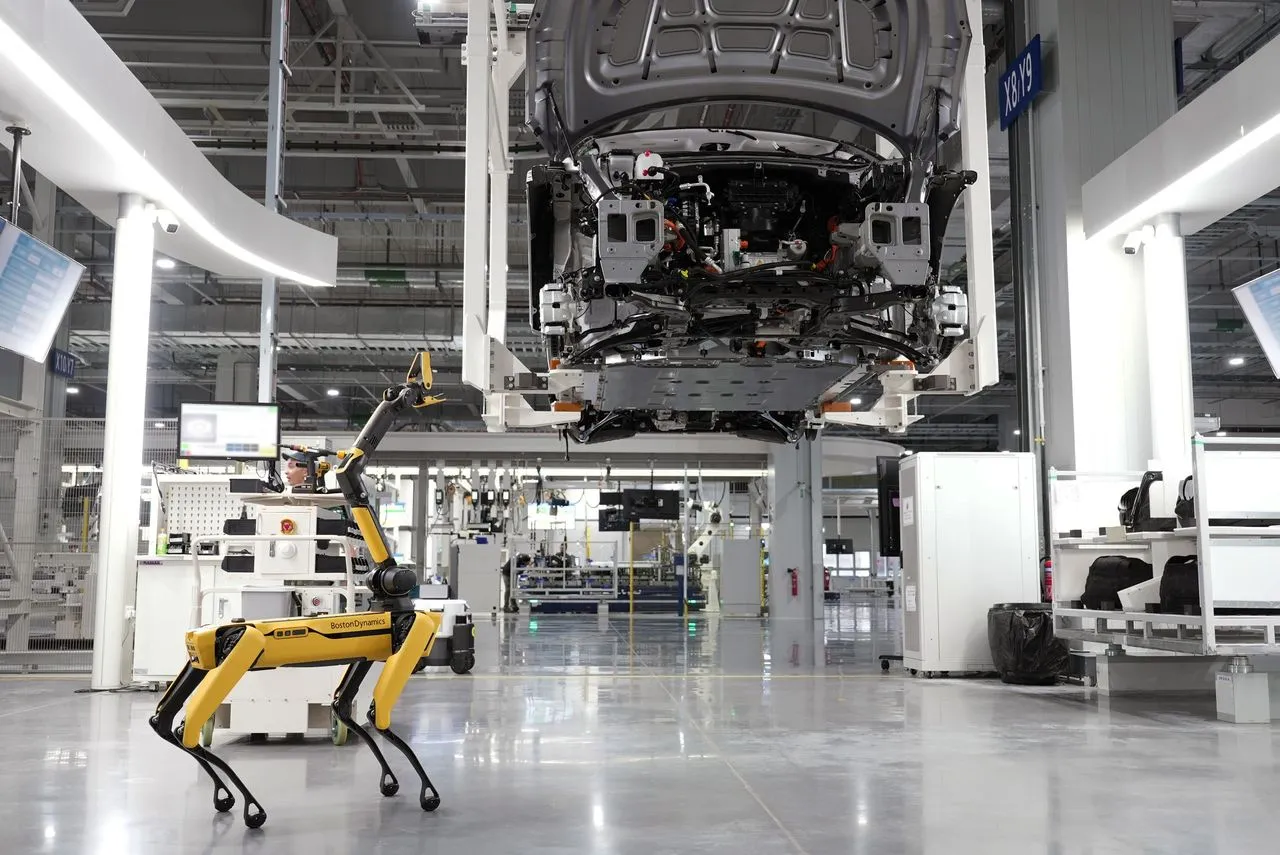
Physical AI combines artificial intelligence with robotics, autonomous systems and real-world environments, enabling machines to perceive, reason and act in physical settings. As enterprises explore applications across manufacturing, logistics, transportation and other industries, the focus is increasingly shifting from experimentation to production.
Grid Dynamics’ participation in the summit builds on its strategic relationships with NVIDIA and Doosan Robotics and reflects the company’s growing capabilities in Physical AI and enterprise robotics. The company is working on a range of applications designed to address complex industrial challenges and help organizations integrate intelligent machines into existing operations.
At the summit, Ilya Katsov, CTO, Americas at Grid Dynamics, will lead a session titled “Operationalizing Physical AI: Lessons From the Field.” The session will examine practical lessons from Grid Dynamics’ experience deploying Physical AI technologies, including humanoid robots, in production environments.
The discussion will focus on one of the industry’s key challenges: moving from successful demonstrations and pilot projects to systems that can operate reliably, efficiently and continuously at enterprise scale.
While interest in Physical AI is growing rapidly, enterprises continue to face challenges when transitioning from pilots to production. These challenges can include evaluating rapidly evolving AI and robotics technologies, collecting and managing high-quality data, integrating systems with existing infrastructure, and continuously improving performance after deployment.
According to Katsov, many manufacturing companies are experimenting with Physical AI, but significantly fewer have successfully moved these systems into dependable production environments. A productization platform that enables organizations to quickly evaluate and combine available technologies, collect data efficiently and establish continuous improvement processes can play an important role in addressing these challenges.
Grid Dynamics’ approach focuses on creating the infrastructure and engineering capabilities required to operationalize Physical AI. By combining AI expertise, robotics engineering, simulation and enterprise technology integration, the company aims to help businesses accelerate the transition from experimental deployments to scalable production systems.
Grid Dynamics is developing Physical AI solutions across several industrial use cases. These initiatives include logistics automation using humanoid robots, autonomous driving systems and simulation for construction and agricultural equipment, robotic manipulation for electric vehicle battery manufacturing and disassembly, and robot simulation and synthetic data generation for warehouse automation.
These applications demonstrate the breadth of opportunities for Physical AI across the physical economy. Intelligent robots and autonomous systems can support activities ranging from material handling and warehouse operations to manufacturing, inspection, assembly and equipment operation.
Simulation and synthetic data are also becoming important components of Physical AI development. By creating virtual environments in which robots and autonomous systems can be trained and evaluated, organizations can test scenarios and refine system performance before deploying technologies in physical environments.
The Physical AI Summit is designed to foster collaboration among the organizations developing, deploying and financing next-generation physical intelligence technologies.
Anik Bose, Founder of EAIGG, emphasized that the potential of Physical AI extends beyond improving individual robotic systems. According to Bose, the technology could introduce intelligence into a broad range of physical industries and infrastructure, including factories, warehouses, energy systems, transportation and other critical environments.
He also highlighted the importance of collaboration among enterprises that understand real-world operational requirements, startups developing advanced AI technologies and investors supporting the transition from pilot projects to commercial deployments.
The summit provides a forum for these groups to exchange insights, discuss emerging technologies and identify opportunities for collaboration. By bringing different stakeholders together, the event aims to address both the technical and business challenges involved in scaling Physical AI.
Grid Dynamics’ Physical AI initiatives are supported by its GAIN Platform for Physical AI, which provides a foundation for digital twin simulation and robotic manipulation solutions for manufacturing.
The platform is designed to support complex robotics applications where conventional automation approaches may face challenges. These include inspecting objects with complex geometries, performing assembly tasks involving variability, and packaging previously unseen or deformable items.
Digital twins and simulation environments can help organizations model physical processes, test robotic behavior and evaluate potential solutions before implementation. Synthetic data generation can further support the development and training of AI systems by creating representative scenarios that may be difficult or expensive to capture in the physical world.
Through these capabilities, Grid Dynamics is working to provide enterprises with technologies that can support the development, testing and continuous improvement of Physical AI systems.

The Physical AI Summit reflects the growing interest in technologies that connect advanced AI models with physical machines and industrial environments. As enterprises evaluate how robotics and autonomous systems can contribute to their operations, the ability to reliably deploy and manage these technologies will become increasingly important.
Grid Dynamics’ work across robotics, simulation, AI and enterprise technology positions the company to contribute to discussions around the practical deployment of Physical AI. Through collaborations with technology providers, enterprises and the broader innovation ecosystem, the company is focused on helping organizations explore and operationalize emerging AI capabilities.
By bringing together industry participants at the Physical AI Summit, Grid Dynamics, NVIDIA, EAIGG and BGV aim to encourage knowledge sharing and collaboration around the technologies and strategies needed to move Physical AI from world models into real-world control.
Grid Dynamics (Nasdaq: GDYN) is an AI transformation partner for Fortune 1000 companies. The company combines AI expertise with enterprise-scale technology delivery to help organizations identify AI opportunities, develop scalable systems and create business value from AI deployments.
Founded in 2006, Grid Dynamics has more than two decades of technology leadership and enterprise AI experience. Headquartered in Silicon Valley, the company has offices across the Americas, Europe and India.
For more information, visit Grid Dynamics’ website or follow the company on LinkedIn.
This communication contains “forward-looking statements” as defined under Section 27A of the Securities Act of 1933 and Section 21E of the Securities Exchange Act of 1934. These statements are not historical facts and involve risks and uncertainties that could cause Grid Dynamics’ actual results to differ materially from those expressed or anticipated.
Forward-looking statements may be identified through terms such as “believes,” “estimates,” “anticipates,” “expects,” “intends,” “plans,” “may,” “will,” “potential,” “projects,” “predicts,” “continue” and “should,” as well as comparable terminology or their negative forms.
Such statements include comments regarding the anticipated benefits of Grid Dynamics’ capabilities, its relationships with customers and partners, and potential future growth. Actual results may differ due to various factors, including Grid Dynamics’ ability to achieve expected benefits, limitations affecting its capabilities or services, market conditions and factors affecting its growth strategy.
Grid Dynamics cautions readers not to place undue reliance on these statements, which speak only as of the date they are made. The company does not undertake any obligation to publicly update or revise forward-looking statements to reflect changes in expectations, events, conditions or circumstances.
Additional information regarding factors that could materially affect Grid Dynamics, including its results of operations and financial condition, is available in the “Risk Factors” section of the company’s Annual Report on Form 10-K filed with the U.S. Securities and Exchange Commission on March 5, 2026, as well as in its other periodic SEC filings.
Source Link: https://www.businesswire.com/