

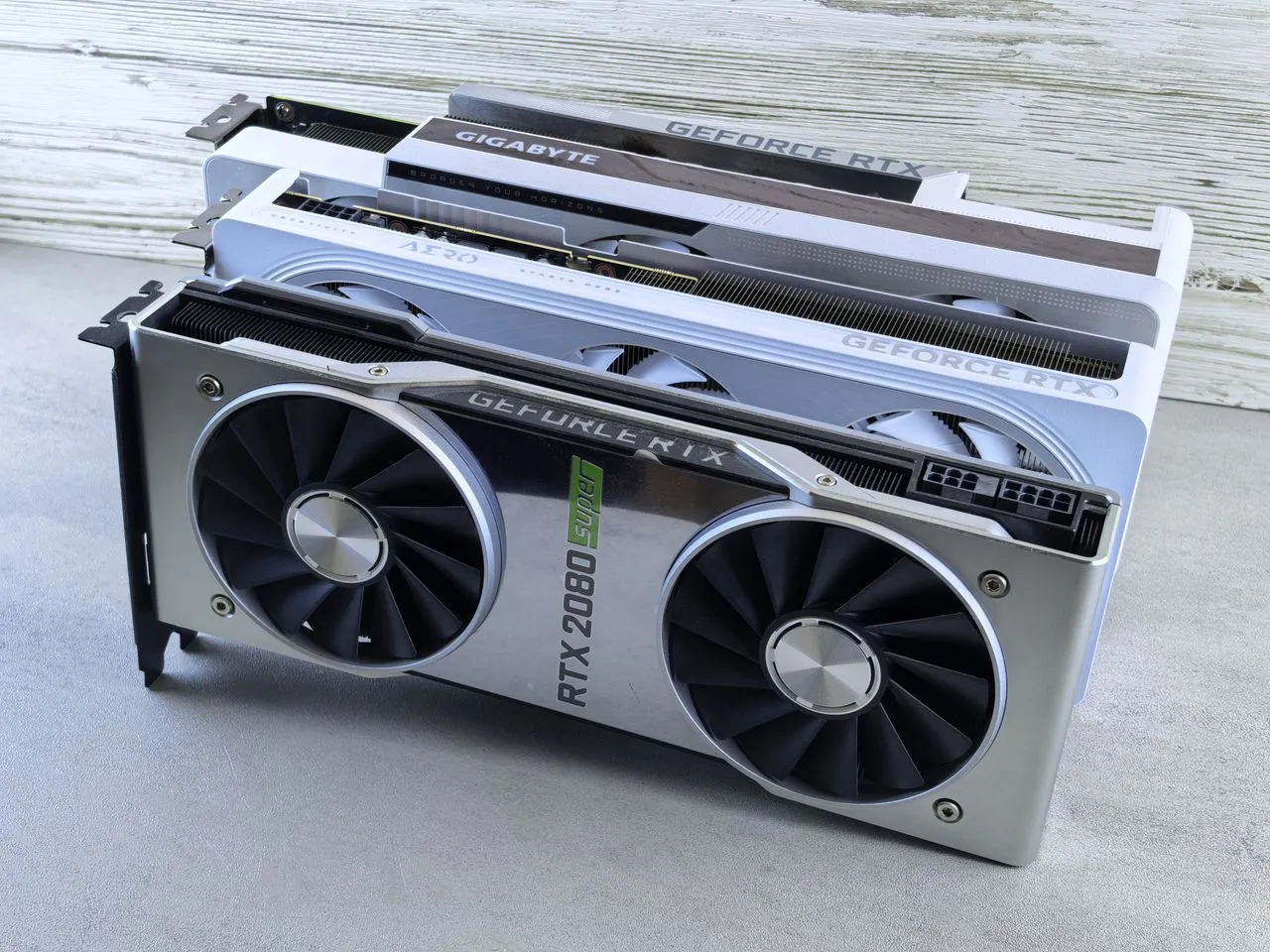
Running on NVIDIA Blackwell GPUs and enhanced through continuous inference optimization, GPT-6 Astra Ultrafast brings faster model responses to developers building coding agents, tool-using systems and interactive AI applications.
GPT-6 Astra Ultrafast is now available through the OpenAI API, as well as to eligible ChatGPT Work and Codex users. Powered by NVIDIA Blackwell GPUs and optimized by OpenAI to take advantage of the architecture’s capabilities, Ultrafast mode can deliver up to 8x faster token generation compared with Astra Standard mode.
For developers, faster token generation can have a direct impact on the experience of building and using AI applications. In coding environments, for example, a faster model can shorten the cycle between generating code, testing it, identifying issues and making corrections. In agentic applications, faster responses can reduce the waiting time between tool calls, while interactive applications can respond more naturally and with less perceived latency.
The benefits become particularly significant when model inference is repeated throughout a longer workflow.
Modern AI applications increasingly rely on multi-step interactions rather than a single request-and-response exchange. An AI agent may generate code, call an external tool, evaluate the result, make a decision and then continue with another action.
Every step introduces an opportunity for latency to accumulate.
GPT-6 Astra Ultrafast is designed to bring Astra’s capabilities into these time-sensitive workflows by accelerating the generation of model responses. When repeated across dozens or hundreds of inference steps, even incremental improvements in response time can have a meaningful effect on the overall speed of an application.
This is particularly relevant for coding agents and other systems that operate in continuous loops. A faster response can allow an agent to move more quickly from one stage of a task to the next, helping developers spend less time waiting for model output and more time reviewing results or directing the workflow.
NVIDIA Blackwell infrastructure provides the underlying compute platform for these workloads, while OpenAI’s inference optimizations are designed to extract greater performance from the hardware.
“NVIDIA’s deep investment in tooling and documentation has enabled us to make our models exceptionally good at programming Blackwell and Rubin GPUs,” said Philippe Tillet, inference lead at OpenAI. “Astra can turn that knowledge into high-performance kernels that make NVIDIA hardware compelling across the full frontier of latency, throughput and cost. With Astra Ultrafast, that means faster model responses as agents write code, use tools and work through complex tasks.”
AI performance is not necessarily fixed when a model first enters production. As software, models and hardware evolve, inference systems can continue to be optimized.
OpenAI is using its own models to help improve the inference software running on NVIDIA GPUs. The programmable nature of NVIDIA’s platform gives developers and researchers the flexibility to experiment with kernels, software techniques and other optimizations designed to improve how models execute.
This creates a continuous performance loop: models can help improve the software used to run models, while the underlying GPU architecture provides the programmability needed to implement and test those improvements.
For deployed AI infrastructure, the approach can help increase productivity over time without requiring organizations to treat the initial performance profile of a workload as a fixed endpoint.
“Our work with NVIDIA is helping us make AI faster and more useful,” said Uday Ruddarraju, chief technology officer of compute at OpenAI. “We used our internal models to optimize inference on NVIDIA GPUs, and NVIDIA’s programmability helped us deliver the acceleration behind Astra Ultrafast.”
The rapid pace of AI development means infrastructure must support more than a single generation of models or a single type of workload. Training, inference and reinforcement learning can place different demands on compute resources, and those requirements can change as models and applications evolve.
NVIDIA’s programmable platform is designed to support these changing workloads, enabling infrastructure to be reused across training, inference and reinforcement learning.
That flexibility can also help organizations manage compute resources more efficiently. Instead of dedicating infrastructure permanently to one workload, teams can adapt available capacity as demand changes. Resources used for training at one stage can potentially be repurposed for inference or other AI workloads when requirements shift.
For developers and infrastructure teams, this ability to adapt can become increasingly important as AI applications move from experimentation into production and workloads become more dynamic.
The significance of faster inference extends beyond benchmark measurements. For developers, response time can influence how quickly an AI-powered application completes a task and how fluidly users interact with it.
In software development, faster model generation can help compress the edit-test-debug cycle. An agent that generates code more quickly can move sooner to execution, inspect the outcome and respond to errors.
For tool-using systems, reduced inference latency can shorten the gaps between model decisions and external actions. And for interactive applications, faster responses can create a more immediate experience, particularly when users are engaged in repeated conversational or task-oriented interactions.
These advantages become more pronounced as AI systems become increasingly agentic and perform longer sequences of actions autonomously.
GPT-6 Astra Ultrafast combines OpenAI’s model capabilities and inference optimization work with NVIDIA Blackwell GPU infrastructure to address this growing demand for responsive AI. The result is a deployment approach focused not only on model capability, but also on the speed and efficiency with which that capability can be delivered.
GPT-6 Astra Ultrafast is available today through the OpenAI API and to eligible ChatGPT Work and Codex users.
For developers, the introduction of Ultrafast mode provides another option for applications where response speed is an important consideration. Its reported up to 8x improvement in token generation over Astra Standard mode is particularly relevant to workflows that repeatedly invoke models for coding, reasoning, tool use and interactive tasks.
As AI applications become more sophisticated, performance increasingly depends on the combination of model capabilities, software optimization and underlying infrastructure. GPT-6 Astra Ultrafast illustrates how those layers can work together, with OpenAI continuously optimizing inference and NVIDIA Blackwell providing a programmable foundation for high-performance AI execution.
Developers can access GPT-6 Astra Ultrafast through the OpenAI API and explore implementation, pricing and access requirements through OpenAI’s Ultrafast documentation.
Source Link: https://blogs.nvidia.com/