

NVIDIA and Microsoft are strengthening their long-standing partnership to transform personal computing through artificial intelligence (AI), advanced hardware, and intelligent software. At a Microsoft event in San Francisco, NVIDIA founder and CEO Jensen Huang and Microsoft CEO Satya Nadella presented their shared vision for the next generation of Windows PCs, highlighting how AI agents and powerful computing platforms could reshape the way people work, create, and develop applications.
The announcement reflects a significant evolution in the relationship between the two companies. While NVIDIA’s early growth was closely connected to the Windows ecosystem and the success of GeForce graphics technology, the partnership is now expanding into AI-powered computing. As intelligent agents become increasingly integrated into everyday workflows, both companies are working to provide the hardware and software infrastructure required to run them securely and efficiently on personal computers.
During a fireside conversation hosted by former White House AI policy adviser Sriram Krishnan at Microsoft’s Windows AI and Surface event, Huang reflected on NVIDIA’s history with Windows and its role in shaping the company’s development. He emphasized that Windows had been central to NVIDIA’s journey, including the evolution of GeForce graphics technology.
Nadella praised Huang’s long-term vision, noting that NVIDIA’s continued investment in emerging computing technologies had helped bring the industry to its current stage. Both executives highlighted the potential of AI agents to transform personal computers from conventional productivity devices into intelligent assistants capable of supporting a wide range of tasks.
A major focus of the announcements was Microsoft’s effort to prepare Windows for the agentic AI era. AI agents can perform tasks, interact with applications, and support complex workflows with varying levels of human supervision. However, their growing capabilities also create new requirements for security, monitoring, and operational control.
To address these challenges, Microsoft announced the general availability of Microsoft Execution Containers (MXC), an operating-system-level infrastructure designed to enable agents to operate securely and persistently in the background under Windows management.
Pavan Davuluri, Microsoft’s executive vice president of Windows and Devices, explained that the company is building essential capabilities directly into Windows to ensure AI agents can be secured, observed, and governed. Combined with Microsoft Security and Agent 365, MXC is intended to provide a foundation for deploying and managing agents across computing environments.
Nadella emphasized that making the desktop a secure environment for agent execution is essential to the future of personal computing. Huang similarly described MXC as a potentially transformative development, comparing its anticipated impact on agent development and deployment to the influence Windows and DirectX had on application development.
By integrating these capabilities into the operating system, Microsoft aims to make it easier for developers and organizations to adopt AI agents while maintaining appropriate security and management controls.
Another major announcement was NVIDIA RTX Spark, a new computing platform designed to bring NVIDIA’s AI capabilities to Windows laptops and compact desktop systems. The platform aims to make advanced AI workloads more accessible locally, allowing developers and other users to run increasingly capable models directly on their computers.
Microsoft introduced Surface Laptop Ultra as part of this vision, with Davuluri highlighting its integration with NVIDIA RTX Spark technology. The system is described as offering up to 128GB of unified memory and up to one petaflop of AI computing performance, enabling it to support demanding workloads that may exceed the capabilities of conventional laptops.
Hardware systems incorporating the platform are planned from manufacturers including Acer, ASUS, Dell, HP, Lenovo, Microsoft, MSI, and Gigabyte. The lineup is expected to include portable laptops and compact desktops designed to support intensive AI workloads and continuously operating agents.
RTX Spark combines an NVIDIA Blackwell RTX GPU with up to 6,144 cores and an NVIDIA Grace CPU featuring up to 20 cores. The processor and graphics architecture are connected through a high-bandwidth interconnect rated at up to 600GB per second. The platform also offers up to 128GB of unified memory and up to one petaflop of FP4 AI performance.
These specifications are intended to support demanding local AI applications, including the execution of large models without relying entirely on cloud-based services. Running AI locally can help users reduce dependence on usage-based cloud computing and keep sensitive information on their own devices, depending on the applications and configurations involved.
The RTX Spark platform also supports NVIDIA’s CUDA software ecosystem, allowing developers to carry models, tools, and workflows across compatible NVIDIA systems with fewer changes. This compatibility is intended to simplify development, testing, and deployment across different computing environments.
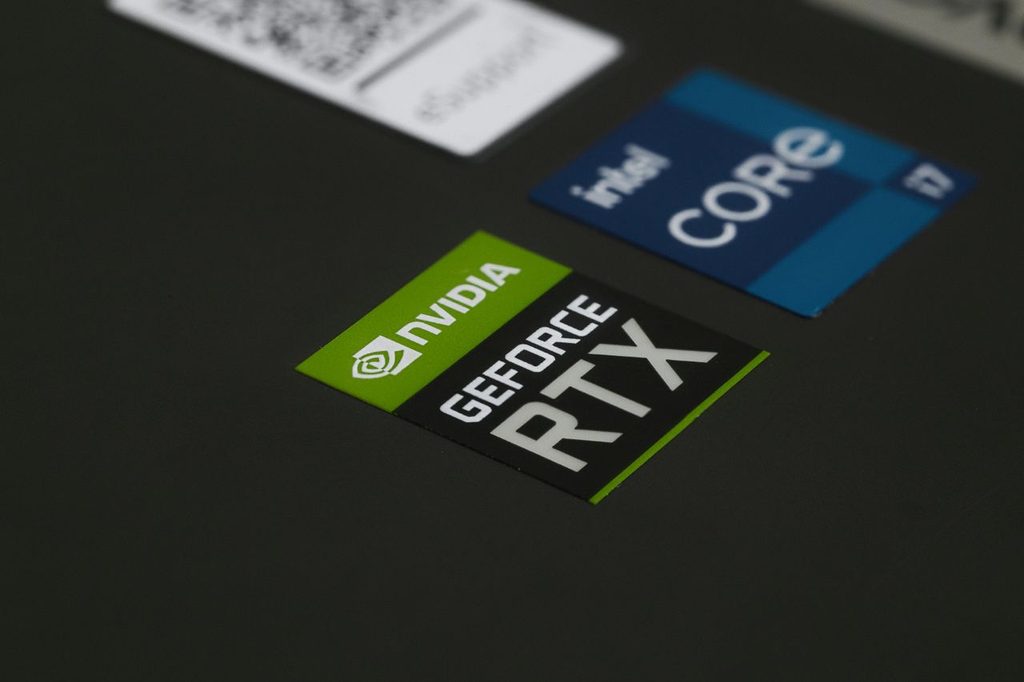
Beyond AI development, RTX Spark is designed to support a broad range of computing activities.
For developers, the platform provides access to NVIDIA’s established AI software stack, helping them build and run applications locally before scaling workloads to more powerful systems, including NVIDIA DGX Station.
Creative professionals can benefit from fifth-generation Tensor Cores with NVFP4 support, hardware-accelerated AV1 processing, and 4:2:2 video encoding and decoding. Support for NVIDIA DLSS and RTX ray tracing also offers capabilities relevant to graphics production, visual effects, and other demanding creative workflows.
Gamers can access NVIDIA graphics technologies designed to improve image quality, responsiveness, and performance, including DLSS, Reflex, and G-SYNC. The platform is intended to combine AI acceleration with high-performance graphics, extending the role of Windows PCs beyond traditional productivity applications.
The compact desktop configuration is particularly relevant for users who need dedicated local AI infrastructure. Designed for continuous operation, these systems can support agents that run in the background and remain available to perform tasks without requiring constant manual intervention.
Microsoft and NVIDIA also previewed NVIDIA DGX Station for Windows, a deskside AI supercomputer designed to bring advanced AI computing into the Windows ecosystem.
The system is based on the NVIDIA GB300 Grace Blackwell Ultra Desktop Superchip and is designed to deliver up to 748GB of coherent memory and up to 20 petaflops of FP4 AI computing performance. These capabilities are intended to support the development, fine-tuning, and execution of large AI models, including models at the trillion-parameter scale, subject to workload and configuration requirements.
Previously, DGX Station was associated with Linux-based environments, which could require enterprise developers to maintain separate systems for AI development and everyday productivity. Many large organizations rely heavily on Windows, making compatibility with existing applications and workflows an important consideration.
DGX Station for Windows aims to reduce this divide by bringing substantial AI computing resources directly to Windows-based development environments. Research teams, enterprise developers, and AI-focused companies can use the platform to experiment with large models, develop multi-agent applications, and run inference workloads without leaving their primary computing environment.
For developers who still require Linux tools, Windows Subsystem for Linux (WSL) provides access to Linux-based AI development workflows within Windows.
The announcements from NVIDIA and Microsoft demonstrate a shared effort to make AI a more integrated part of personal and enterprise computing. By combining Windows security infrastructure, NVIDIA’s accelerated computing technologies, and hardware designed for local AI workloads, the companies aim to give developers and businesses more flexibility in how they build and deploy intelligent applications.
RTX Spark is intended to bring advanced AI performance to individual users, while DGX Station for Windows targets more demanding development and research requirements. Meanwhile, Microsoft’s investment in secure agent infrastructure seeks to establish the foundations for AI systems that can operate within everyday computing environments.
Together, these developments point toward a future in which personal computers become more than tools for running applications. They could increasingly serve as intelligent platforms where AI agents assist with complex tasks, developers build advanced models, and professionals work with powerful AI capabilities directly on their own devices.
Source Link: https://blogs.nvidia.com/