


AMD introduced the AMD Instinct™ MI400 Series, its latest family of data center GPUs designed to accelerate artificial intelligence (AI) and high-performance computing (HPC) workloads. Built to support everything from hyperscale AI factories to sovereign AI initiatives and scientific research, the new GPU lineup combines advanced computing performance, high-bandwidth memory, scalable networking, and enterprise-grade security to meet the growing demands of next-generation AI infrastructure.
The AAI new portfolio includes the AMD Instinct MI455X, designed for frontier AI and large-scale AI factory deployments, and the AMD Instinct MI430X, which targets sovereign AI projects and HPC environments that require exceptional numerical precision and long-term operational reliability.
With the MI400 Series, AMD aims to provide organizations with flexible infrastructure capable of supporting today’s AI workloads while preparing for increasingly complex applications in the years ahead.
Artificial intelligence is rapidly transforming how modern data centers are designed and operated.
Organizations are no longer deploying AI exclusively within hyperscale cloud environments. Governments, research institutions, enterprises, and national computing centers increasingly require specialized infrastructure tailored to their unique workloads.
Large AI factories focus on training frontier models and running high-volume inference across millions of users. Meanwhile, sovereign AI initiatives emphasize local data ownership, security, and regulatory compliance. Scientific computing facilities demand extremely high numerical accuracy for simulations, climate modeling, engineering, and biomedical research.
Recognizing these diverse requirements, AMD developed the MI400 Series as a portfolio rather than a one-size-fits-all solution.
Each GPU is optimized for specific deployment scenarios while maintaining a common software ecosystem that enables customers to scale AI applications without sacrificing flexibility or portability.
The AAI MI400 Series introduces two distinct products aimed at different segments of the AI market.
The AMD Instinct MI455X is engineered for frontier AI deployments and hyperscale AI factories, where organizations train massive foundation models, deploy generative AI services, and perform large-scale inference across distributed infrastructure.
Complementing it is the AMD Instinct MI430X, built specifically for sovereign AI programs, leadership-class supercomputers, and scientific research environments.
Together, these products allow customers to select hardware optimized for their operational requirements while maintaining compatibility across AMD’s broader AI ecosystem.
Whether supporting commercial AI services, national AI infrastructure, or scientific discovery, the portfolio is designed to provide scalable performance across a wide variety of workloads.
One of the AAI defining characteristics of the MI400 Series is its ability to handle both AI and traditional HPC applications efficiently.
The MI455X delivers the computing power, memory bandwidth, and networking performance needed for training large language models, fine-tuning AI systems, and executing high-volume inference workloads.
These capabilities make it well suited for organizations building AI factories capable of supporting enterprise applications, cloud AI services, and next-generation intelligent assistants.
Meanwhile, the MI430X focuses on scientific computing and mixed AI-HPC environments.
The AAI GPU provides up to 288 teraflops (TFLOPS) of hardware-accelerated FP64 performance, enabling researchers and engineers to perform complex simulations requiring double-precision accuracy.
Applications such as computational fluid dynamics, weather forecasting, physics simulations, life sciences, and engineering analysis benefit from this level of numerical precision while also leveraging AI acceleration where appropriate.
As AI models continue growing in size, memory capacity and bandwidth have become just as important as raw compute performance.
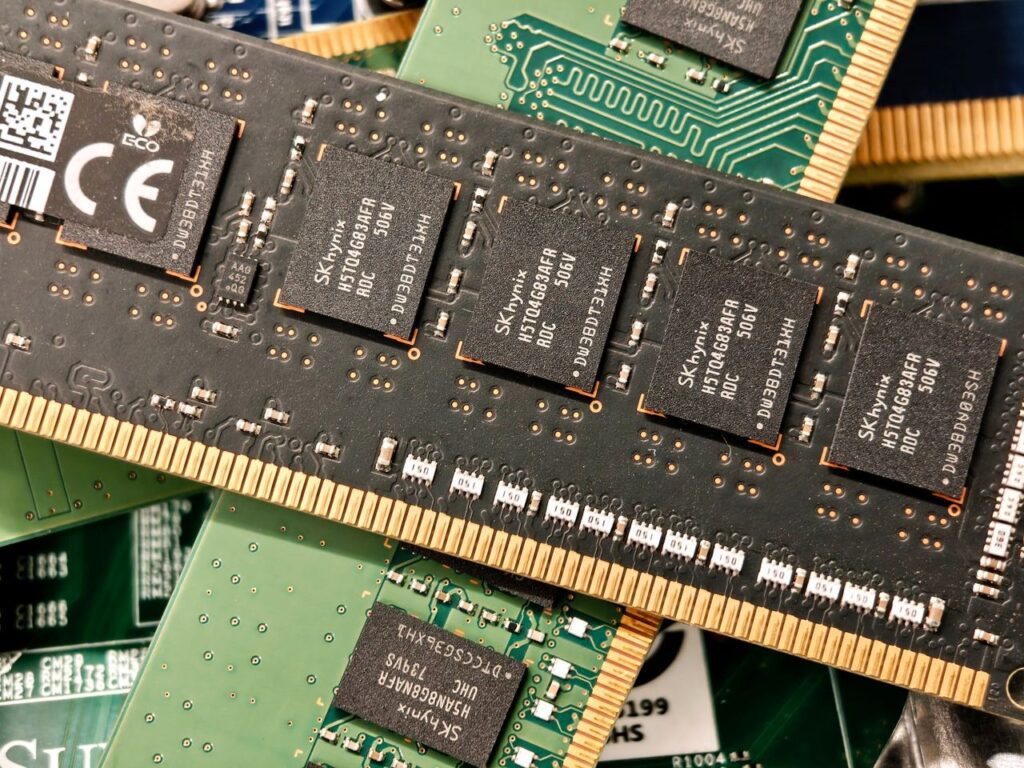
To AAI address this challenge, every GPU in the MI400 Series incorporates HBM4 (High Bandwidth Memory 4) technology.
HBM4 provides significantly higher memory bandwidth than previous generations, allowing AI accelerators to process larger datasets while reducing bottlenecks during training and inference.
The AAI increased bandwidth also enables organizations to deploy larger AI models using fewer accelerators, reducing infrastructure complexity and improving overall energy efficiency.
For enterprises operating AI at scale, these improvements can help lower deployment costs while increasing application performance.
The AAI MI455X is also a core component of AMD Helios™, the company’s next-generation rack-scale AI platform.
Rather than focusing solely on individual GPUs, Helios integrates compute, networking, memory, power delivery, and cooling into a fully optimized AI system.
This AAI system-level approach reflects the industry’s growing shift toward rack-scale AI infrastructure, where overall platform performance depends on how efficiently every component works together.
Helios combines AMD Instinct GPUs with AMD EPYC processors, AMD Pensando networking technologies, and AMD ROCm software into an integrated solution designed for hyperscale AI deployments.
The architecture supports massive AI clusters while improving power efficiency, serviceability, and scalability.
Hardware alone cannot deliver successful AI deployments without a robust software ecosystem.
AMD continues to strengthen its commitment to open computing through the ROCm™ software platform, which serves as the foundation for the MI400 Series.
ROCm provides developers with programming models, compilers, runtime environments, optimized libraries, deployment tools, and AI frameworks needed to build and scale machine learning applications.
By supporting open standards, AMD enables organizations to develop AI software without becoming dependent on proprietary ecosystems.
This AAI approach provides greater flexibility when selecting hardware, networking technologies, and deployment environments while helping protect long-term software investments.
Customers can migrate workloads across future AMD platforms with minimal disruption, supporting greater infrastructure longevity.
As AI systems increasingly process sensitive enterprise and government data, security has become a fundamental infrastructure requirement.
The AAI MI400 Series incorporates multiple hardware-based security technologies designed to protect AI workloads throughout their lifecycle.
Key capabilities include secure boot, encrypted GPU-to-GPU communications, and advanced hardware protections that safeguard applications against unauthorized access and data compromise.
These AAI features are particularly valuable for organizations operating within regulated industries, sovereign AI initiatives, and national research programs where protecting sensitive information is essential.
Combined with AMD’s scalable deployment architecture, the security framework enables organizations to confidently deploy AI infrastructure across both commercial and mission-critical environments.
Flexibility AAI is another major focus of the MI400 Series.
Organizations deploying frontier AI models often require large rack-scale systems optimized for maximum performance and throughput.
Scientific computing centers, however, frequently rely on traditional mesh-based supercomputer architectures designed for highly parallel HPC applications.
AMD supports both deployment models.
The AAI Helios rack-scale solution addresses hyperscale AI factories, while the MI430X remains compatible with conventional HPC infrastructure, allowing customers to integrate AI acceleration into existing supercomputing environments.
This versatility enables organizations to modernize AI infrastructure without completely redesigning their computing environments.
According to Vamsi Boppana, Senior Vice President of AI at AMD, the next phase of artificial intelligence will span multiple domains—including frontier AI, sovereign AI, and scientific computing—each requiring infrastructure optimized for different operational priorities.
He AAI emphasized that the MI400 Series expands AMD’s AI portfolio with purpose-built hardware capable of supporting the full spectrum of AI and HPC deployments while maintaining an open software foundation that encourages innovation at every scale.
By combining high-performance GPUs, advanced memory technologies, scalable networking, enterprise security, and open software, AMD aims to provide organizations with the flexibility needed to address rapidly evolving AI workloads.
With the launch of the Instinct MI400 Series, AMD continues expanding its presence in the AI accelerator market while strengthening its position across enterprise AI, hyperscale cloud computing, sovereign AI initiatives, and scientific research.
The AAI combination of purpose-built hardware, the Helios rack-scale platform, ROCm software, and support for both AI and HPC workloads positions the MI400 Series as a comprehensive solution for organizations building next-generation AI infrastructure.
As AI models become larger, more intelligent, and increasingly integrated into every industry, demand for scalable, secure, and energy-efficient computing platforms will continue to grow. AMD’s latest GPU family is designed to meet those demands by providing the performance, flexibility, and openness required to power the future of artificial intelligence and high-performance computing.
Source link: https://newsroom.amd.com