

Artificial intelligence is reshaping every aspect of modern computing, and as AI models become larger and more sophisticated, data centers must evolve to support unprecedented levels of performance and scalability. To meet these growing demands, AMD and Meta are expanding their long-standing collaboration to co-engineer next-generation AI infrastructure, combining advanced processors, accelerators, networking technologies, and software into an integrated platform designed for hyperscale AI workloads.
The partnership spans AMD’s complete AI portfolio—including AMD EPYC™ processors, AMD Instinct™ GPUs, AMD Helios™ rack-scale systems, AMD Pensando™ networking, and the ROCm™ software platform—all optimized to support Meta’s rapidly expanding AI ecosystem. Together, the companies are developing infrastructure capable of powering AI training, inference, recommendation systems, and emerging intelligent applications at an unprecedented scale.
As AI adoption accelerates, traditional data center architectures are no longer sufficient. In the past, infrastructure was designed by optimizing individual servers or hardware components independently. Today’s AI workloads require a much more holistic approach.
During AMD’s Advancing AI 2026 event, AMD Chair and CEO Dr. Lisa Su spoke with Santosh Janardhan, Meta’s Head of Infrastructure, about how both companies are rethinking data center design to meet the next wave of AI innovation.
According to Janardhan, AI is transforming not only the services delivered by data centers but also the way they are engineered. Supporting billions of users across Meta’s platforms requires massive computing resources capable of handling increasingly complex AI models used for content recommendations, personalized experiences, generative AI services, ranking systems, and intelligent assistants.
Rather than simply adding more servers or GPUs, Meta is redesigning its infrastructure so that computing, memory, networking, cooling, power delivery, and software function as one highly optimized system.
The goal is to build AI infrastructure that operates efficiently at gigawatt scale, supporting enormous computational workloads while maximizing performance, energy efficiency, and reliability.
One of the biggest shifts in AI infrastructure is the move away from treating hardware components as isolated technologies.
Instead, AMD and Meta are collaborating from the earliest stages of product development, aligning hardware and software design decisions long before deployment.
This deeper level of engineering enables both companies to optimize every layer of the AI stack—from silicon architecture to networking protocols and software frameworks.
Such collaboration is becoming increasingly important because different AI workloads place unique demands on infrastructure.
Large-scale AI training requires massive parallel computing capabilities, while inference workloads prioritize low latency and energy efficiency. Recommendation systems, search technologies, and emerging autonomous AI agents each introduce their own performance requirements.
By designing infrastructure around these diverse workloads rather than individual hardware specifications, AMD and Meta hope to create platforms capable of adapting as AI technologies continue evolving.
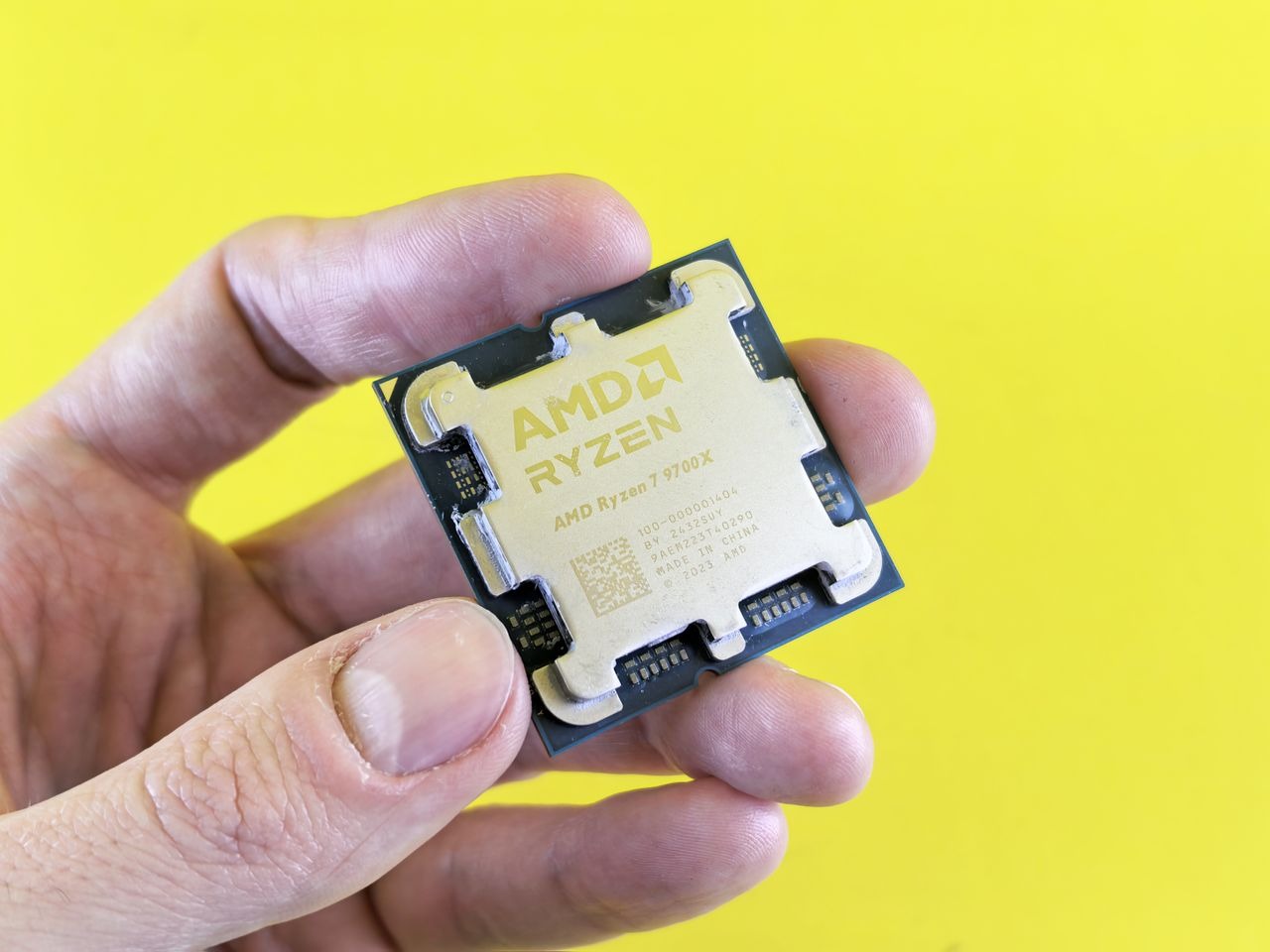
A major part of the collaboration centers on AMD’s EPYC server processors.
Meta has already deployed millions of AMD EPYC CPUs throughout its global infrastructure, supporting a wide range of cloud computing and AI services.
The partnership now extends across multiple processor generations, including Milan, Bergamo, Turin, and the upcoming 6th Generation AMD EPYC “Venice” platform.
Meta is serving as one of the lead customers helping validate Venice-based systems before large-scale production deployments.
According to AMD, Venice processors are expected to deliver higher core counts, improved performance, greater energy efficiency, and enhanced customization capabilities tailored to hyperscale computing environments.
Meta is already evaluating early Venice platforms in its testing laboratories, where engineers are working closely with AMD to prepare the processors for deployment across future AI infrastructure.
Although GPUs remain the primary engines for AI model training and inference, CPUs are becoming increasingly important as AI systems evolve.
Modern AI applications involve far more than simply executing neural networks.
CPUs now coordinate AI agents, manage data movement, execute software tools, orchestrate workloads across thousands of GPUs, and oversee the broader infrastructure supporting AI services.
As autonomous AI agents become more capable, balancing CPU and GPU performance will become even more important.
Meta expects this growing role to continue with future EPYC generations, including planned collaboration on AMD’s upcoming Verano platform and subsequent processor roadmaps.
Alongside CPUs, AMD and Meta are strengthening their work on AI accelerators.
Earlier this year, Meta introduced the Open Rack Wide (ORW) specification through the Open Compute Project, creating an open standard specifically designed for large-scale AI deployments.
AMD’s Helios rack-scale solutions are built around this open architecture.
Rather than delivering individual servers, Helios combines AMD Instinct GPUs, EPYC processors, Pensando networking technology, and ROCm software into an integrated rack-level platform optimized for hyperscale AI clusters.
This approach allows organizations to deploy complete AI infrastructure that has already been engineered for performance, efficiency, cooling, and serviceability.
For hyperscale operators like Meta, this integrated design significantly simplifies deployment while improving overall system optimization.
The collaboration between AMD and Meta has steadily expanded across several generations of AI accelerators.
The partnership began with the AMD Instinct MI300X, providing Meta with experience deploying AMD GPUs at hyperscale while optimizing AI workloads using the ROCm software ecosystem.
Building on those efforts, the MI350 series expanded support for AI training, particularly for recommendation and ranking models that power many of Meta’s core services.
The next stage moves beyond standard hardware adoption.
Meta now plans to deploy a custom GPU based on AMD’s upcoming Instinct MI450 architecture, representing a much deeper engineering relationship between the two companies.
Instead of simply purchasing hardware, Meta is actively participating in platform design, ensuring future GPU systems align closely with its unique AI requirements.
Meta has already begun testing AMD’s Helios platform through early-access programs.
Engineering teams from both companies are working together throughout the development process, validating hardware performance, optimizing software stacks, integrating networking technologies, and preparing AI workloads before commercial deployment.
This close collaboration allows potential challenges to be identified and addressed early, reducing deployment timelines while improving long-term system reliability.
The work supports Meta’s ambitious goal of deploying AI infrastructure capable of consuming up to six gigawatts of power using AMD GPU technology.
At this scale, decisions regarding cooling systems, networking architecture, memory configurations, power distribution, and software optimization must all be coordinated simultaneously rather than independently.
While processors and accelerators often receive the most attention, software plays an equally important role in large-scale AI deployments.
AMD’s ROCm open software platform provides developers with tools to build, optimize, and deploy AI applications across AMD hardware.
The collaboration enables Meta to optimize production AI workloads directly on ROCm while contributing valuable real-world feedback that helps improve future software releases.
Combined with AMD Pensando networking technology and Red Hat-based infrastructure integration, the software ecosystem provides the flexibility required to support rapidly evolving AI models across diverse computing environments.
Looking beyond current deployments, AMD and Meta are already collaborating on future technologies.
The partnership is expected to influence upcoming AMD Instinct MI500 accelerators, next-generation Helios rack-scale systems, and future EPYC processor families.
By aligning infrastructure planning with evolving AI workloads well before product launches, both companies hope to reduce deployment times while improving operational efficiency.
This long-term strategy allows Meta to scale AI capacity more quickly while giving AMD valuable insight into the needs of one of the world’s largest AI infrastructure operators.
As artificial intelligence becomes increasingly central to digital services, building faster chips alone is no longer enough. The future of AI depends on tightly integrated systems where processors, accelerators, networking, software, memory, cooling, and power infrastructure work together as a unified platform.
Through their expanding partnership, AMD and Meta are embracing this system-level approach to AI infrastructure.
By combining Meta’s expertise in operating platforms used by billions of people with AMD’s leadership in CPUs, GPUs, networking, and AI software, the companies aim to accelerate the deployment of scalable, efficient, and flexible AI infrastructure capable of supporting the next generation of intelligent applications.
As AI workloads continue growing in size and complexity, this collaboration represents an important step toward building the hyperscale infrastructure that will power the future of artificial intelligence.
Source link: https://newsroom.amd.com