


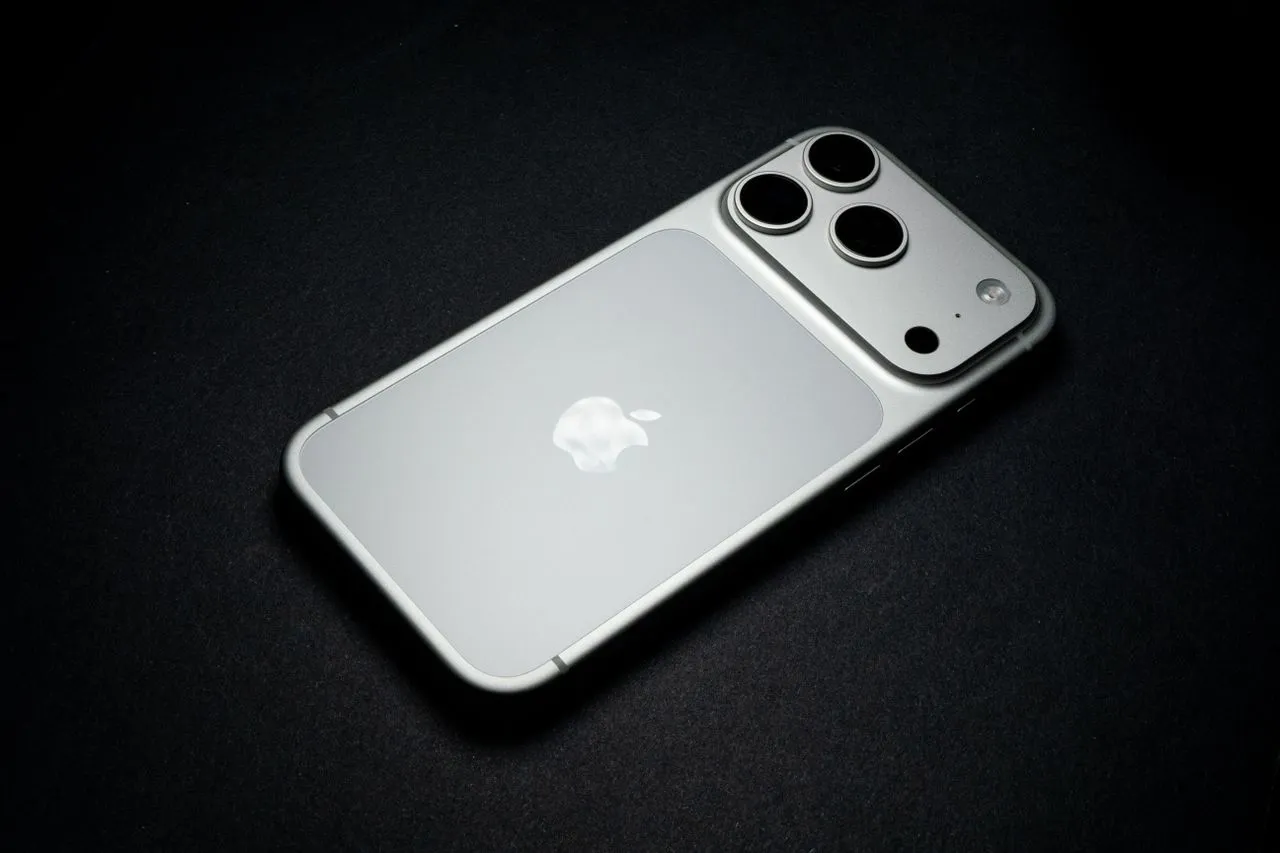
IPhone 18 Pro Moments of touch, connection, care, observation, and shared experience form the foundation of “What Holds Us,” a new photography exhibition featuring original work created exclusively with the new iPhone 18 Pro. Bringing together three distinctive artistic perspectives, the exhibition explores the people, places, emotions, and ideas that connect us and give meaning to the world around us.
Photographers and filmmakers Alex Prager, Jack Davison, and Jimmy Chin each approached the theme from a different perspective, creating images that explore presence not only as a physical state but also as a way of seeing and experiencing life.
Curating the exhibition is Kathy Ryan, the former longtime director of photography at The New York Times Magazine. Ryan says the exhibition reflects the realities of an increasingly fragmented world while focusing instead on the possibilities created by human connection.
“The theme holds a mirror to our increasingly fragmented world,” Ryan explains. “Rather than adding to this tension, ‘What Holds Us’ is a showcase of the limitless possibilities that emerge when three extraordinary artists are given the creative space to explore the idea of what connects us, using this incredible tool.”
The three artists were selected for their distinctive visual languages and individual creative interests. Working with the latest iPhone camera system, they explored different ways of translating their ideas into images. iPhone 18 Pro introduces variable aperture for the first time, along with improvements designed to deliver higher-quality low-light photography, sharper details, and greater creative control.
For Ryan, the project demonstrates how technology can expand the possibilities of photography without changing the fundamental principles of the craft.
“What makes iPhone such a compelling creative tool is its immediacy — it puts the ability to see, experiment, and create directly into everyone’s hands,” she says. “Seeing what Alex, Jack, and Jimmy are able to create with a device we all carry every day challenges our ideas of what photography can be and shows us how it can remain true to the original values of the craft while embracing new tools and possibilities.”
Although Prager, Davison, and Chin have highly individual practices, Ryan says they share an ability to capture deeply human experiences. Their work for the exhibition presents three different interpretations of connection while demonstrating how imagination and technology can work together to create new forms of visual storytelling.
“What Holds Us” opens September 18 in New York City. Ahead of the exhibition, the artists discussed their creative processes, their interpretations of connection, and the ways iPhone 18 Pro influenced their approach to photography.
For Academy Award-winning filmmaker, mountain climber, and adventure photographer Jimmy Chin, the exhibition provided an opportunity to explore connection in one of the world’s most demanding environments.
Earlier this summer, Chin traveled to the snow-covered Bugaboo Mountains in southeastern British Columbia, Canada, where he photographed a series centered on trust, human resilience, and the relationship between people and the natural world.
Using the 48MP Fusion Main camera with variable aperture on iPhone 18 Pro, Chin captured everything from highly detailed images of rock and ice to expansive panoramic views of the mountain range. He also used the Telephoto camera to photograph intricate patterns across snow, glaciers, and ice.
“The resolution and the sharpness on iPhone 18 Pro surprised me,” Chin says. “I could shoot a few inches of rock and ice, or a massive panorama, and trust that it would hold at size.”
His work combines tight close-ups, sweeping landscapes, and dynamic action photographs to communicate the scale and intensity of the environment. Among the images is a panoramic photograph featuring legendary climber Conrad Anker as a tiny figure surrounded by the immense mountain landscape.
Chin says his fascination with photography has always centered on human passion and meaning, particularly where those qualities intersect with the raw beauty of wild environments.
“I’ve always been interested in human passion and meaning, and where that intersects with the raw beauty of wild landscapes,” he explains. “When you spend a lot of time in these places, you start to look at things differently. You start to see the details.”
Working in extreme conditions also made portability essential. With winds reaching speeds of up to 70 miles per hour, Chin and his crew needed equipment that could provide flexibility without adding unnecessary weight.
“The resolution and the sharpness on iPhone 18 Pro surprised me,” he says. “I could shoot a few inches of rock and ice, or a massive panorama, and trust it would hold at size. That is what this work needed. It also meant I carried almost nothing. In the mountains, everything you carry is a decision. I was not thinking about gear. I was thinking about what was in front of me.”
Ryan says Chin’s experience demonstrates how compact technology can remove practical barriers for photographers working in challenging environments.
“Given the difficulty of reaching such heights amid 70-mile-per-hour winds with traditional equipment, it was essential for Jimmy to be able to work with the minimal equipment and maximum flexibility that iPhone gave him,” she says.
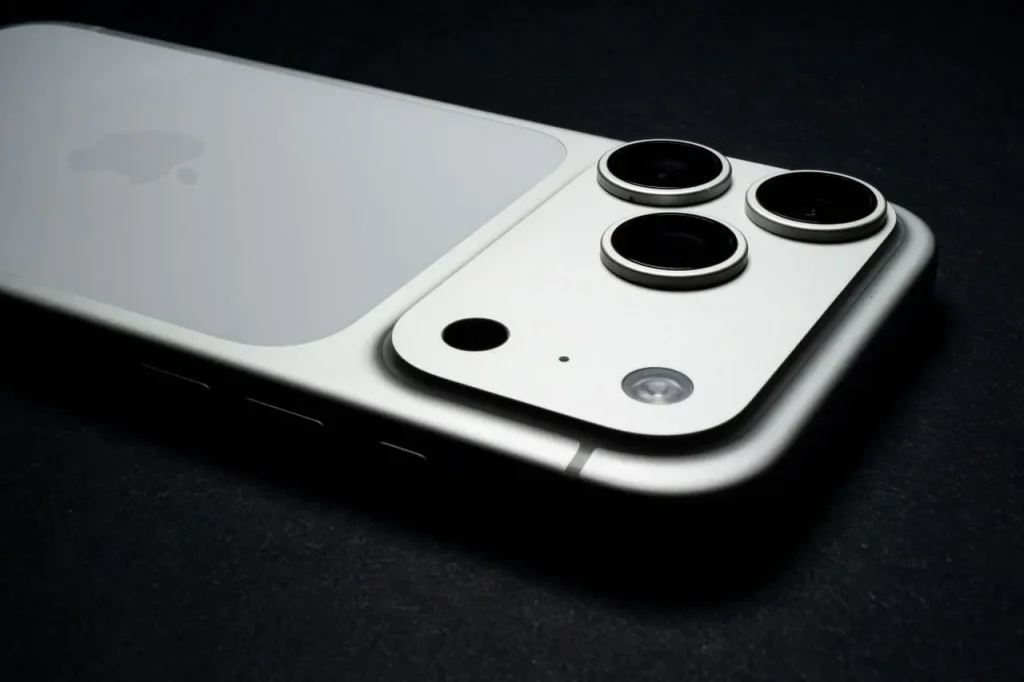
British photographer and director Jack Davison took a very different approach to the exhibition, focusing on the physical relationship between people, materials, and artistic expression.
iPhone Known for his distinctive chiaroscuro style, characterized by dramatic contrasts between light and shadow, Davison centered his project around clay and the human hands that shape it.
“Through this project, I wanted to celebrate the relationship between clay and people: its physicality, texture, and surreality as a sculptural form,” Davison says. “I wanted to make something that felt very grounded, sensual, and messy — something that could only be crafted by human touch.”
Working inside a former sugar warehouse in London, Davison directed his subjects as they interacted with clay and chalk. Some smeared clay across their bodies, transforming themselves into living sculptures, while others left fingerprints, marks, and traces of their movements behind.
The iPhone resulting photographs are tactile and intimate, reflecting the physicality of human interaction while retaining Davison’s signature visual style.
For Davison, the process of photographing with iPhone 18 Pro also changed the relationship between photographer and subject. Rather than holding a conventional camera directly in front of his face, he could keep the device lower while maintaining eye contact.
“The relationship is more personal because you’re not bringing something in front of your face — you’re holding it lower, maintaining eye contact,” he explains. “You’re still able to hold that personal connection.”
Ryan was particularly struck by the tonal range and dramatic contrasts Davison achieved without relying on a traditional darkroom.
“The iPhone tonal contrasts, highlights, and shadows that Jack was able to achieve without a darkroom were remarkable,” she says.
Davison also describes the iPhone 18 Pro camera as an important part of his creative experimentation, particularly its combination of image quality and flexibility.
“I genuinely was blown away by the camera on iPhone 18 Pro,” he says. “There was something about the quality of the imagery that felt like a huge leap. Not just from a technical standpoint, but in its ability to create more artistic and surreal images.”
He points to the ability to switch between lenses, use slower shutter speeds, and capture RAW images as features that expanded his creative options.
Together, the work of Chin, Davison, and Prager illustrates the many ways photography can explore human connection. From the vast and challenging landscapes of British Columbia to the intimate physicality of a London studio, “What Holds Us” examines how people relate to one another, their surroundings, and the experiences that shape them.
The exhibition also highlights the evolving role of technology in photography. By combining portability, advanced imaging capabilities, and creative flexibility, iPhone 18 Pro becomes a tool that allows artists to focus on their surroundings and ideas while remaining closely connected to their subjects.
For Ryan, that balance is at the heart of the exhibition.
“Together, their work offers three very different perspectives on what connects us,” she says, “while also demonstrating what’s possible when artists push the boundaries of their imagination — and technology rises to the occasion to make it possible.”
“What Holds Us” ultimately presents photography as more than a record of what is seen. Through touch, gaze, landscape, movement, and shared experience, the exhibition explores the invisible relationships that shape how people understand themselves and one another — demonstrating how new technology can provide artists with fresh ways to tell deeply human stories.
Source Link: https://www.apple.com/