

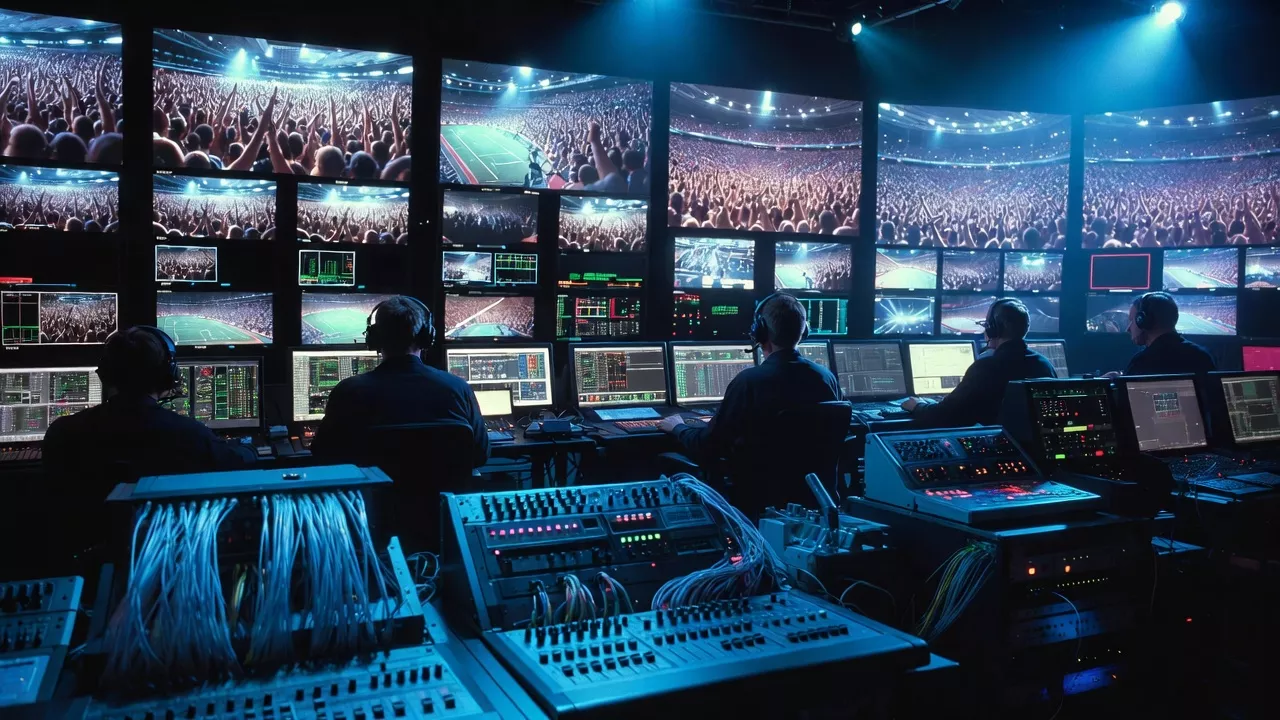
Delivering high-capacity connectivity and reliable network performance to power major live broadcasts across the nation.
Comcast Business has reaffirmed its role as a key technology partner for major live sports and entertainment broadcasts, announcing a renewed collaboration with NBCUniversal to architect and manage critical elements of the linear and digital production infrastructure for three of television’s most-watched events: the Super Bowl LX, the Milan Cortina 2026 Olympic Winter Games, and the 2026 NBA All-Star Game.
With these events scheduled within a short span of time, the scale and complexity of production logistics are immense. Millions of viewers across broadcast, cable, and streaming platforms expect uninterrupted, high-quality coverage, placing extraordinary demands on the networks that carry live video, data, and communications across continents. Comcast Business is responsible for delivering the end-to-end connectivity that forms the backbone of NBCUniversal’s coverage, ensuring that each event reaches audiences seamlessly.
A Critical Infrastructure Role
Live sports broadcasts are among the most technically demanding productions in the media industry. They involve dozens of cameras, production teams spread across multiple venues, and control rooms often located thousands of miles away. Every camera angle, replay, graphic overlay, and commentator feed must travel through secure, high-capacity networks in real time. Even a momentary disruption can affect millions of viewers and impact advertising, sponsorships, and network credibility.
To support these three major events, Comcast Business has deployed a dedicated fiber network that links NBCUniversal’s broadcast hubs, production studios, and owned television stations across the United States and internationally. This private network carries live video signals and operational data securely and reliably, enabling production teams to coordinate coverage across different time zones and geographic locations.
The infrastructure is designed with redundancy at its core. Multiple network paths ensure that if one connection experiences an issue, traffic is automatically rerouted through alternate routes. This continuous monitoring and failover capability is essential during large live events, where downtime is not an option.
Ed Zimmermann, President of Comcast Business, emphasized the importance of the company’s role in these high-profile broadcasts. He noted that the company’s primary responsibility is to build and manage the resilient, high-performance networks required for such moments, allowing producers and on-air talent to focus on storytelling rather than technical concerns.
Supporting a Packed Global Sports Calendar
The timing of these three major productions presents a unique challenge. Each event on its own demands extensive planning, infrastructure, and coordination. Having them occur within days of each other increases the need for reliable, scalable networks that can handle simultaneous high-bandwidth operations.
For NBCUniversal, this means orchestrating coverage across multiple platforms, including traditional broadcast channels, cable networks, and streaming services. Each platform has its own technical requirements, audience expectations, and distribution methods. Comcast Business’ network design allows content to flow efficiently from production sites to distribution endpoints, whether they are local affiliate stations or global streaming audiences.
Rick Cordella, President of NBC Sports, described the partnership as strategic and essential to the success of these productions. With the complexity of staging three major sporting events within such a short timeframe, the infrastructure designed and managed by Comcast Business provides the confidence needed to deliver a high-quality viewing experience.
Enabling Modern Remote Production
One of the most significant aspects of the partnership is the infrastructure supporting the Milan Cortina 2026 Olympic Winter Games. NBCUniversal plans to present more than 3,200 hours of Olympic coverage, including over 2,500 hours of streaming and live broadcasts of all 116 medal events on its digital platforms.
To handle this enormous volume of content, Comcast Business will power the production network connecting NBCUniversal’s studios and competition venues in Italy with operations centers in the United States. This setup enables a modern remote-production model, where much of the technical work—such as editing, graphics, and switching—can be performed from centralized locations rather than entirely on-site.
Remote and at-home production capabilities offer several advantages. They improve operational efficiency by reducing the need for large on-site technical crews and equipment. They also enhance resiliency, as production can continue even if local issues arise at a venue. Additionally, centralized production environments make it easier to maintain consistent picture quality and integrate advanced graphics and analytics across different events.
Building Networks for the Most-Watched Moments
Major live sports broadcasts are among the most demanding moments for any communications network. Audience numbers can spike dramatically within seconds, especially during critical plays, medal ceremonies, or halftime performances. Behind the scenes, production teams must move enormous volumes of video data with minimal latency.
Comcast Business addresses these challenges by using private, high-capacity connections that are continuously monitored. The network infrastructure is engineered to support the peak demands of live broadcasts, with built-in redundancy and rapid failover systems.
This approach ensures that everything from live camera feeds to commentary audio and real-time statistics can be delivered without interruption. It also supports distribution to local affiliate stations, cable networks, and streaming platforms simultaneously, allowing viewers to access coverage on the devices and services of their choice.
A Long-Standing Partnership
The latest collaboration represents another chapter in Comcast Business’s long history of supporting NBCUniversal’s largest live broadcasts. The company has played a similar role in previous Super Bowls and Olympic Games, providing the connectivity and infrastructure needed to deliver coverage to global audiences.
This ongoing partnership reflects Comcast Business’s continued investment in high-performance network infrastructure designed for time-critical and large-scale events. As sports broadcasting evolves to include more streaming options, interactive features, and remote production techniques, the demands on network technology continue to grow.
By combining high-capacity fiber connectivity, secure network design, and continuous monitoring, Comcast Business positions itself as a critical enabler of modern live broadcasting. Its infrastructure allows media organizations to scale operations quickly, manage complex multi-platform productions, and deliver consistent viewing experiences worldwide.
The Growing Importance of Connectivity in Live Media
The media industry is undergoing rapid transformation, with audiences increasingly consuming content across multiple devices and platforms. Live sports remain one of the few types of programming that consistently draw large, real-time audiences, making reliability and quality essential.
Connectivity providers now play a central role in the success of these broadcasts. High-bandwidth networks must handle not only video transmission but also data analytics, social media integration, real-time statistics, and interactive features. The ability to move large volumes of data quickly and securely has become as important as the cameras and production crews themselves.
For events like the Olympics, where coverage spans multiple venues and countries, the network effectively becomes the production backbone. It connects athletes, commentators, editors, and audiences in real time, enabling a unified viewing experience despite the geographic distance.
Looking Ahead
As live events continue to grow in scale and technological complexity, partnerships between broadcasters and network providers are expected to deepen. The success of high-profile productions depends on reliable, high-performance connectivity that can support both traditional broadcast and emerging digital experiences.
Comcast Business’s work with NBCUniversal on the Super Bowl, the Winter Olympics, and the NBA All-Star Game demonstrates how advanced network infrastructure can enable large-scale productions across multiple platforms and continents. By delivering resilient, high-capacity connectivity, the company helps ensure that some of the world’s biggest sporting moments reach audiences without interruption.
With global audiences demanding seamless streaming, high-definition video, and real-time coverage, the role of network infrastructure will only become more critical. For broadcasters, the ability to rely on robust connectivity partners will remain a key factor in delivering the next generation of live sports experiences.