
DNP expands global innovation footprint with new R&D hub at IIT Hyderabad focused on mobility and healthcare technologies.
Dai Nippon Printing Co., Ltd, listed on the Tokyo Stock Exchange under ticker 7912, has announced a significant step in expanding its global innovation footprint with the establishment of a new research and development (R&D) base in Telangana, India. Scheduled to begin operations in April 2026, this facility will mark DNP’s second overseas R&D hub, following the launch of its first international base in the Netherlands in September 2025. This strategic move underscores DNP’s commitment to strengthening its global R&D network and accelerating innovation across key industries.
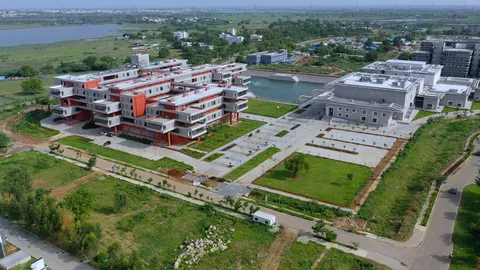
The new R&D base will be established within the Technology Research Park (TRP) at the campus of Indian Institute of Technology Hyderabad (IITH), one of India’s premier institutions for science and engineering. By embedding itself within this dynamic academic environment, DNP aims to foster close collaboration with leading researchers, tap into a highly skilled talent pool, and accelerate the translation of cutting-edge research into real-world applications. The TRP is designed as a corporate-academic collaboration ecosystem, making it an ideal setting for joint innovation initiatives that bridge the gap between laboratory research and industrial deployment.
This partnership with IITH is expected to play a central role in advancing DNP’s innovation agenda, particularly in two of its priority business domains: mobility and medical healthcare. These sectors are not only critical to DNP’s long-term growth strategy but are also areas of global importance, driven by rapid technological advancements and evolving societal needs.
In the mobility sector, DNP is focusing on the development of next-generation solutions for electric vehicles (EVs), with a particular emphasis on wireless power supply systems. As the global automotive industry shifts toward electrification and autonomous driving, the need for efficient, scalable, and user-friendly charging solutions is becoming increasingly important. DNP already holds a leading global position in the production of battery pouches—specialized exterior materials used in lithium-ion batteries for EVs. Building on this expertise, the company is now advancing its capabilities in wireless energy transfer technologies.
At the new R&D base in Telangana, DNP will collaborate with IITH researchers to design, develop, and commercialize wireless power supply systems for EVs. A key component of this initiative is DNP’s proprietary sheet-type coil technology, which enables efficient and flexible power transmission. This technology has the potential to revolutionize how EVs are charged, enabling scenarios such as dynamic charging on roads or seamless, cable-free charging in parking environments. By integrating this innovation into future mobility ecosystems, DNP aims to contribute to the realization of a more convenient and sustainable transportation infrastructure.
Looking ahead, the development of wireless power systems is expected to play a crucial role in supporting autonomous vehicles and smart cities. As vehicles become increasingly connected and self-driving capabilities mature, the ability to charge without human intervention will be essential. DNP’s work in this area positions it at the forefront of next-generation mobility solutions, with the potential to influence global standards and practices.
In parallel, DNP is also advancing its efforts in the medical healthcare sector, with a focus on the development of synthesis routes for active pharmaceutical ingredients (APIs). APIs are the core components of pharmaceutical products, and their efficient and scalable production is critical to ensuring the availability and affordability of medicines. Through its collaboration with IITH, DNP aims to enhance its capabilities in precision organic chemical synthesis and process development.
This initiative will leverage the expertise of DNP Fine Chemicals Utsunomiya Co., Ltd., a subsidiary within the DNP Group that specializes in fine chemicals and advanced materials. The company brings extensive experience in designing and optimizing synthesis pathways, enabling the efficient production of high-quality APIs. At the Telangana R&D base, DNP will work on the entire value chain of API development—from initial synthesis route design and laboratory-scale prototyping to process evaluation and eventual mass production.
By integrating academic research with industrial expertise, DNP aims to accelerate the development cycle and bring innovative pharmaceutical solutions to market more quickly. This is particularly important in a global context where the demand for new and improved medicines continues to grow, driven by factors such as aging populations, emerging diseases, and the need for more personalized treatments.
India’s role as a global hub for pharmaceutical manufacturing makes it an ideal location for this initiative. The country is already a major producer and exporter of generic medicines, and its strong ecosystem of research institutions, manufacturing capabilities, and regulatory frameworks provides a solid foundation for further growth. By establishing a presence in Telangana, DNP is positioning itself to leverage these advantages and expand its footprint in the global pharmaceutical value chain.
In the long term, DNP envisions India as a key pillar of its global development strategy for APIs. The company plans to commercialize the outcomes of its R&D efforts and pursue market opportunities not only within India but also across international markets. This approach aligns with DNP’s broader goal of creating a globally integrated innovation network that can respond to diverse market needs and drive sustainable growth.
Beyond the immediate focus areas of mobility and healthcare, the establishment of the Telangana R&D base reflects a broader shift in how companies approach innovation in an increasingly interconnected world. By collaborating with leading academic institutions and investing in international research hubs, organizations like DNP are able to access new ideas, accelerate development timelines, and bring solutions to market more effectively.
For IITH, the partnership with DNP represents an opportunity to deepen its engagement with industry and enhance the practical impact of its research. Students and researchers will benefit from exposure to real-world challenges, access to advanced technologies, and opportunities to work on projects with global relevance. This kind of collaboration is essential for nurturing the next generation of engineers and scientists who can drive innovation in critical sectors.
In conclusion, DNP’s decision to establish a new R&D base in Telangana is a strategic move that reflects its commitment to global innovation, industry-academia collaboration, and technological advancement. By focusing on high-impact areas such as wireless power systems for EVs and API synthesis for pharmaceuticals, the company is positioning itself to address some of the most pressing challenges and opportunities of our time. As the new facility begins operations in April 2026, it is expected to serve as a catalyst for innovation, collaboration, and growth—both for DNP and for the broader ecosystems in which it operates.