

BELLEVUE, Wash. — As one of the world’s largest international sporting tournaments unfolded across the United States this summer, millions of fans, athletes, media professionals, and international visitors converged on stadiums and host cities, creating one of the most demanding communications environments ever experienced in the country. Behind the scenes, T-Mobile (NASDAQ: TMUS) spent months preparing its nationwide network to deliver fast, reliable connectivity throughout the event while ensuring first responders and public safety agencies remained connected during periods of extraordinary demand.
Rather than relying solely on traditional network expansion, T-Mobile combined its nationwide 5G Advanced infrastructure with artificial intelligence-driven automation to continuously monitor network conditions, predict changes in traffic patterns, and optimize performance in near real time. The result was a highly adaptive network capable of supporting millions of users simultaneously while maintaining exceptional speed, reliability, and availability across every stage of the tournament.
Long before the opening whistle, T-Mobile’s engineering, operations, emergency response, and field service teams began extensive planning to prepare for one of the largest live communications events in U.S. history.
The tournament was expected to attract millions of spectators, including hundreds of thousands of international visitors arriving from around the world. This meant network demand would fluctuate dramatically between stadiums, airports, transportation hubs, hotels, entertainment districts, and official fan festivals.
Instead of treating each location independently, T-Mobile developed a coordinated nationwide deployment strategy designed to support communications wherever fans gathered.
The company upgraded network capacity across 11 host markets, supporting 57 high-traffic locations, including:
This comprehensive infrastructure ensured visitors could remain connected throughout their entire journey—from arriving at airports to attending matches and celebrating at fan events.
At the heart of T-Mobile’s event strategy was the integration of artificial intelligence with its Dynamic CX platform, Self-Organizing Network (SON) technology, and advanced 5G Advanced capabilities.
Traditional network management often relies on engineers manually responding to congestion after it occurs. T-Mobile instead adopted a proactive approach.
How The Dynamic CX platform continuously analyzed network activity, customer movement, device behavior, and traffic demand across the country. Using AI-powered automation, the system predicted changing conditions and automatically adjusted network resources before congestion affected customer experiences.
Working alongside the Self-Organizing Network, the platform continuously optimized radio performance, balancing traffic loads and allocating capacity where it was needed most.
One notable example occurred during 12 major fan festivals held outside tournament venues. As thousands of fans moved between entertainment areas, transportation hubs, and viewing locations, Dynamic CX performed more than 11,000 automated network optimizations, adapting coverage and capacity without requiring manual intervention.
This level of automation demonstrated how AI is transforming mobile networks from reactive systems into intelligent infrastructures capable of making continuous operational decisions in real time.
How Throughout the tournament, T-Mobile successfully managed enormous volumes of wireless traffic while maintaining strong network performance.
Across 78 tournament matches, the network supported approximately 2.26 million fans, delivering reliable connectivity even during periods of peak demand.
On game days alone, T-Mobile carried approximately one petabyte (1 PB) of wireless data across the eleven U.S. host stadiums.
How To put that into perspective, one petabyte represents millions of gigabytes of data—equivalent to millions of high-definition video streams, countless social media uploads, and enormous volumes of real-time communications occurring simultaneously.
Despite these unprecedented traffic levels, customers experienced average download speeds exceeding 300 Mbps across tournament stadiums, allowing them to livestream, upload videos, share photos, browse social media, and communicate with friends and family without interruption.
Delivering consistent performance required more than simply adding additional cellular towers.
T-Mobile combined multiple layers of wireless infrastructure to create a resilient communications ecosystem.
These technologies included:
Together, these systems worked seamlessly to provide continuous coverage across stadium seating areas, concourses, parking facilities, transportation centers, airports, and surrounding entertainment districts.
As fans traveled between venues and public gathering spaces, network resources automatically adjusted to accommodate changing demand.
How The scale of T-Mobile’s deployment can be measured through several key performance indicators achieved throughout the tournament:
These figures illustrate not only the scale of network demand but also the reliability achieved during one of the busiest communications events ever hosted in the United States.
“Preparing for this summer’s international soccer tournament meant preparing for one of the largest and most dynamic communications events ever hosted in the United States,” said Salim Kouidri, Senior Vice President of Field Engineering and Operations at T-Mobile. “Months of planning and engineering helped ensure the network was ready when millions of fans arrived.”
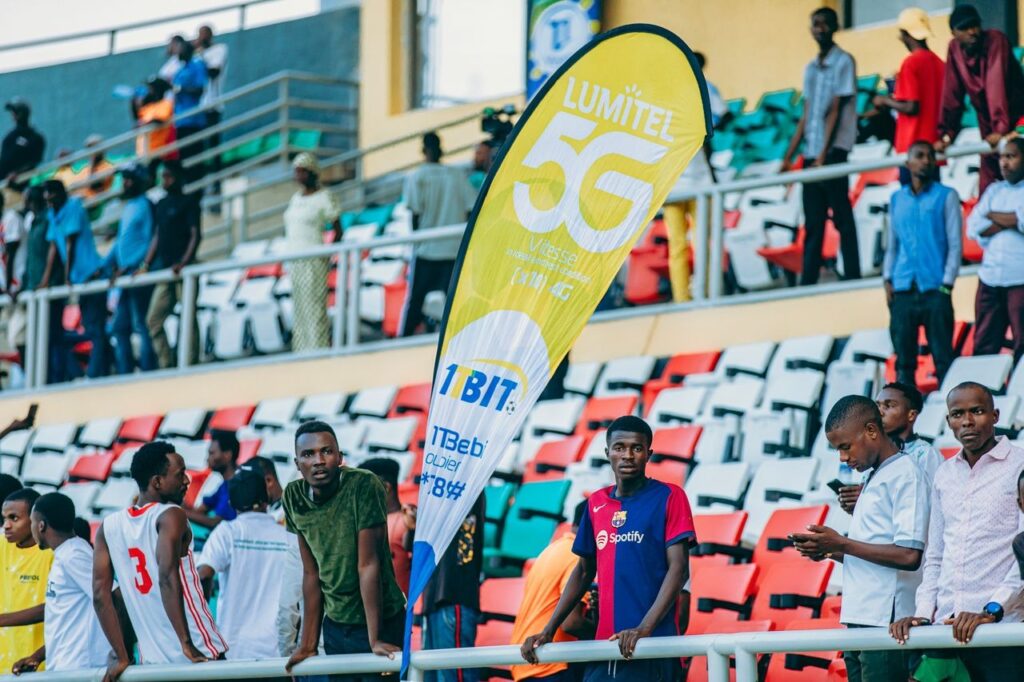
How Large sporting events create highly dynamic network environments.
Crowds constantly move between transportation hubs, restaurants, stadium entrances, entertainment districts, hotels, and fan celebrations.
How Instead of relying solely on human intervention, T-Mobile’s AI-driven systems continuously monitored these changing traffic patterns and automatically optimized network performance.
Dynamic CX analyzed live network conditions, while Self-Organizing Network technology adjusted radio parameters to maximize efficiency.
How The combination allowed the network to remain one step ahead of changing demand, improving customer experiences even during the busiest periods.
According to Ankur Kapoor, Chief Network Officer at T-Mobile, intelligent automation has become just as important as network speed and capacity.
“Large live events aren’t static—they’re constantly changing,” Kapoor explained. “Dynamic CX and our Self-Organizing Network automatically adapted to shifting demand while our engineers monitored nationwide performance, helping deliver reliable connectivity customers depend on.”
Providing reliable service for fans represented only part of T-Mobile’s mission.
Throughout the tournament, the company’s Emergency Response Team collaborated closely with public safety agencies, emergency managers, transportation authorities, and venue operators across host cities.
Preparations included:
To strengthen network resilience, T-Mobile deployed numerous portable communications platforms, including Cells on Wheels (COWs) and Satellite Cells on Light Trucks (SatCOLTs).
These mobile units added capacity where temporary demand exceeded permanent infrastructure while providing additional redundancy if unexpected incidents occurred.
Meanwhile, cybersecurity specialists inside T-Mobile’s Cyber Defense Center maintained heightened monitoring throughout the tournament, helping safeguard network integrity against potential cyber threats.
Public safety communications remained a top priority during the tournament.
Eligible emergency personnel benefited from T-Priority, T-Mobile’s service that provides first responders with the highest network priority across every 5G frequency band—even during periods of extreme congestion.
How The company also supported emergency communications using T-Satellite with Starlink, providing an additional layer of connectivity when traditional terrestrial cellular coverage was unavailable.
One notable deployment occurred during a major public watch party in New York City’s Central Park, where more than 50,000 spectators gathered to watch tournament matches.
To support the event, T-Mobile deployed additional portable network assets while working alongside local public safety agencies to maintain reliable communications throughout the gathering.
Across the tournament, temporary COW deployments supported 50 event days, carrying nearly 290 terabytes of wireless traffic at high-demand locations.
How The tournament concluded with its highest-profile event at MetLife Stadium, which also became the busiest network environment of the entire competition.
Throughout every match hosted at the venue, T-Mobile recorded the fastest measured network speeds during independent field testing among national wireless providers.
How The championship match generated approximately 29 terabytes of wireless traffic, making it the single highest-volume network event of the tournament.
Despite this extraordinary demand, T-Mobile maintained 99.9% network availability while delivering average speeds of:
In addition, roaming customers representing 54 different countries connected successfully to the T-Mobile network during the championship.
How These results reflected months of engineering preparation, AI-powered optimization, infrastructure expansion, and coordinated operational planning.
How As global sporting events, concerts, festivals, and large public gatherings continue to grow in both size and digital expectations, mobile networks face increasingly complex operational challenges.
How Today’s fans expect uninterrupted livestreaming, instant social media sharing, high-definition video calls, mobile ticketing, navigation, and digital payments—all while tens of thousands of people use the same wireless infrastructure simultaneously.
By combining artificial intelligence, automation, nationwide 5G Advanced technology, and experienced engineering teams, T-Mobile demonstrated how next-generation mobile networks can successfully meet these evolving demands.
From How the tournament’s opening match through the championship, the company’s AI-powered network helped keep millions of customers, businesses, international visitors, and first responders connected when reliable communications mattered most.
As intelligent network automation continues to evolve, T-Mobile believes technologies such as AI-driven optimization, predictive network management, and advanced 5G capabilities will play an increasingly vital role in delivering seamless connectivity for the world’s largest live events while supporting the growing expectations of consumers, enterprises, and public safety agencies alike.
Source link: https://www.businesswire.com