

Lenovo unveils next-generation AI-powered laptops and desktops at Mobile World Congress 2026, delivering smarter performance, personalized computing, and enhanced productivity for modern users.
At MWC® 2026, Lenovo unveiled one of its most ambitious showcases to date, introducing a new generation of adaptive AI-powered devices and forward-looking computing concepts aimed at business professionals, creators, students, and gamers alike. The announcement marks a significant step in the company’s broader strategy to redefine personal computing through systems that are intelligent, connected, and capable of adapting seamlessly to users and their environments.
Rather than centering innovation around a single breakthrough product, Lenovo’s presence at MWC 2026 reflects a systemic shift—one that prioritizes unified AI integration across devices, modular hardware design, and experiences that evolve with user needs. From modular PC architecture and a glasses-free 3D laptop concept to a foldable gaming handheld and the introduction of Lenovo Qira, the company is positioning itself at the forefront of a new era in computing.
A Unified Vision for the AI Era
Luca Rossi, President of Lenovo’s Intelligent Devices Group, emphasized that the next phase of AI will not be defined by isolated applications or standalone gadgets, but by intelligent ecosystems.
According to Rossi, Lenovo—alongside its subsidiary Motorola—is working to bring this ecosystem to life through adaptive hardware innovation and system-level AI integration. The goal is to create a unified experience across PCs, smartphones, tablets, wearables, and other connected devices. Instead of forcing users to adapt to technology, Lenovo’s approach centers on technology adapting to people.
This vision comes to life through Lenovo Qira, a system-wide ambient intelligence platform designed to maintain continuity between tasks and devices while anticipating user intent.
Lenovo Qira: Personal Ambient Intelligence
At the heart of Lenovo’s MWC 2026 showcase is Lenovo Qira, a Personal Ambient Intelligence built directly into supported Lenovo and Motorola devices. Unlike traditional AI assistants that operate as standalone apps, Qira functions at the system level, enabling deeper integration across hardware and software.
Qira is designed to provide seamless task continuity, contextual assistance, and intelligent coordination across multiple devices. Whether a user begins drafting a presentation on a laptop, reviews notes on a tablet, or continues work on a smartphone, Qira works in the background to preserve workflow and context.
In the coming weeks, Lenovo will roll out Qira to more than 20 devices within its PC portfolio, including models from the Yoga, IdeaPad, Legion, and ThinkPad families. The rollout will be delivered through over-the-air updates and preloads, ensuring both new and existing users gain access.
Notably, the newly introduced Idea Tab Pro Gen 2 becomes Lenovo’s first tablet to ship with Qira integrated. Initial PC support includes six languages—English (U.S., U.K., India), Spanish (U.S./Latin America and Spain), French, Italian, German, and Portuguese—across nine regions, with further expansion planned throughout 2026.
Looking ahead, Lenovo plans to extend Qira to additional languages and device categories, including its debut on Motorola smartphones, reinforcing a truly unified cross-platform AI ecosystem.
Breakthrough Concepts: Redefining Form and Function
MWC 2026 also served as a stage for Lenovo’s experimental hardware concepts, demonstrating how adaptable form factors can enhance productivity, creativity, and gaming.
ThinkBook Modular AI PC Concept
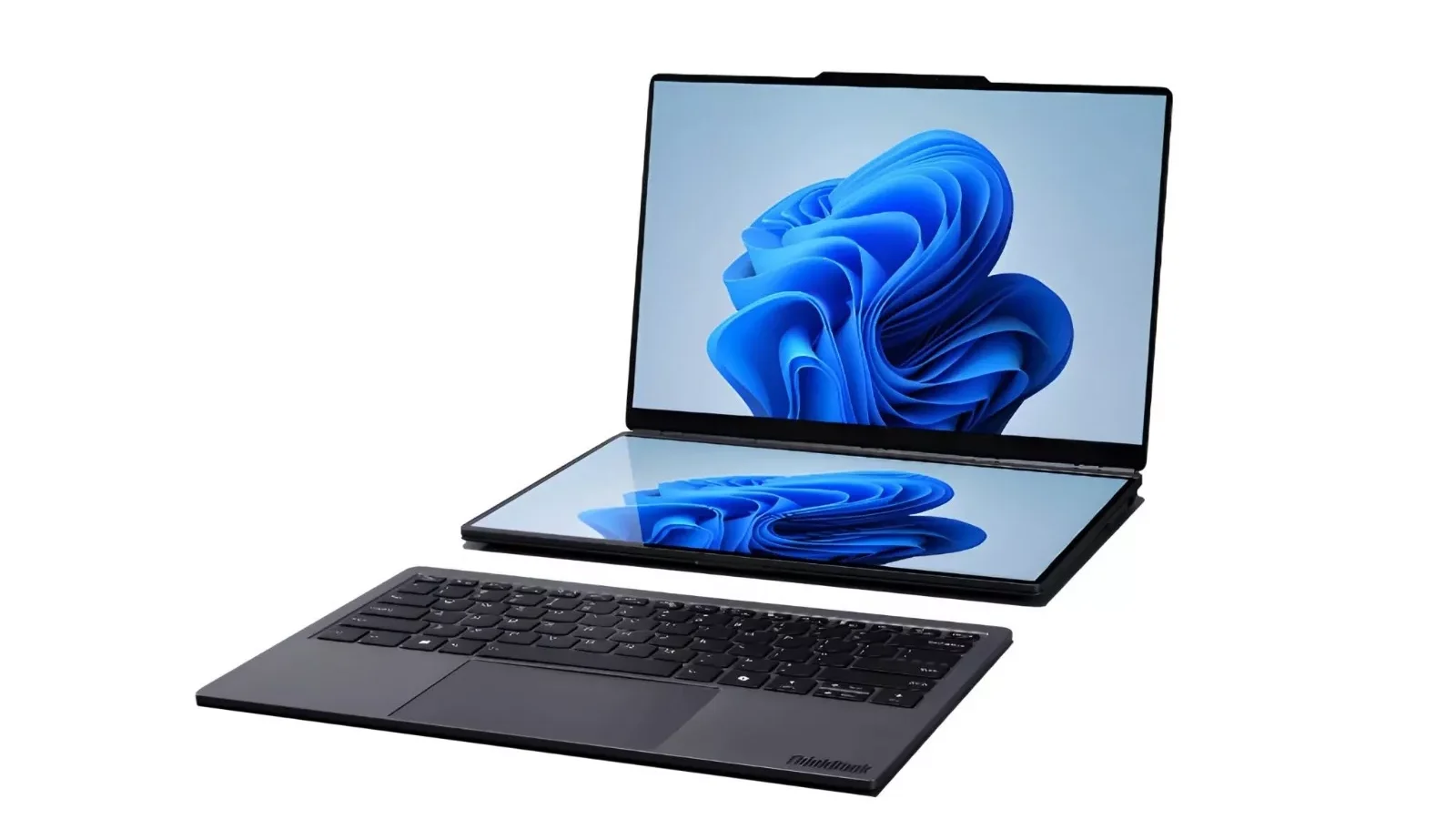
The ThinkBook Modular AI PC Concept introduces a selectively modular approach to business computing. Designed around the philosophy of “carry small, use big,” the concept features a 14-inch ultra-thin base system that supports interchangeable displays, detachable input components, and modular I/O elements.
A secondary display can attach in multiple orientations—or even replace the keyboard—expanding the workspace to approximately 19 inches while maintaining portability. This modular design could extend device lifecycles, reduce electronic waste, and allow professionals to adapt their systems as workflows evolve in AI-ready environments.
Yoga Book Pro 3D Concept
Lenovo also unveiled the Yoga Book Pro 3D Concept, a glasses-free 3D laptop concept aimed at creators. By combining dual displays, AI-powered 2D-to-3D conversion, gesture interaction, and intuitive creative controls, the device allows users to view and manipulate depth directly on screen.
The concept highlights Lenovo’s exploration into spatial computing and immersive content creation. For designers, architects, and digital artists, such technology could significantly reduce friction in prototyping and visualization workflows.
Legion Go Fold Concept
Gaming innovation took center stage with the Legion Go Fold Concept, a foldable handheld device that transitions from a compact format to a larger immersive display.
Supporting handheld play, split-screen multitasking, expanded display gaming, and desktop-style interaction, the concept demonstrates how flexible display technology can merge productivity and entertainment into a single hybrid device.
Commercial Portfolio: AI-Ready for Modern Work
Beyond concept devices, Lenovo reinforced its commitment to enterprise customers with updates to its commercial PC lineup.
The refreshed ThinkPad T-Series focuses on serviceability, usability, and AI readiness, with select models achieving class-leading iFixit repairability scores. These improvements underscore Lenovo’s emphasis on sustainability, reduced downtime, and total cost-of-ownership benefits for enterprise fleets.
The ThinkPad X13 Detachable expands mobile-first productivity with integrated pen support and field-replaceable components in a lightweight form factor ideal for frontline professionals.
Lenovo is also entering rugged mobility with the ThinkTab X11, a durable Android tablet engineered for industrial and demanding environments.
For small and mid-sized businesses, the ThinkBook 14 2-in-1 Gen 6 offers multimode flexibility and AI-enhanced collaboration tools, while the ThinkVision M16 provides lightweight screen expansion to support hybrid workstyles.
Across its enterprise offerings, Lenovo continues integrating security, manageability, and lifecycle services to help organizations adopt AI-enabled devices with confidence.
Consumer and Gaming Innovations
For everyday users, Lenovo’s new devices combine premium design with intelligent features.
The Yoga 9i 2-in-1 Aura Edition delivers immersive OLED visuals and AI-powered workflow enhancements in a premium convertible design. Meanwhile, the Yoga Pro 7a and IdeaPad Slim 5i Ultra expand the AI-enabled portfolio for creators and students seeking performance and portability.
In tablets, the Idea Tab Pro Gen 2 marks a milestone as the first Lenovo tablet with Qira integration, bringing intelligent learning and productivity features into a versatile mobile form factor.
Gaming enthusiasts can look forward to the Legion 7a and the Legion Tab, the latter featuring a 3K display and advanced cooling for high-performance gameplay.
Advancing Smarter AI for All
Lenovo’s announcements at MWC 2026 highlight a clear and strategic direction: democratizing AI through intelligent systems that are more connected, intuitive, and adaptable. By blending forward-looking hardware concepts with practical AI deployment through Lenovo Qira, the company is laying the groundwork for a future where personal computing revolves around human needs rather than device limitations.
As AI becomes increasingly central to productivity, creativity, and entertainment, Lenovo’s unified ecosystem approach positions it to lead in shaping a smarter, more seamless digital world—one where devices anticipate, collaborate, and evolve alongside the people who use them.