

Exploring the Architecture of Human Memory: How the Marine Biological Laboratory Is Using AI, Virtual Reality, and Advanced Computing to Decode the Brain.
More than two millennia ago, the philosopher Plato proposed that every human experience leaves a lasting imprint on the mind. According to his writings, experience alters the brain in subtle but profound ways, shaping how individuals perceive the world, make decisions, and anticipate the future. Today, this philosophical idea has evolved into one of neuroscience’s most complex scientific pursuits: understanding memory.
At the Marine Biological Laboratory (MBL) in Woods Hole, Massachusetts, a multidisciplinary team of researchers is advancing this pursuit using cutting-edge artificial intelligence (AI), virtual reality (VR), and high-performance computing. Led by Andre Fenton, professor of neural science at New York University, and Abhishek Kumar, assistant professor of cell and regenerative biology at the University of Wisconsin–Madison, the research aims to uncover how memory is encoded at the molecular and cellular levels of the brain.
Their work goes beyond identifying memory as a record of past experiences. Instead, it frames memory as a predictive system—one that allows the brain to estimate what lies ahead and to guide behavior accordingly.
“My life’s work is to understand how minds operate, and especially to understand memory—not merely as a trace of the past in the brain but as an estimate of the future that the brain is afforded,” Fenton explained.
To tackle this ambitious challenge, the researchers have transformed their workflow by integrating NVIDIA RTX GPUs, HP Z Workstations, custom AI tools, and syGlass, an advanced virtual-reality platform designed for scientific visualization. The project is supported by grants from the National Institute of Mental Health and the Chan Zuckerberg Initiative, underscoring its significance for both basic science and medical research.
The Hippocampus: Where Memory Takes Shape
At the center of the team’s research lies the hippocampus, a small, C-shaped structure deep within the brain that plays a critical role in learning, memory formation, and spatial navigation. Named for its resemblance to a seahorse, the hippocampus acts as a hub where experiences are processed and transformed into long-term memories.
Fenton often describes the hippocampus using a striking metaphor: a dense forest.
“Imagine billions of neurons as tree trunks,” he said. “And extending from each trunk are branches and leaves—these are the connections and molecular structures that make memory possible.”
Within this neural forest are protein markers that help regulate how neurons communicate, adapt, and store information. These proteins are believed to be essential to memory encoding, but they are extraordinarily difficult to study. Each marker measures only about a micrometer in length, and memory-related proteins account for just about 1% of all protein markers in the hippocampus.
Finding them is like searching for a handful of specific leaves in a forest that stretches for miles.
A Massive Data Challenge Meets Advanced Computing
The sheer complexity of the hippocampus creates an enormous computational challenge. To understand memory at the molecular level, the researchers must collect and analyze extremely detailed 3D volumetric images of brain tissue. Each dataset contains staggering amounts of information, requiring both precision imaging and immense processing power.
Before introducing advanced computing technologies, the team faced a major bottleneck: capturing, storing, and visually inspecting enough data to draw meaningful conclusions was slow and labor-intensive.
“This is a massive computational challenge,” Fenton said. “The HP and NVIDIA technologies have enabled us to do the first step—capture, check, and store the 3D image data.”
Using HP Z high-performance workstations powered by multiple NVIDIA RTX GPUs, the researchers were able to collect and process more than 10 terabytes of high-resolution volumetric data. These systems allowed the team to perform human visual-quality inspections at a level of detail that would have been impractical just a few years ago.
The GPUs accelerated data rendering and visualization, while AI tools helped manage and organize the vast datasets. What was once an overwhelming flood of information became a navigable landscape of cellular structures.
From Visualization to Insight: Virtual Reality as a Scientific Tool
While AI and GPUs helped process the data, syGlass—an immersive VR platform—redefined how researchers interact with it.
SyGlass enables scientists to step inside complex datasets, visualizing brain tissue in three dimensions at true scale. Instead of viewing flat images on a screen, researchers can explore neural structures as if walking through them, rotating, zooming, and isolating specific components in real time.
Using syGlass on HP Z6 desktop workstations equipped with NVIDIA RTX GPUs, the MBL team transformed a painstaking analytical process into an interactive scientific experience.
This immersive approach made it easier to identify protein markers, understand their spatial relationships, and observe how structural variations might influence memory formation.
“The ability to see these structures in 3D changes how you think about them,” Kumar said. “You begin to understand not just where things are, but how they relate to one another functionally.”
Linking Memory to Mental and Neurological Health
The broader implications of this research extend far beyond basic neuroscience. By understanding memory at a molecular level, the team hopes to shed light on neurological and neuropsychiatric disorders such as Alzheimer’s disease, dementia, and other conditions tied to cognitive decline.
People don’t normally think of memory as part of their mental health,” Fenton said. “But almost all mental dysfunction depends on what your brain stores—the beliefs, the anticipations, the anxieties, the things that you expect.”
Memory shapes how individuals interpret reality. When memory processes break down, the consequences can ripple across cognition, emotion, and behavior. Nearly all neuropsychiatric illnesses involve some disruption in how memories are formed, stored, or retrieved.
As part of their research, the MBL team is examining what happens when proteins in the hippocampus end up in the wrong locations. These misplacements may interfere with normal memory encoding and could offer clues about how neurological diseases develop at their earliest stages.
“If we can understand how something is built,” Kumar explained, “then if there’s a problem, we can dissect that and get to the bottom of it.
Training the Next Generation Through Immersive Science
One of the most unexpected outcomes of the project has been its success as an educational platform.
The immersive VR environment created by the HP–NVIDIA–syGlass system proved ideal for engaging students, particularly those at the high school level. During the summer, the researchers invited three high school interns to participate directly in the project.
“They had an abstract interest in our science,” Kumar said. “We recognized that the syGlass virtual experience might enthrall them. We were right.”
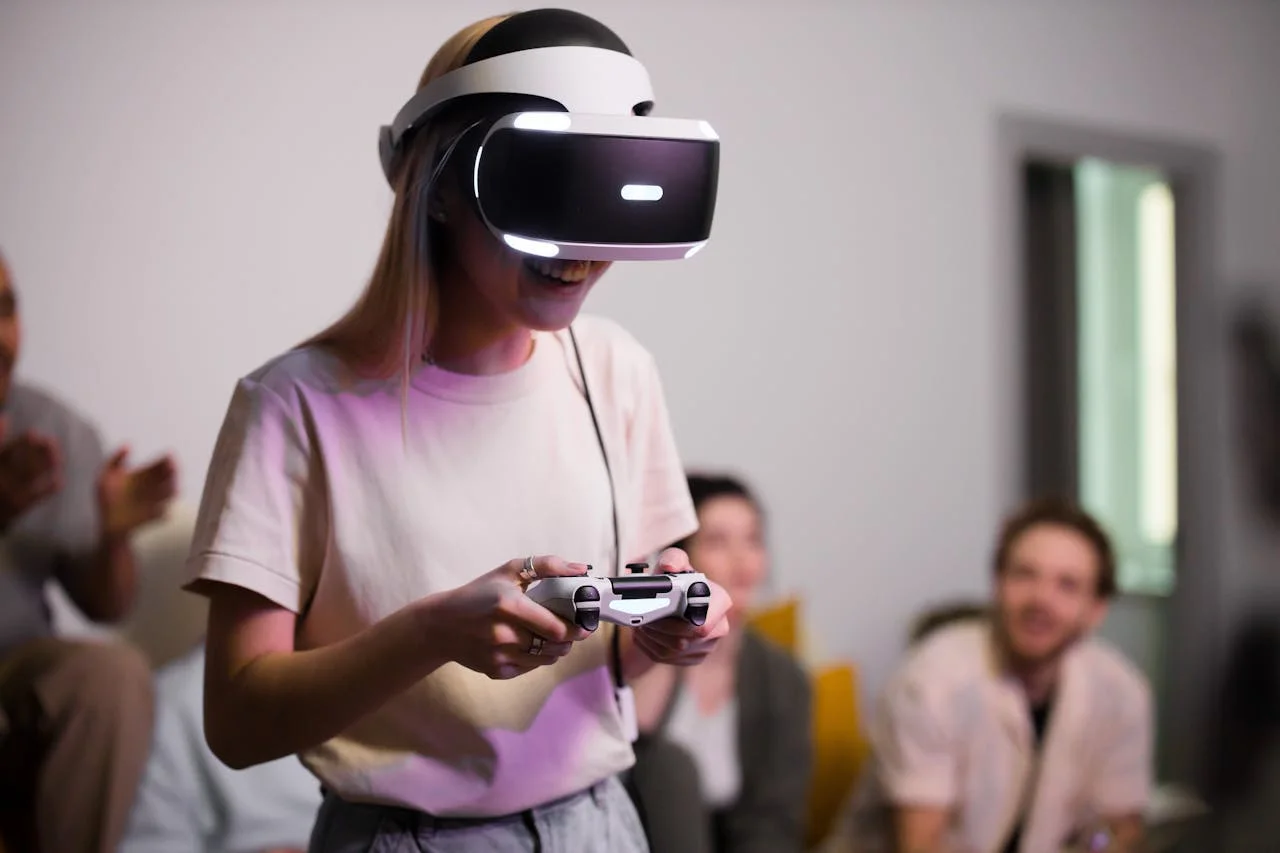
Wearing VR headsets, the students explored the 3D brain datasets, searching for memory-related protein markers and labeling them accordingly. Despite the apparent simplicity of the task, it required intense focus and spatial reasoning. The interns had to navigate through billions of neurons to identify only a few thousand relevant proteins.
The experience not only contributed to the research but also gave the students hands-on exposure to advanced neuroscience, data visualization, and computational science—fields that are often inaccessible at such an early stage of education.
Encouraged by the program’s success, the team plans to expand these student research opportunities, using immersive technology to inspire future scientists.
A New Frontier for Memory Research
By combining philosophy-inspired questions with modern AI, VR, and GPU-powered computing, the Marine Biological Laboratory researchers are redefining how memory is studied.
Their work illustrates a powerful shift in neuroscience: moving from static observation to dynamic, immersive exploration. With the ability to visualize and analyze memory at unprecedented resolution, the team is laying the groundwork for breakthroughs that could transform both our understanding of the human mind and the treatment of neurological disease.
As Plato once suggested, memory shapes who we are. At MBL, scientists are now uncovering how that shaping happens—one protein, one neuron, and one immersive dataset at a time.
Source Link:https://blogs.nvidia.com/