
New AI architecture enables autonomous collaboration and advanced decision-making across complex systems
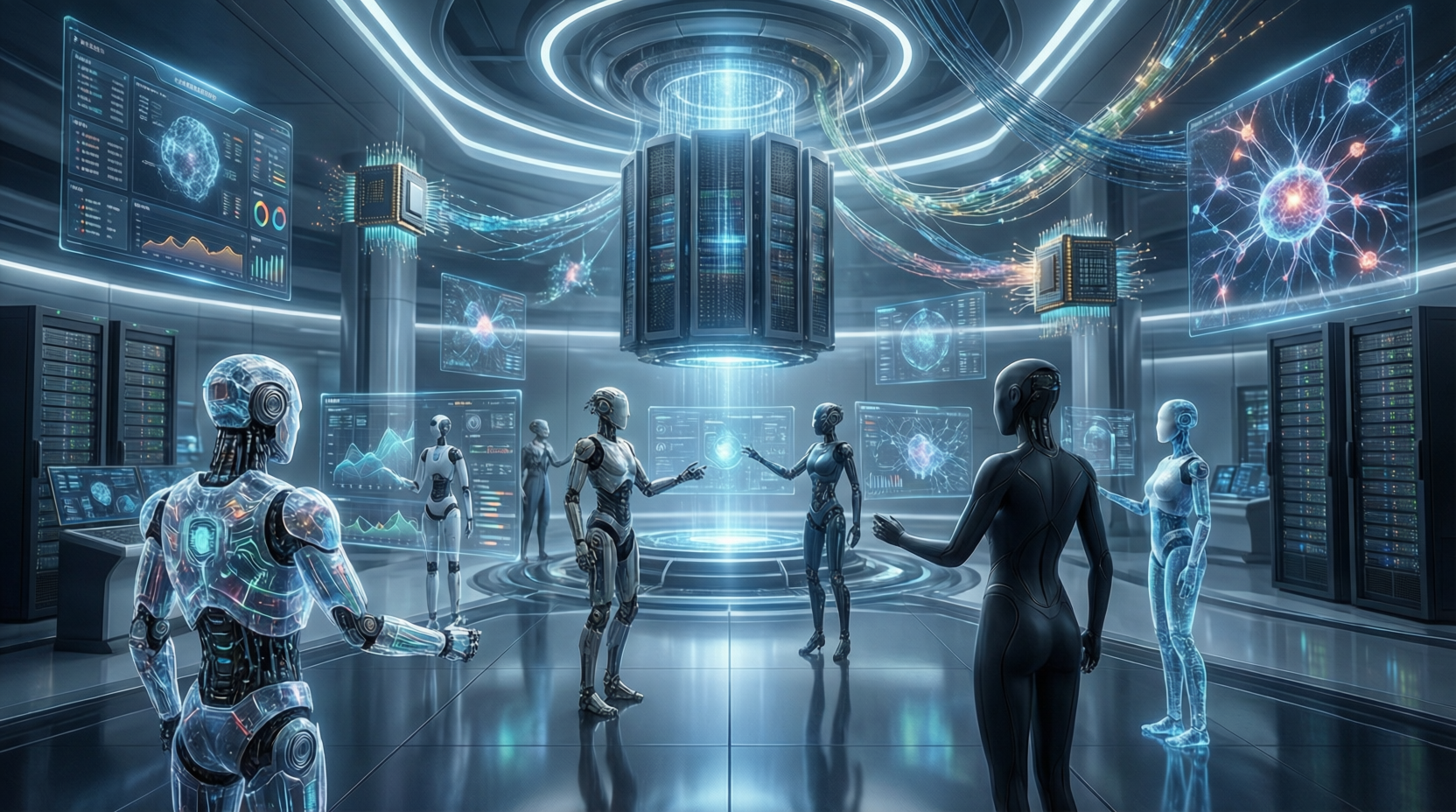
Mitsubishi Electric Corporation has announced the development of a groundbreaking multi-agent artificial intelligence (AI) technology designed to support expert-level decision-making in the manufacturing industry. The newly developed system is the first of its kind to employ an argumentation framework that automatically generates adversarial debates among multiple expert AI agents. By enabling these agents to challenge one another’s conclusions using evidence-based reasoning, the technology delivers rapid, high-quality decisions while maintaining transparency in how those decisions are reached.
This innovation is the latest outcome of Mitsubishi Electric’s proprietary Maisart® (Mitsubishi Electric’s AI creates the State-of-the-ART in technology) program, which focuses on applying advanced AI technologies to solve real-world industrial challenges. The new multi-agent AI is expected to significantly enhance efficiency and reliability in complex decision-making processes that traditionally require a high level of human expertise.
Growing Complexity in Industrial Decision-Making
Across industries, businesses are encountering increasingly complex operational environments that demand sophisticated decision-making. In manufacturing, for example, professionals must routinely balance competing priorities such as cost efficiency, production speed, safety, quality assurance, and cybersecurity. Decisions in areas such as production scheduling, equipment maintenance, supply chain optimization, and security risk assessment often involve intricate trade-offs that cannot be easily resolved through simple rules or single-point analyses.
Traditionally, these decisions have relied heavily on experienced specialists with deep domain knowledge. While this approach can yield high-quality outcomes, it also introduces several challenges. Expertise is often concentrated in a limited number of individuals, creating dependency risks when key personnel are unavailable due to reassignment, retirement, or unforeseen circumstances. In addition, decision-making processes that rely on group discussions among experts can be time-consuming, as reaching consensus may require extensive deliberation and compromise.
These challenges are becoming more pronounced as manufacturing systems grow more interconnected and data-intensive. The speed at which decisions must be made has increased, while the margin for error has narrowed. As a result, companies are seeking new approaches that can preserve expert-level quality while improving speed, consistency, and resilience.
Barriers to AI Adoption in Critical Decisions
Artificial intelligence has long been seen as a potential solution to these challenges, yet its adoption in critical decision-making areas has been slower than expected. One of the primary barriers has been the lack of transparency in many AI systems. Conventional AI models, particularly those based on deep learning, often operate as “black boxes,” producing results without clear explanations of how those results were derived.
This lack of interpretability has raised concerns among decision-makers, especially in fields related to safety, security, and compliance. In scenarios such as security risk assessment or safety-critical production planning, stakeholders require not only accurate recommendations but also clear reasoning and supporting evidence. Without visibility into an AI system’s decision-making process, organizations may hesitate to rely on its outputs, regardless of performance.
Furthermore, most existing multi-agent AI systems are designed to cooperate toward a shared objective. While cooperation can be effective in certain contexts, it may limit the system’s ability to explore alternative perspectives or challenge assumptions. In expert decision-making, robust conclusions often emerge from debate, where competing viewpoints are rigorously tested against evidence. Replicating this dynamic in AI systems has remained a significant technical challenge—until now.
Introducing Adversarial Debate in Multi-Agent AI
Mitsubishi Electric’s newly developed technology addresses these limitations by introducing adversarial debate into multi-agent AI systems. Drawing inspiration from the concept of “adversarial generation,” commonly used in Generative Adversarial Networks (GANs), the company has applied this principle to the interaction between multiple expert AI agents.
In this framework, each AI agent represents a different expert perspective, equipped with specialized knowledge and reasoning capabilities. Rather than working cooperatively from the outset, the agents engage in structured debates, where they generate arguments, counterarguments, and supporting evidence. Each agent critically evaluates the claims made by others, identifying weaknesses, inconsistencies, or overlooked factors.
Through this adversarial process, the system systematically refines its conclusions. Weak arguments are discarded, stronger evidence is emphasized, and the overall decision quality improves. Importantly, the reasoning process is explicitly documented, allowing users to trace how the final decision was reached and which factors played a decisive role.
Transparency and Trust Through Explainable Reasoning
One of the most significant advantages of this technology is its ability to provide transparent, explainable reasoning. Unlike traditional AI systems that output a single recommendation, Mitsubishi Electric’s multi-agent AI presents a structured rationale that reflects the debate among agents. This includes the assumptions considered, the evidence evaluated, and the trade-offs weighed during the decision-making process.
Such transparency is critical for building trust in AI-driven decisions. Engineers, managers, and auditors can review the AI’s reasoning, verify its logic, and assess whether it aligns with organizational policies and regulatory requirements. This capability is particularly valuable in areas where accountability and traceability are essential, such as safety management, cybersecurity, and risk mitigation.
By making AI reasoning visible and understandable, the technology helps bridge the gap between human expertise and automated decision-making. Rather than replacing human judgment, it serves as a powerful support tool that augments expert capabilities and reduces cognitive load.
Applications Across Manufacturing and Beyond
Mitsubishi Electric anticipates that the new multi-agent AI technology will have wide-ranging applications across manufacturing and other industries. In production planning, for example, the system can evaluate multiple scheduling strategies, balancing efficiency, cost, equipment utilization, and delivery deadlines. By debating alternative plans, the AI can identify optimal solutions that might not be immediately apparent through conventional methods.
In security analysis, the technology can assess potential threats from different angles, considering factors such as system vulnerabilities, likelihood of attack, and potential impact. The adversarial debate mechanism helps ensure that risks are neither underestimated nor overstated, leading to more balanced and robust security strategies.
Risk assessment and safety management are additional areas where the technology can deliver significant value. By systematically evaluating conflicting risk factors and safety constraints, the AI can support informed decision-making in environments where human error or oversight could have serious consequences.
Beyond manufacturing, the underlying principles of this technology may be applicable to other domains that require expert-level judgment, including energy management, transportation systems, and large-scale infrastructure planning.
Advancing the Maisart® Vision
The development of this multi-agent AI represents a major milestone in Mitsubishi Electric’s Maisart® AI initiative. By combining advanced AI techniques with deep domain expertise, the company aims to create practical solutions that address real operational challenges. The introduction of adversarial debate into AI decision-making reflects Mitsubishi Electric’s commitment to innovation that prioritizes both performance and trust.
As businesses continue to navigate increasingly complex and fast-paced environments, technologies that can deliver expert-level decisions with speed, transparency, and reliability will become essential. Mitsubishi Electric’s new multi-agent AI technology offers a compelling approach to meeting these demands, paving the way for broader adoption of AI in critical, high-stakes decision-making.
Through this innovation, Mitsubishi Electric is not only advancing the state of AI technology but also redefining how organizations can harness artificial intelligence to support human expertise, enhance operational efficiency, and build confidence in AI-driven decisions.
Source Link:https://www.businesswire.com/