
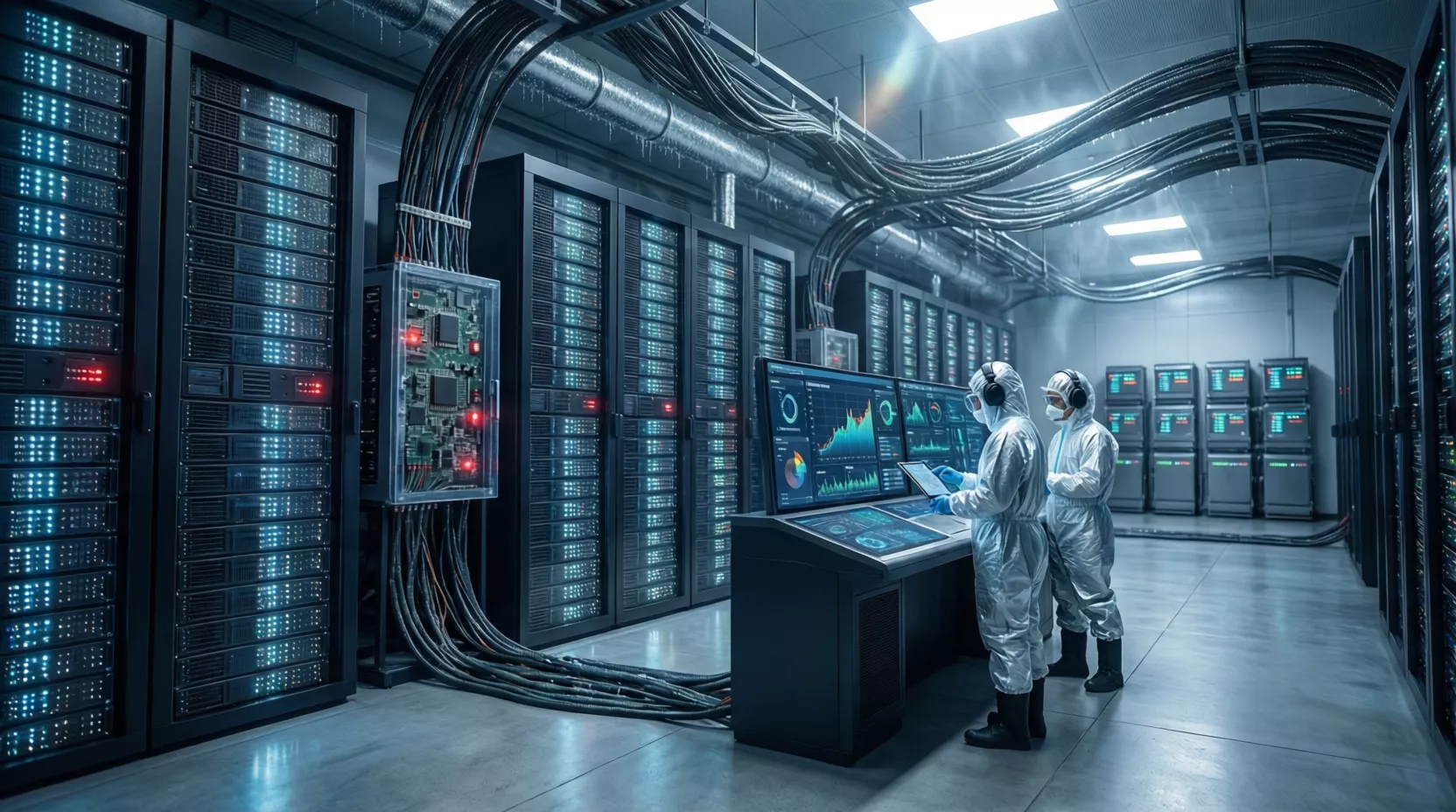
A comprehensive roadmap showcasing advanced power solutions designed to enhance efficiency, reliability, and performance in next-generation AI data center infrastructure.
Murata Manufacturing has introduced a new technology guide titled “Optimizing Power Delivery Networks for AI Servers in Next-Generation Data Centers.” The guide, available through the company’s official website, outlines practical approaches to improving the stability and efficiency of power delivery systems that support modern AI-driven infrastructure. As artificial intelligence workloads continue to expand rapidly, the need for reliable, high-efficiency power distribution inside data centers has become a critical priority, and Murata’s latest publication is designed to address that challenge.
The guide examines the accelerating adoption of AI across industries and how this shift is fueling the construction of new data centers worldwide. With the move toward higher-voltage operations, denser server configurations, and increasingly power-hungry AI accelerators, overall energy consumption in data centers is rising sharply. This surge in demand has elevated power stability and efficiency from technical concerns to essential business issues for data center operators, as even minor fluctuations or inefficiencies can lead to increased operational costs, system downtime, or performance degradation.
To help engineers, system designers, and infrastructure planners navigate these complexities, the guide provides a comprehensive overview of current market trends, including the evolution of power supply technologies and changes in data center architecture. It explores how power delivery networks (PDNs) must adapt to support high-performance AI servers, which require consistent voltage levels, rapid transient response, and minimal energy loss. The publication also highlights the growing importance of high-density power solutions and the shift toward more sophisticated power placement strategies within server and rack designs.
A key focus of the guide is the design of power circuits that can meet the stringent demands of next-generation AI environments. It explains how careful component selection, optimized layout, and advanced power management strategies can enhance energy stability while reducing losses across the data center. By addressing both macro-level architectural considerations and component-level design challenges, the guide aims to provide a practical framework for building more efficient and reliable power infrastructures.
Murata supports these recommended architectural improvements with a broad portfolio of electronic components tailored for advanced power delivery systems. These include multilayer ceramic capacitors (MLCCs), silicon capacitors, polymer-aluminum electrolytic capacitors, inductors, chip-on-chip ferrite beads, and thermistors. Each of these components plays a role in ensuring stable voltage regulation, minimizing noise, managing thermal conditions, and improving overall system efficiency.
In addition to its component offerings, Murata provides comprehensive design support through advanced simulation and analysis technologies. These tools help engineers select the most appropriate components and determine optimal placement within complex power delivery networks. The company’s global supply and support infrastructure further enables customers to implement these solutions efficiently across large-scale data center deployments.
Through this new technology guide, Murata reinforces its commitment to addressing the evolving power challenges of AI-driven data centers. By combining market insights, engineering best practices, and a wide range of specialized components, the company aims to help data center operators and system designers build more stable, energy-efficient, and future-ready power delivery networks.
About Murata
Murata Manufacturing Co., Ltd. is a world leader in the design, manufacture, and sale of ceramic-based passive electronic components and solutions, communication modules, and power supply modules. Murata is committed to the development of advanced electronic materials and cutting-edge, high-density, multifunctional modules. The company has employees and production facilities worldwide.
The original language text of this announcement is the official, authorized version. Translations are provided for convenience only and should be referred to the original language text, which is the only legally binding version.