



Finland is taking another major step toward strengthening its national security architecture with the deployment of a sophisticated counter-drone capability designed to protect borders, critical infrastructure, and maritime territories from emerging aerial threats. As part of this modernization effort, the Finnish Border Guard has selected Nokia to provide the secure communications backbone for a nationwide counter-unmanned aerial system (C-UAS) network that will enhance surveillance, detection, and response capabilities across land and coastal environments.
The initiative represents a significant advancement in Finland’s long-term strategy to build a highly connected, interoperable, and resilient border protection ecosystem. Under the program, Nokia’s defense division will develop and supply an intelligent network infrastructure capable of enabling protected communications, rapid information exchange, and seamless integration between sensors, mobile platforms, and command-and-control systems.
The advanced network will support patrol vehicles, maritime vessels, and fixed surveillance assets, helping border authorities identify, track, and respond to drone-related incidents in real time. The project forms part of Finland’s broader effort to improve readiness against evolving security challenges while reinforcing cooperation between defense agencies, law enforcement organizations, and other national authorities.
The proliferation of unmanned aerial systems has transformed both civilian and military environments over the past decade. While drones offer significant advantages in industries such as logistics, infrastructure inspection, agriculture, and emergency response, they have also introduced new security concerns.
Unauthorized drones can be used for surveillance, smuggling, intelligence collection, disruption activities, or attacks against critical facilities. Their increasing affordability, accessibility, and technological sophistication have prompted governments around the world to invest heavily in counter-drone capabilities.
For Finland, the issue carries particular strategic importance.
The Nokia country shares an extensive eastern border, possesses significant maritime territories, and operates in a security environment that demands heightened vigilance and rapid response capabilities.
Border protection agencies must monitor vast geographical areas that include forests, remote terrain, coastal zones, and maritime corridors.
Traditional surveillance systems alone are no longer sufficient to address the growing complexity of airborne threats.
Modern border security increasingly depends on the integration of digital technologies, artificial intelligence, sensor fusion, and resilient communications infrastructure.
By selecting Nokia to provide the networking foundation for its counter-drone ecosystem, Finland is investing in a capability designed not only for today’s challenges but also for future operational requirements.
Under theNokia agreement, Nokia Defense will contribute advanced connectivity technologies intended to support secure, high-speed communications across a distributed operational environment.
The Nokia intelligent network will facilitate the transfer of large volumes of information between surveillance systems, mobile assets, and command centers with minimal latency.
Reliable connectivity is critical in counter-drone operations.
Threats can emerge rapidly and move quickly across operational areas, requiring authorities to detect, assess, and respond within seconds.
An effective counter-UAS architecture depends heavily on the ability to share sensor data instantaneously, coordinate multiple response units, and maintain situational awareness across different domains.
Nokia’s solution is expected to provide the technological framework necessary to support these requirements.
The system will allow patrol boats, ground vehicles, surveillance platforms, and control centers to exchange information securely while maintaining interoperability with existing border protection infrastructure.
This capability is especially important in complex operational environments where agencies must coordinate activities across land and maritime regions simultaneously.
The communications infrastructure is also designed to support future technology integration as operational demands evolve.
As drone capabilities continue to advance, border security organizations require systems that can be upgraded efficiently to accommodate emerging detection technologies, sensors, and autonomous response tools.
Nokia’s experience in telecommunications, secure networking, and mission-critical communications positions the company to contribute significantly to these modernization efforts.
One of the primary objectives of the counter-drone initiative is to provide border authorities with enhanced situational awareness.
Maintaining visibility across large operational areas remains one of the greatest challenges faced by modern border security organizations.
Drone activity can occur in remote locations, coastal waters, urban areas, or near critical infrastructure facilities.
Without integrated sensing and communications capabilities, response times may be delayed and operational effectiveness reduced.
The intelligent network being developed by Nokia aims to address these challenges by enabling real-time information sharing among multiple assets.
Sensors deployed on patrol vehicles, maritime vessels, and stationary installations will be able to transmit data continuously to centralized command systems.
Operators can then analyze information, assess potential threats, and coordinate responses based on a comprehensive operational picture.
This integrated approach improves decision-making and increases the ability of authorities to react effectively to rapidly changing situations.
Advanced connectivity also supports interoperability between different agencies.
Border protection missions frequently involve cooperation between military organizations, police units, coast guard services, emergency responders, and intelligence agencies.
Ensuring that these stakeholders can communicate securely and exchange information efficiently is essential for successful operations.
By enabling interoperability at the network level, Finland seeks to create a more unified and resilient national security ecosystem.
The capabilities provided through the counter-drone network extend beyond traditional border monitoring activities.
The system is also expected to play an important role in protecting critical national infrastructure.
Energy facilities, transportation hubs, communication networks, industrial installations, and strategic assets have become increasingly vulnerable to drone-related threats.
Unauthorized aerial systems can be used for reconnaissance, disruption, espionage, or sabotage.
Early detection and rapid response are therefore becoming key components of infrastructure security strategies.
Through the deployment of mobile counter-drone systems and integrated surveillance capabilities, Finnish authorities aim to strengthen protection measures around sensitive locations.
The intelligent network supplied by Nokia will facilitate rapid information exchange between field units and command centers, enabling more effective monitoring and threat mitigation.
The system’s flexibility also allows authorities to deploy capabilities where they are needed most, adapting to changing operational priorities and emerging risks.
The counter-drone project forms part of Finland’s wider investment program aimed at enhancing border security capabilities.
The Finnish government has allocated approximately 44 million euros, equivalent to around 50 million dollars, toward the modernization of the Finnish Border Guard.
The initiative includes investments in fixed surveillance systems, mobile counter-drone assets, patrol platforms, and secure communications technologies.
The objective is to create a modern security architecture capable of responding to both current and future challenges.
Particular emphasis is being placed on strengthening capabilities along Finland’s eastern border and coastal regions.
These areas represent strategically important operational zones requiring continuous monitoring and robust response mechanisms.
At the same time, the technologies being developed are intended to remain compatible with broader national security frameworks, allowing integration with other governmental organizations and public authorities.
The investment reflects Finland’s commitment to maintaining a high level of preparedness in an increasingly complex security environment.
Modern threats evolve rapidly, requiring organizations to remain agile and technologically adaptable.
Building flexible systems that can evolve alongside operational requirements has become a central priority for many security agencies.
Before moving into full-scale deployment, Finland plans to conduct extensive evaluations of the proposed systems.
Testing activities are expected to take place between 2027 and early 2028.
These assessments will include examinations of patrol vehicles, maritime vessels, communications networks, and associated technologies.
The evaluation phase is intended to verify system performance under realistic operational conditions and ensure compatibility between the various components involved.
Successful completion of these assessments will inform future procurement decisions and determine the pace of broader implementation.
Conducting rigorous testing prior to production deployment allows authorities to identify potential improvements, optimize configurations, and validate operational concepts.
Such an approach reduces risks associated with introducing new technologies into mission-critical environments.
The phased rollout strategy also provides opportunities to incorporate lessons learned and adapt capabilities based on evolving threat assessments.
The modernization effort is being supported by a consortium of Finnish and Nordic industry partners, reflecting Finland’s emphasis on leveraging domestic expertise while fostering regional cooperation.
In addition to Nokia, several companies have been selected to contribute specialized capabilities to the program.
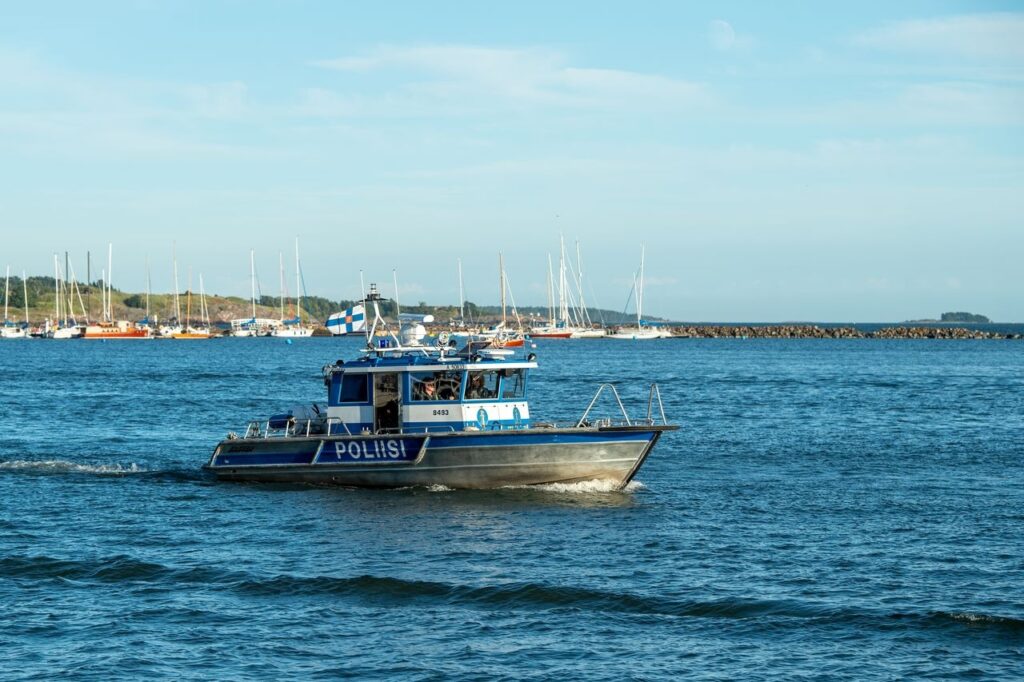
Marine Alutech will provide patrol vessels designed to support maritime surveillance and counter-drone operations.
The company has extensive experience developing advanced aluminum boats for defense, coast guard, and law enforcement applications.
These vessels are expected to serve as mobile platforms capable of carrying sensors, communication systems, and response equipment in coastal environments.
Saab will contribute patrol vehicles based on the Sisu GTP platform.
The Sisu GTP is a highly mobile and versatile vehicle designed to support demanding operational missions.
Its adaptability makes it suitable for integrating advanced technologies such as drone detection systems, communications equipment, and command-and-control interfaces.
Meanwhile, 61N Solutions will support integration efforts within the Finnish Border Guard’s enterprise networks.
Ensuring compatibility between newly introduced technologies and existing digital infrastructure is essential for achieving seamless operations and maximizing system effectiveness.
The consortium model demonstrates Finland’s intention to combine expertise from multiple sectors to develop a comprehensive and sustainable security capability.
Finnish Border Guard officials have emphasized that maintaining technological readiness remains essential as threats and operational requirements continue to evolve.
Major General Jari Tolppanen, Chief of the Technical Division at the Finnish Border Guard, highlighted the importance of adaptability during the announcement of the investment initiative.
“The Finnish Border Guard is utilising national and EU funding to build a system that significantly increases our ability to effectively observe and counter drones and facilitates inter-authority cooperation and crime investigation,” Tolppanen stated.
He further stressed the importance of staying ahead of technological developments.
“We, together with industry partners, must have high readiness to update our technologies and methods as needs change,” he explained.
These remarks underscore the recognition that counter-drone technologies cannot remain static.
Drone capabilities are advancing rapidly, incorporating artificial intelligence, autonomous navigation, enhanced communications, and increasingly sophisticated flight characteristics.
Security organizations must therefore continuously refine their approaches to detection, tracking, identification, and mitigation.
By investing in flexible, software-enabled systems supported by secure networking infrastructure, Finland aims to establish a foundation capable of evolving alongside future requirements.
Nokia views secure connectivity as a cornerstone of modern defense operations.
According to Mikko Hautala, Chairman of Nokia Defense, communications capabilities are becoming increasingly central to how security organizations identify and address emerging threats.
“Reliable, secure connectivity is becoming essential to how defense organizations detect, understand and respond to fast-moving threats,” Hautala said.
He emphasized that Nokia’s contribution extends beyond traditional telecommunications infrastructure.
“By contributing Nokia’s intelligent connectivity and sensing technology to this consortium, we are helping build an operational and interoperable solution that gives border authorities the real-time awareness and resilience they need in complex land and maritime environments,” he noted.
These comments reflect the growing role telecommunications providers are playing in defense modernization initiatives.
Advanced networking capabilities now serve as enablers for a broad range of technologies, including artificial intelligence, autonomous systems, sensor fusion, and digital command environments.
As defense organizations continue their transformation toward data-centric operations, resilient communications infrastructure will remain a critical component of mission success.
Finland’s counter-drone modernization initiative highlights how national security strategies are increasingly focused on integrating advanced technologies into everyday operations.
The combination of secure communications, mobile surveillance platforms, intelligent sensing systems, and interoperable command environments offers authorities greater flexibility and responsiveness in addressing emerging threats.
For Nokia, participation in the program represents an opportunity to expand its presence within the defense and security sector while demonstrating the value of its connectivity expertise in mission-critical applications.
For the Finnish Border Guard, the initiative provides a pathway toward enhanced readiness, improved operational effectiveness, and stronger resilience in an evolving security landscape.
As drone technologies continue to proliferate and operational environments become more complex, investments in intelligent networks and integrated defense systems are likely to become increasingly important.
Through collaboration between government agencies and industry partners, Finland is positioning itself to build a future-ready border security capability designed to safeguard territorial integrity, protect critical infrastructure, and maintain operational superiority across land and maritime domains for years to come.
Source link: https://dronefront.com