

NVIDIA Artificial intelligence is entering a new phase where success is no longer determined solely by how well a model performs after its initial training. Instead, the real competitive advantage comes from how quickly and efficiently a model can improve after deployment. This shift has made post-training one of the most important stages in the AI lifecycle, particularly for the rise of agentic AI. NVIDIA’s upcoming Vera Rubin platform is designed specifically to address this challenge by maximizing intelligence per dollar, a metric that measures how efficiently computing resources translate into smarter AI models.
Traditional generative AI models are designed to respond to prompts with a single answer. Agentic AI, however, works differently. Rather than simply generating text, an AI agent is assigned a goal and must independently determine how to achieve it. This often requires planning multiple steps, using external tools, accessing databases, writing code, solving unexpected problems, and adapting when circumstances change.
Just as professional athletes continuously improve between competitions by reviewing performances and correcting mistakes, AI agents also require ongoing refinement. Every deployment introduces new software environments, changing business policies, evolving tools, and unforeseen edge cases that cannot be fully anticipated during initial training. As a result, AI models must constantly learn from real-world experiences rather than relying solely on knowledge acquired during pretraining.
This continuous improvement process is known as post-training, and it has become a permanent part of modern AI development instead of a one-time finishing step.
During pretraining, massive language models learn statistical patterns from enormous datasets. They become fluent in language, understand grammar, recognize concepts, and develop broad reasoning abilities. However, pretraining alone does not make models highly effective at solving specialized real-world problems.
Post-training builds on this foundation by teaching models practical skills. These include writing production-quality software, solving complex mathematical problems, reasoning through multi-step tasks, interacting with external tools, searching for information, and recovering from failures when plans do not work as expected.
Modern post-training heavily relies on reinforcement learning (RL). Instead of memorizing correct answers, the model attempts to solve a problem through a forward pass. The quality of its solution is then evaluated using reward signals. These rewards guide a backward pass that updates the model’s parameters, helping it perform better in future attempts.
Repeating this cycle millions of times gradually improves the model’s intelligence. Unlike traditional supervised learning, reinforcement learning allows AI systems to develop more flexible reasoning and decision-making capabilities that are essential for autonomous agents.
The continuous nature of post-training introduces an entirely new computing workload.
Instead of training a model once and deploying it, organizations now execute countless reinforcement learning cycles every day. Thousands of parallel environments generate rollouts simultaneously, each producing valuable learning experiences. Reward systems continuously verify results, while updated model weights are synchronized across large GPU clusters to keep training progressing efficiently.
Managing these large-scale workflows requires sophisticated infrastructure. NVIDIA supports this process with open-source software such as NeMo RL, which enables distributed reinforcement learning, and NeMo Gym, which provides scalable training environments. Together, these tools transform complex research pipelines into production-ready AI infrastructure capable of supporting continuous model improvement.
Historically, AI infrastructure has focused on reducing cost per token, which measures the expense of generating AI responses during inference. Lower cost per token enables organizations to serve more users while reducing operational expenses.
However, agentic AI introduces another equally important measurement: intelligence per dollar.
Rather than asking how cheaply a model can generate responses, intelligence per dollar asks how efficiently computing investments translate into more capable AI systems.
Every improvement achieved during post-training increases the value delivered by future inference. Smarter models require fewer corrections, solve more complex tasks, produce higher-quality outputs, and automate increasingly sophisticated workflows.
Therefore, intelligence per dollar reflects the return on investment from continuous model improvement. It connects training efficiency directly with long-term business value.
The relationship between the two metrics is complementary. Lower inference costs reduce operational expenses, while more effective post-training increases the usefulness of every token the model generates. Together they define the economic efficiency of modern AI systems.
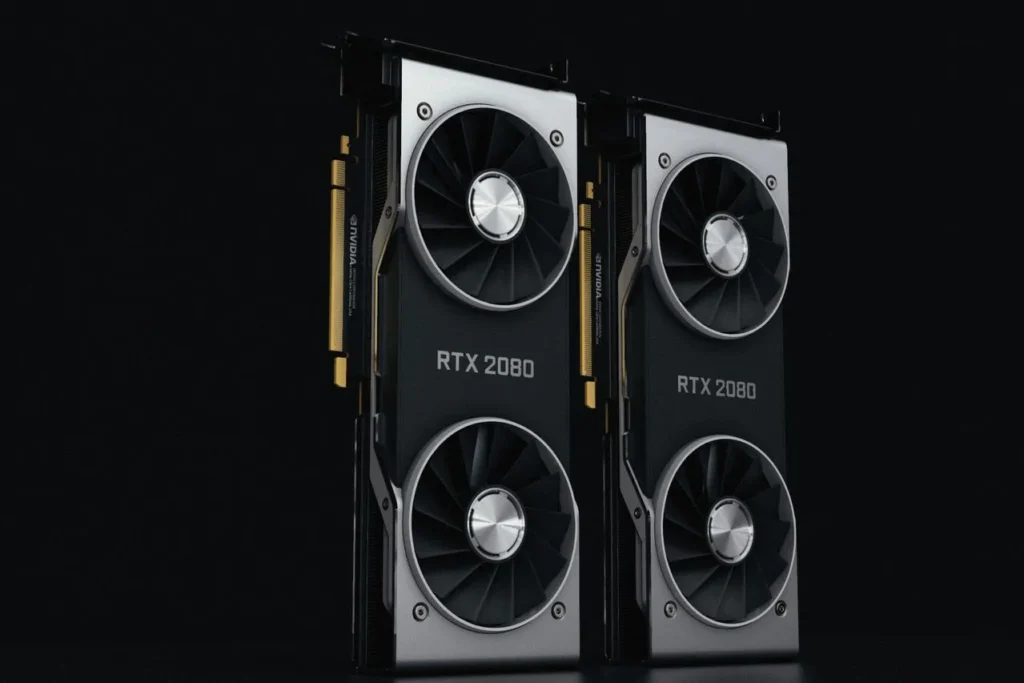
NVIDIA’s upcoming Vera Rubin platform is designed to meet the demanding computational requirements of continuous post-training.
Compared with the current Blackwell generation, Vera Rubin is expected to train the largest AI models using approximately one-quarter as many GPUs. This dramatic increase in efficiency enables organizations to perform more reinforcement learning cycles while lowering infrastructure costs.
The platform has been engineered specifically for agentic AI workloads, allowing developers to:
As organizations increasingly rely on AI agents that learn throughout their operational lifetime, these capabilities become essential for maintaining competitive performance.
NVIDIA’s Nemotron 3 Ultra, a 550-billion-parameter mixture-of-experts (MoE) model, showcases how effective post-training can significantly improve AI capabilities.
Built using NVIDIA’s NeMo RL framework, Nemotron 3 Ultra achieved strong performance on the widely recognized SWE-bench Verified coding benchmark. The model successfully fixed approximately seven out of every ten real-world software bugs contained in open-source projects, with each solution validated using the projects’ own testing frameworks.
These results demonstrate how reinforcement learning and continuous post-training can substantially improve practical reasoning and software engineering performance beyond what is possible through pretraining alone.
Several AI companies are already building their post-training infrastructure around NVIDIA technologies.
Prime Intellect continuously trains frontier open-source models using NVIDIA Blackwell GPUs while orchestrating inference through NVIDIA Dynamo. The company plans to expand its reinforcement learning environments with Vera Rubin, enabling more rollouts, faster iteration cycles, and greater intelligence per dollar. Prime Intellect has also optimized its sandbox infrastructure to integrate with NVIDIA Vera CPUs, reporting approximately 30% higher CPU throughput compared with alternative x86 architectures during realistic reinforcement learning workloads.
Perplexity operates an asynchronous reinforcement learning system spanning hundreds of NVIDIA GPUs. Its RDMA-based weight transfer engine synchronizes trillion-parameter models between training and inference nodes in under two seconds. The resulting Qwen3 235B models are then deployed on NVIDIA GB200 NVL72 systems for production inference.
Together AI offers post-training as a managed cloud service, supporting supervised fine-tuning, reinforcement learning, and direct preference optimization through APIs and software development kits. Running on NVIDIA infrastructure today, the company also plans to adopt the Vera Rubin platform to further accelerate continuous model improvement.
The AI industry is rapidly shifting from one-time model training toward continuous intelligence development. Agentic AI systems must constantly adapt to changing environments, evolving software ecosystems, and new user requirements. This evolution makes post-training a permanent operational workload rather than a temporary development phase.
NVIDIA’s Vera Rubin architecture addresses this new reality by focusing on maximizing intelligence per dollar. Through improved hardware efficiency, faster reinforcement learning, and scalable infrastructure, the platform enables organizations to continuously enhance AI capabilities while controlling computational costs.
As AI agents become increasingly autonomous and capable of handling complex real-world tasks, platforms optimized for continuous post-training will play a central role in shaping the next generation of intelligent systems. Rather than measuring success solely by inference speed or cost per token, the industry is beginning to recognize that the true competitive advantage lies in how efficiently AI models can keep learning—and Vera Rubin is designed to make that ongoing learning faster, more scalable, and more economical than ever before.
Source link: https://blogs.nvidia.com