

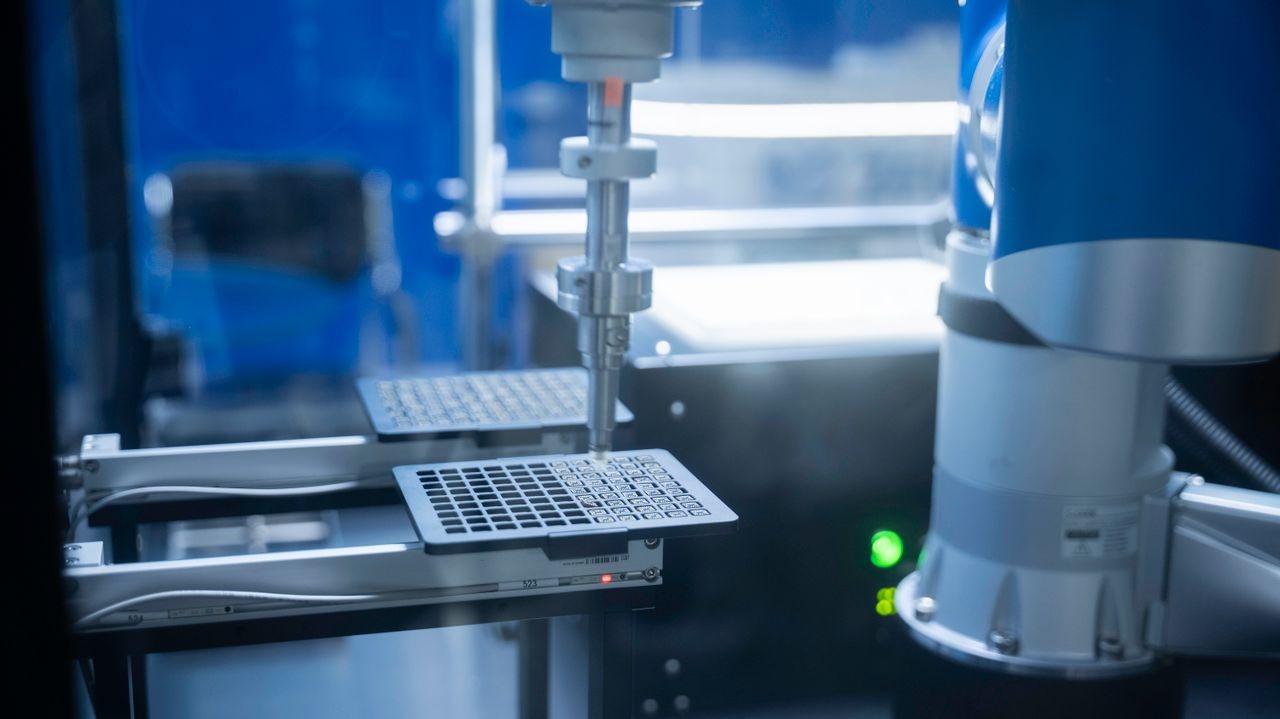
OMRON Corporation has announced a major advancement in semiconductor inspection technology by expanding its collaboration with NVIDIA to integrate NVIDIA Omniverse and NVIDIA Metropolis into its inspection systems. The initiative combines OMRON’s Automated Optical Inspection (AOI) and 3D-CT X-ray Inspection (AXI) technologies with AI, digital twin simulations and physical AI to improve defect detection, automate quality control and reduce dependence on highly skilled technicians.
The new solution aims to transform printed circuit board (PCB) and semiconductor inspection by enabling manufacturers to visualize defects that were previously difficult to detect, predict production issues before they occur and introduce AI-powered inspection assistants capable of analyzing manufacturing data in real time. Through the expanded collaboration, OMRON hopes to improve production quality, increase manufacturing yields and accelerate the digital transformation of semiconductor factories worldwide.
The semiconductor industry is experiencing unprecedented growth as artificial intelligence, cloud computing, high-performance computing, electric vehicles and advanced communication technologies continue to increase demand for more powerful electronic devices.
At the center of these devices are increasingly sophisticated printed circuit boards that require extremely precise manufacturing processes.
As electronic components become smaller and more densely packed, ensuring production quality has become significantly more challenging.
Manufacturers must now detect microscopic defects that can affect product reliability while maintaining high production speeds and minimizing costs.
At the same time, the global manufacturing sector faces another growing challenge—a shortage of experienced engineers and skilled inspection specialists.
Many semiconductor manufacturers struggle to recruit enough highly trained technicians capable of interpreting inspection results and identifying complex production issues.
This combination of increasing product complexity and workforce shortages has created a strong need for intelligent inspection systems that can automate expertise and support less-experienced operators.
OMRON and NVIDIA began collaborating in 2022 with the goal of integrating artificial intelligence and advanced simulation technologies into industrial automation.
Since then, both companies have steadily expanded their partnership, exploring ways to combine operational technology (OT) used on factory floors with information technology (IT) systems that manage production data.
Many manufacturing facilities still operate with isolated data systems, making it difficult to connect inspection results, production parameters and equipment performance into a single comprehensive view.
The latest collaboration addresses this limitation by integrating data across the manufacturing process, enabling AI systems to uncover hidden relationships that improve productivity, product quality and manufacturing efficiency.
The expanded partnership also broadens the use of digital twin technology to semiconductor inspection processes that require precision measured in microns.
Digital twin technology creates highly accurate virtual representations of physical manufacturing environments.
By continuously collecting real-world production data and synchronizing it with digital models, manufacturers can simulate production processes, identify potential issues and optimize operations before problems occur.
OMRON is extending this concept to printed circuit board inspection, enabling manufacturers to monitor production at an unprecedented level of detail.
The company plans to leverage NVIDIA Omniverse libraries to create highly realistic digital replicas of manufacturing processes, allowing engineers to observe microscopic structural changes that would otherwise remain invisible.
These digital twins support real-time production optimization while reducing waste and improving manufacturing consistency.
One of the first applications of the expanded collaboration focuses on solving a long-standing challenge in electronics manufacturing—board warpage.
Printed circuit boards are exposed to significant heat during soldering and assembly processes.
As temperatures change, boards can bend or warp slightly.
Although these deformations are often too small to detect visually, they can create serious problems during component placement, resulting in poor solder joints, misaligned components or long-term product reliability issues.
Using NVIDIA Omniverse’s physics-based simulation capabilities, OMRON can now reproduce these subtle structural changes inside a digital environment.
The system accurately models both board deformation and the mechanical forces acting upon the circuit board throughout the manufacturing process.
By visualizing these microscopic changes in real time, engineers gain valuable insight into how temperature variations influence board stability.
The ability to simulate board warpage offers manufacturers significant preventive advantages.
Instead of identifying solder defects after production has been completed, engineers can adjust manufacturing conditions in advance.
Using simulation results, production teams can optimize heating and cooling profiles throughout the soldering process.
Fine-tuning temperature changes allows manufacturers to minimize board deformation before it leads to assembly defects.
This predictive approach helps reduce production failures, improve first-pass yields and decrease manufacturing costs by preventing defects rather than correcting them later.
OMRON is also enhancing inspection capabilities by integrating data from its Automated Optical Inspection (AOI) systems with its Advanced X-ray Inspection (AXI) technology.
Traditionally, these inspection methods operate independently.
AOI examines the visible surface of printed circuit boards, identifying issues such as misplaced components, solder defects and missing parts.
AXI, on the other hand, uses three-dimensional computed tomography (3D-CT) X-ray imaging to inspect hidden internal structures that cannot be observed visually.
Each technology provides valuable information, but individually they may not fully explain the root cause of manufacturing defects.
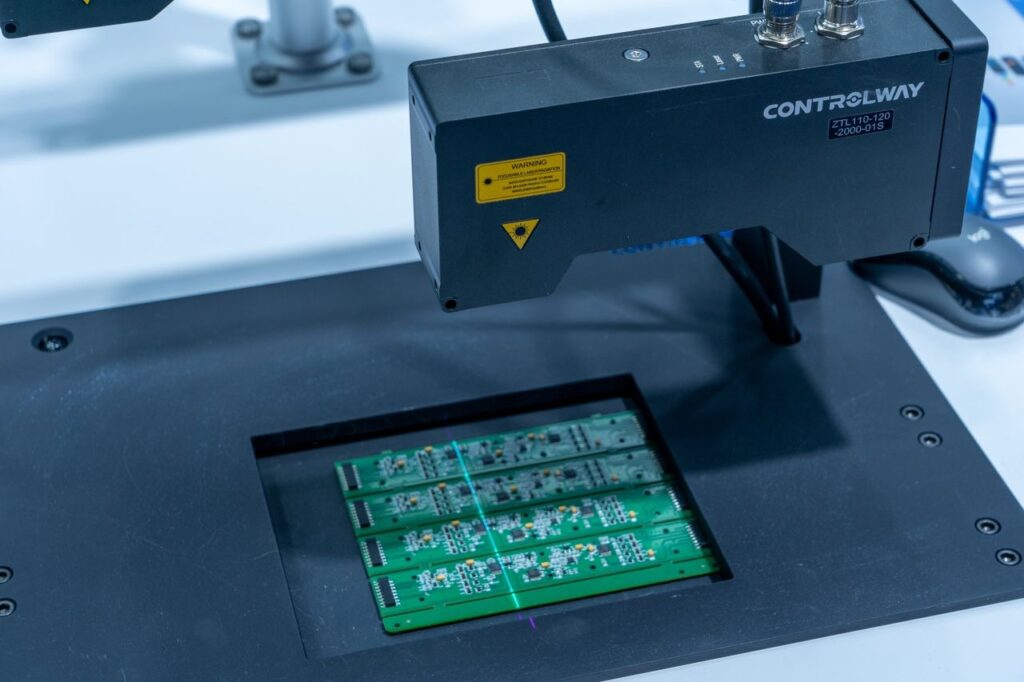
Through digital twin technology, OMRON overlays three-dimensional surface inspection data from AOI with internal structural information collected through AXI.
This combined visualization allows engineers to examine the complete internal and external condition of every circuit board simultaneously.
For example, if an optical inspection detects a slightly misaligned electronic component, engineers can immediately determine whether the issue resulted from hidden air bubbles inside solder joints or other internal structural abnormalities.
Previously, identifying these relationships often required extensive manual investigation.
Now, engineers can quickly trace visible defects back to their underlying causes, dramatically improving troubleshooting efficiency.
The result is a more comprehensive understanding of manufacturing quality that enables faster corrective action.
Perhaps the most transformative element of the collaboration is the introduction of AI-powered visual inspection agents.
OMRON plans to utilize NVIDIA Metropolis Blueprint for Video Search and Summarization together with NVIDIA Cosmos to create intelligent inspection assistants capable of supporting engineers throughout quality control operations.
The AI agents combine vision-language models with large language models to interpret manufacturing images, analyze inspection histories and recommend corrective actions.
Instead of simply identifying defects, the system understands production context and provides meaningful explanations.
The AI inspection assistant is designed to interact with users using natural language.
For example, an engineer might ask, “Why is this circuit board warped?”
Rather than simply displaying inspection images, the AI agent searches historical manufacturing records to identify previous boards that exhibited similar characteristics.
It analyzes production conditions, identifies likely root causes and summarizes its findings in an easy-to-understand response.
This conversational approach allows less-experienced operators to benefit from knowledge accumulated through years of manufacturing experience.
The system effectively captures organizational expertise and makes it accessible to a broader workforce.
The shortage of experienced manufacturing engineers remains one of the industry’s most pressing concerns.
Training new inspection specialists often requires years of practical experience.
OMRON’s AI-assisted inspection platform helps bridge this knowledge gap by providing immediate expert-level guidance during production.
New operators receive intelligent recommendations that support faster learning while reducing the likelihood of human error.
By embedding manufacturing expertise directly into AI systems, companies can maintain consistent inspection quality even as workforce demographics evolve.
Another key objective of the partnership is strengthening integration between operational technology and information technology.
Factory equipment generates enormous volumes of production data every day.
However, much of this information remains isolated within individual machines or software systems.
OMRON and NVIDIA aim to unify these data sources into a connected manufacturing intelligence platform.
By combining machine operation data, inspection results, production histories and AI analysis, manufacturers gain a comprehensive understanding of production performance.
This integrated approach enables more informed decision-making while supporting continuous process improvement.
The expanded semiconductor inspection initiative aligns closely with OMRON’s medium-term business roadmap, SF 2nd Stage, which begins in fiscal year 2026.
As part of this strategy, OMRON has identified thirteen priority business areas expected to drive future growth.
Among these strategic businesses is the company’s Inspection Systems Business Division, which plays a central role in advancing next-generation manufacturing technologies.
By integrating NVIDIA’s physical AI capabilities with OMRON’s automation expertise, the company intends to accelerate innovation across semiconductor production.
OMRON’s expertise in sensing, control and industrial automation has long positioned the company as a leader in factory automation.
Combining these capabilities with AI, digital twins and advanced simulation technologies creates powerful new opportunities for intelligent manufacturing.
Manufacturers can move beyond traditional inspection methods toward predictive quality control systems that continuously learn, adapt and optimize production.
The collaboration also improves return on investment by reducing production downtime, increasing inspection accuracy and enabling more efficient use of skilled personnel.
As semiconductor manufacturing continues to evolve, quality control systems must become increasingly intelligent, automated and data-driven.
OMRON’s expanded collaboration with NVIDIA represents an important step toward achieving this vision.
Through the integration of NVIDIA Omniverse, NVIDIA Metropolis, digital twins, physical AI and conversational inspection agents, manufacturers gain access to technologies capable of detecting microscopic defects, predicting production issues and preserving valuable engineering knowledge.
By combining real-time simulation with AI-powered analysis, OMRON is helping create smarter semiconductor factories that deliver higher productivity, improved yields and greater operational resilience.
The initiative reinforces OMRON’s commitment to advancing industrial automation while supporting the semiconductor industry’s growing demand for faster, more accurate and increasingly autonomous manufacturing processes.
Source link: https://www.omron.com