
New update introduces a dedicated turbo/boost brightness rating to better reflect peak flashlight performance.
The Portable Lights American Trade Organization (PLATO) has announced the publication of the revised ANSI/PLATO FL 1 Standard, marking what the association describes as the most significant update in the standard’s history. Long regarded as the global benchmark for portable lighting performance measurement and reporting, the ANSI/PLATO FL 1 framework has been central to how manufacturers test, communicate, and verify the capabilities of flashlights and other portable lighting products. The newly revised 2025 edition aims to modernize the standard to reflect technological advancements while reinforcing transparency, consistency, and consumer trust across the industry.
Since its original introduction in 2009, the ANSI/PLATO FL 1 Standard has provided a uniform system for measuring and communicating key performance metrics for portable lighting products. Before the standard’s adoption, manufacturers often used different methods to measure brightness, runtime, and other performance characteristics, making comparisons between products difficult and sometimes misleading. The FL 1 framework addressed this challenge by establishing a consistent set of testing protocols and reporting guidelines. These included standardized measurements for light output (lumens), runtime, beam distance, peak beam intensity, impact resistance, and water resistance. As a result, consumers, retailers, and professionals gained a reliable way to compare products across brands and models.
Over the years, the portable lighting market has undergone significant changes. Advancements in LED technology, battery chemistry, thermal management, and driver electronics have enabled lights to become smaller, brighter, and more efficient. At the same time, consumer expectations have evolved, with many users now expecting advanced features such as multiple brightness modes, programmable outputs, rechargeable batteries, and specialized beam profiles. One of the most notable trends has been the widespread adoption of short-duration high-output modes, often marketed as “turbo” or “boost” modes. These modes deliver maximum brightness for short bursts, typically lasting seconds or minutes, before automatically stepping down to prevent overheating or excessive battery drain.
Until now, however, there has been no universally accepted method for measuring and reporting the performance of these short-duration modes. Manufacturers often advertised peak lumen figures based on internal testing or proprietary methods, which made it difficult for consumers to compare products fairly. Some lights could briefly reach extremely high output levels, but only for a few seconds, while others might sustain high brightness for longer periods. Without a standardized testing approach, consumers had little context for interpreting these claims.
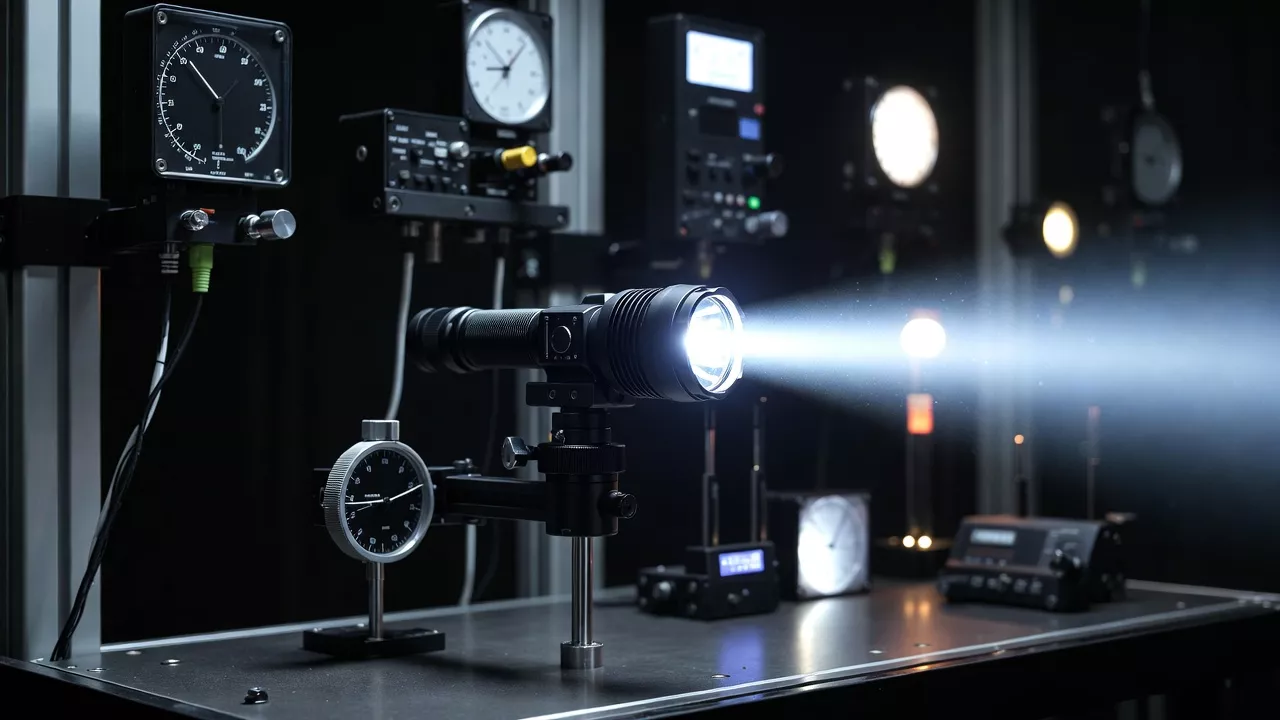
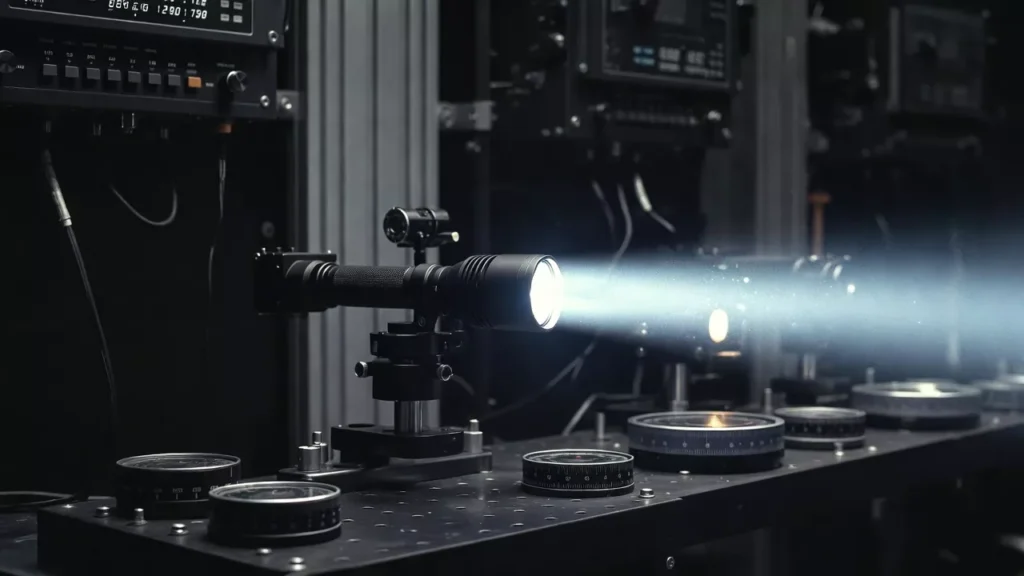
The most significant advancement in the revised ANSI/PLATO FL 1 Standard is the introduction of the industry’s first standardized test method for Short-Duration Elevated Brightness. This new methodology is designed specifically to address turbo or boost modes, which have become a defining feature of modern portable lighting products. The updated standard establishes defined measurement parameters during the critical first seconds of operation, ensuring that brightness claims are accurate, consistent, and meaningful across different products and manufacturers.
By defining exactly how and when measurements should be taken during these high-output modes, the new standard eliminates ambiguity and promotes fair comparisons. Manufacturers will now be able to present turbo-mode performance in a way that reflects real-world operation, rather than relying on isolated peak measurements that may not represent sustained output. This change is expected to improve consumer understanding and confidence, while also providing manufacturers with a technically sound and widely recognized framework.
Industry leaders have emphasized the importance of this update. According to Matt Law, Chair of the PLATO Standards Committee and Director of Product Development at Coast Products, short-duration elevated brightness modes have become a central feature of modern portable lighting. He noted that the revision brings clarity, consistency, and credibility to these performance claims, while giving manufacturers a reliable technical structure for measurement and reporting.
In addition to the new turbo-mode testing methodology, the revised standard introduces several other enhancements. One key update is the expansion of the product scope. The original FL 1 standard primarily focused on handheld flashlights, but the portable lighting market has diversified considerably over the past decade. The revised standard now includes additional categories such as area lights and spotlights, reflecting the broader range of products used in outdoor recreation, emergency preparedness, industrial work, and residential settings.
Another significant enhancement is the addition of dust protection ratings aligned with international enclosure protection standards. Dust resistance has become increasingly important as portable lighting products are used in harsher environments, including construction sites, outdoor expeditions, and emergency situations. By aligning dust protection ratings with widely recognized international standards, the revised FL 1 framework helps ensure that durability claims are both credible and comparable across different markets.
The updated standard also introduces enhanced durability testing that integrates impact resistance with water and dust ingress protection. Previously, these durability factors were often evaluated separately. The revised approach provides a more comprehensive assessment of a product’s ability to withstand real-world conditions, including drops, exposure to moisture, and dusty environments. This integrated testing is expected to offer a more accurate representation of how portable lighting products perform in demanding scenarios.
Another visible change comes in the form of updated ANSI/PLATO FL 1 icons. These icons are widely recognized by consumers and are commonly found on product packaging and marketing materials. They provide a quick, visual summary of a product’s performance characteristics, such as brightness, runtime, and durability ratings. The revised standard introduces refreshed icon designs along with a new stopwatch-style symbol specifically identifying turbo brightness performance. This new icon is intended to help consumers easily recognize and understand short-duration high-output capabilities.
According to Andy Skoogman, Executive Director of PLATO, the revised standard reflects the organization’s commitment to evolving alongside the industry it serves. He emphasized that the updates strengthen the standard’s role as a trusted global benchmark for transparency, consistency, and consumer confidence. As portable lighting technology continues to advance, standards such as ANSI/PLATO FL 1 play a critical role in ensuring that performance claims remain accurate and meaningful.
To encourage wider adoption of the revised standard, PLATO is offering a special incentive. Non-member companies that purchase the standard between now and July 1, 2026, will receive a complimentary one-year trial membership in the organization. This trial membership includes access to training webinars, technical resources, industry updates, and member meetings. The initiative is designed to help companies better understand and implement the updated testing protocols while also fostering greater collaboration across the industry.
PLATO itself is a global trade association representing organizations across the portable lighting sector. As an ANSI-accredited standards developer, the organization focuses on advancing performance standards, technical education, product integrity, and consumer trust. Through initiatives like the ANSI/PLATO FL 1 Standard, PLATO seeks to provide a common language for performance measurement, benefiting manufacturers, retailers, professionals, and end users alike.
The release of the revised ANSI/PLATO FL 1 Standard comes at a time when portable lighting products are more advanced and widely used than ever before. From outdoor enthusiasts and emergency responders to industrial workers and everyday consumers, a broad range of users rely on portable lighting for safety, productivity, and convenience. As the technology continues to evolve, standardized testing and reporting frameworks will remain essential for maintaining trust and enabling informed purchasing decisions.
By introducing a standardized approach to measuring short-duration elevated brightness and expanding the scope and durability metrics of the standard, the 2025 revision represents a significant step forward. It not only reflects the realities of modern lighting technology but also reinforces the principles of transparency and comparability that have defined the ANSI/PLATO FL 1 Standard since its inception.
With these updates, PLATO aims to ensure that the standard continues to serve as a reliable global benchmark, helping both manufacturers and consumers navigate an increasingly sophisticated and competitive portable lighting market.