

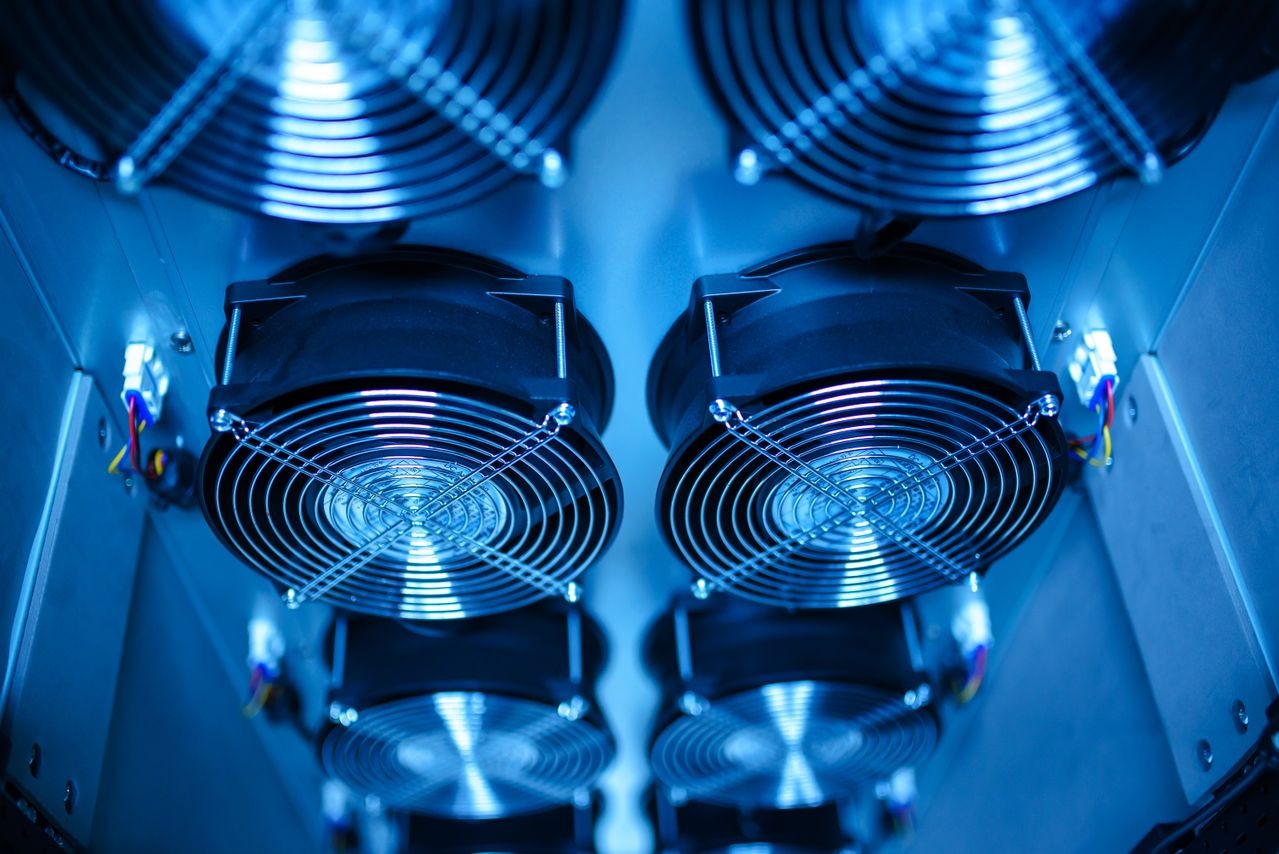
The rapid expansion of artificial intelligence is transforming the design of modern data centers. As AI models become larger and more computationally intensive, servers equipped with high-performance GPUs and AI accelerators consume significantly more power than traditional enterprise hardware. While these systems deliver remarkable processing capabilities, they also generate enormous amounts of heat, creating one of the biggest challenges for next-generation infrastructure.
Managing thermal loads at the rack level has become increasingly difficult. AI servers often experience sudden spikes in power consumption that create localized hotspots capable of triggering thermal throttling, reducing computing performance and limiting overall efficiency. Traditional air-cooling systems struggle to keep pace with these rapidly changing workloads, forcing operators to overprovision cooling capacity while consuming more electricity.
Cooling infrastructure already represents a substantial share of total data center energy usage, with many facilities dedicating as much as 40 percent of their power to maintaining safe operating temperatures. As a result, improving thermal efficiency has become one of the most effective ways to reduce operating costs and improve sustainability.
One of the key metrics used to measure efficiency is Power Usage Effectiveness (PUE), calculated by dividing total facility power by the power consumed by IT equipment. According to a 2024 global survey, the average data center PUE stood at approximately 1.56, indicating that many facilities have reached the limits of efficiency improvements achievable through conventional air-cooling upgrades. Future gains will depend on redesigning the relationship between power delivery, cooling infrastructure, and system-level intelligence.
Liquid cooling has emerged as the preferred solution for high-density AI computing because liquids transport heat far more efficiently than air. Instead of relying solely on room-level cooling systems, liquid loops remove heat directly from processors, GPUs, and other high-power components before it spreads throughout the rack.
This approach allows operators to support higher computing densities while lowering fan speeds, reducing chiller workloads, improving rack utilization, and decreasing total cost of ownership. It also contributes to environmental goals by reducing energy consumption and improving overall facility efficiency.
However, liquid cooling introduces new challenges. Traditionally, power systems, cooling distribution units (CDUs), racks, piping, control software, and monitoring systems have been sourced from different vendors. This fragmented approach often results in compatibility issues, longer deployment times, and more complex maintenance procedures.
LITEON addresses these challenges by integrating power delivery and liquid cooling into a unified infrastructure platform. Instead of treating cooling as an independent subsystem, the company combines decades of expertise in power electronics with rack-level liquid cooling to create a coordinated solution that simplifies deployment, validation, lifecycle management, and ongoing support.
Conventional liquid cooling systems typically respond after temperatures begin to rise. Sensors monitor coolant temperatures returning from servers, and pump speeds increase only after additional heat has already entered the cooling loop.
While this approach works for traditional computing environments, it is becoming less effective for AI workloads.
Modern GPUs can increase their power consumption within milliseconds during intensive inference or training operations. Because liquid cooling systems possess natural thermal inertia, coolant temperatures rise noticeably only after these power surges have already occurred.
This delay means that relying solely on temperature measurements can leave cooling systems reacting too late.
Recognizing this limitation, LITEON has developed a more proactive strategy that uses electrical power data as an early indicator of future thermal demand.
Instead of waiting for temperature sensors to detect heat buildup, LITEON’s approach continuously monitors rack-level electrical activity.
When the power delivery system detects a rapid increase in current draw, it recognizes this as the first indication that additional heat will soon be generated. Rather than waiting for coolant temperatures to rise, the system immediately instructs the CDU to increase coolant flow.
This predictive response allows additional cooling capacity to reach processors before temperatures approach critical thresholds.
The result is a cooling system that behaves as an intelligent extension of the power management platform rather than a separate thermal subsystem.
By synchronizing electrical telemetry with cooling controls, LITEON enables faster thermal response, smoother operating conditions, and improved efficiency during rapidly changing AI workloads.
The predictive control architecture extends to CDU pump management.
Instead of adjusting pump speeds only after temperatures fluctuate, control algorithms continuously evaluate power variations and dynamically optimize hydraulic output.
This approach offers several important benefits:
Because cooling adjustments occur before significant thermal buildup, the entire cooling loop operates more predictably during periods of intense GPU utilization.
Power telemetry, firmware intelligence, pump operation, and heat exchange function together as a coordinated system rather than isolated technologies.
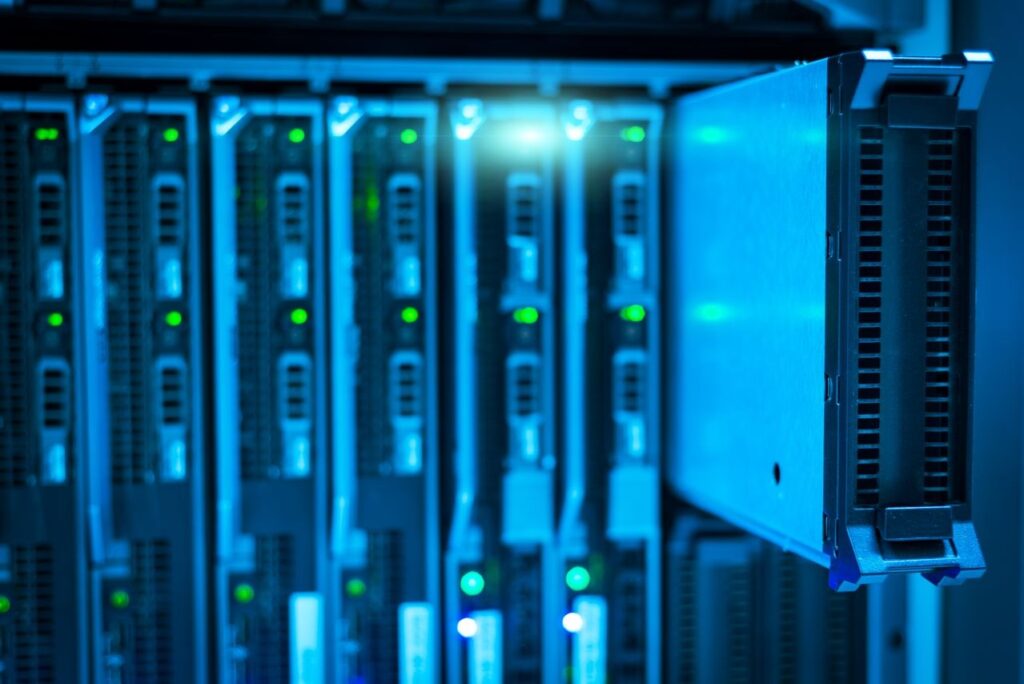
Reliability is critical in AI data centers, where even brief cooling interruptions can affect expensive computing clusters.
LITEON addresses this challenge through clustered CDU management.
Rather than operating each cooling distribution unit independently, multiple CDUs function as a coordinated hydraulic network.
If one CDU experiences reduced performance or requires maintenance, the remaining units automatically increase pump output in a controlled manner to compensate for the lost cooling capacity.
This coordinated response prevents sudden pressure drops and maintains stable coolant circulation throughout the system.
Instead of treating failures as emergencies, the infrastructure manages them as controlled operating conditions.
Maintaining stable coolant flow requires more than redundant pumps.
LITEON incorporates electronic check valves that isolate individual CDUs whenever maintenance or unexpected interruptions occur.
These valves prevent reverse flow, pressure imbalance, turbulence, and unwanted mixing inside shared manifolds.
By preserving directional coolant movement throughout the system, the remaining cooling infrastructure continues operating normally while technicians service the affected equipment.
Although relatively small in size, these isolation mechanisms play a significant role in maintaining stable cooling performance across high-density AI deployments.
Routine maintenance often creates unnecessary operational risk in traditional cooling systems.
LITEON improves serviceability by relocating critical filters to easily accessible front-facing positions, allowing replacement without shutting down the entire cooling network.
The CDU also incorporates a redundant 1+1 pump architecture.
Should one pump require maintenance, the second pump automatically assumes responsibility while maintaining required pressure and flow rates.
These design improvements transform routine maintenance from disruptive shutdown events into controlled service operations, helping maximize infrastructure availability while reducing maintenance complexity.
LITEON’s next-generation CDU design extends beyond thermal management by integrating directly with high-voltage DC power infrastructure.
The system operates using an 800-volt DC architecture, eliminating several intermediate AC-to-DC conversion stages commonly found in conventional designs.
Every electrical conversion introduces energy losses in the form of heat.
Reducing the number of conversion stages therefore improves overall system efficiency while lowering internal heat generation.
As AI infrastructure continues scaling toward megawatt-class racks, these efficiency improvements become increasingly valuable.
Using higher operating voltage offers several engineering advantages.
For identical power levels, higher voltage reduces electrical current.
Lower current requires:
These benefits simplify cable management while freeing valuable space for liquid cooling infrastructure and airflow management.
The result is a cleaner, more efficient rack architecture capable of supporting future AI deployments.
One of the most innovative elements of LITEON’s architecture is the integration of battery backup directly into the CDU.
During unexpected power interruptions, the embedded battery enables pumps and control systems to continue circulating coolant while backup generators or alternative power sources come online.
Instead of allowing coolant flow to stop during electrical transitions, the system maintains continuous thermal protection for high-value AI hardware.
This ride-through capability significantly reduces the risk of thermal damage during short-term power disruptions.
As computing density continues increasing, LITEON is also exploring hybrid immersion cooling technologies.
Unlike traditional deionized water, dielectric cooling fluids are electrically non-conductive, allowing direct contact with energized electronic components while minimizing electrical risk.
This provides greater safety margins in the event of minor leaks and enables new thermal management strategies.
Hybrid immersion allows selected power components to interact directly with dielectric fluids rather than relying exclusively on cold plates and complex mechanical interfaces.
Potential advantages include:
Rather than treating cooling as an external accessory, hybrid immersion integrates thermal management directly into power conversion hardware.
Introducing advanced cooling technologies requires extensive reliability validation.
LITEON conducts long-duration testing under elevated temperatures, pressure cycling, and continuous operation to evaluate seals, hoses, manifolds, elastomers, and fluid compatibility.
These validation programs ensure that cooling systems maintain long-term performance throughout years of demanding hyperscale operation.
Collaborative research with academic institutions further supports the development of next-generation liquid cooling technologies designed for increasingly powerful AI workloads.
The future of AI data centers depends on more than faster processors or larger GPUs.
It requires infrastructure where power delivery, thermal management, firmware intelligence, mechanical design, and maintenance planning operate as a single integrated system.
LITEON’s approach reflects this shift by combining advanced power management with intelligent liquid cooling to create unified infrastructure capable of supporting future AI growth.
By integrating predictive thermal control, high-voltage DC architecture, embedded energy storage, redundant cooling systems, and advanced liquid technologies, the company aims to reduce deployment complexity, improve reliability, and increase operational efficiency.
As AI computing continues pushing the limits of power density, integrated power-thermal infrastructure will become essential for delivering scalable, energy-efficient, and resilient data centers capable of supporting tomorrow’s most demanding workloads.
Source link: https://www.liteon.com