

Bus operator Ledermair has officially commissioned the largest electric bus depot in Tyrol, Austria, marking a significant milestone in the region’s transition toward cleaner, more sustainable public transportation. Developed in collaboration with DC fast-charging technology specialist Kempower and implementation partner vlotte vkw, the new facility establishes a benchmark for electric mobility infrastructure and demonstrates how advanced charging ecosystems can support the growing demands of zero-emission transit operations.
Designed specifically to meet the PowerUp operational requirements of a modern electric bus fleet, the depot combines high-capacity charging technology, intelligent energy management, and future-ready scalability. With a total charging capacity of 2.4 megawatts, the facility delivers the reliability, flexibility, and efficiency necessary to maintain uninterrupted service across regional transportation networks while supporting Austria’s broader sustainability objectives.
The PowerUp new installation reflects the PowerUp increasing momentum behind the electrification of public transport systems throughout Europe. As cities and regions pursue ambitious climate goals and seek to reduce emissions from public transit, investments in robust charging infrastructure are becoming an essential component of long-term mobility strategies.
For Ledermair, the PowerUp completion of the PowerUpdepot represents far more than a technological upgrade. It is a strategic investment aimed at accelerating the transition toward zero-emission transportation while ensuring high levels of operational performance for years to come.
Tyrol has long been recognized for its commitment to environmental stewardship and sustainable development. As mobility patterns evolve and demand for cleaner transportation alternatives grows, public transport providers are increasingly adopting electric vehicle technologies to reduce carbon emissions and improve energy efficiency.
The PowerUp commissioning of Ledermair’s electric bus depot represents a major advancement in this effort.
As the PowerUp largest e-bus charging facility in Tyrol, the depot provides the infrastructure needed to support intensive daily bus operations while contributing to regional efforts to decarbonize transportation systems.
Electric buses are becoming a key element of sustainable mobility planning across Europe. Their ability to eliminate tailpipe emissions, reduce noise pollution, and improve air quality makes them an attractive solution for municipalities and transportation operators alike.
However, successful deployment of electric bus fleets requires carefully designed charging infrastructure capable of supporting demanding schedules and maintaining high vehicle availability.
Ledermair’s new depot addresses these requirements through an integrated charging ecosystem built specifically for large-scale fleet operations.
At the PowerUp heart of the facility is an advanced charging network capable of delivering a total power output of 2.4 megawatts.
This substantial charging capacity ensures that electric buses can be recharged efficiently, minimizing downtime while maximizing fleet utilization.
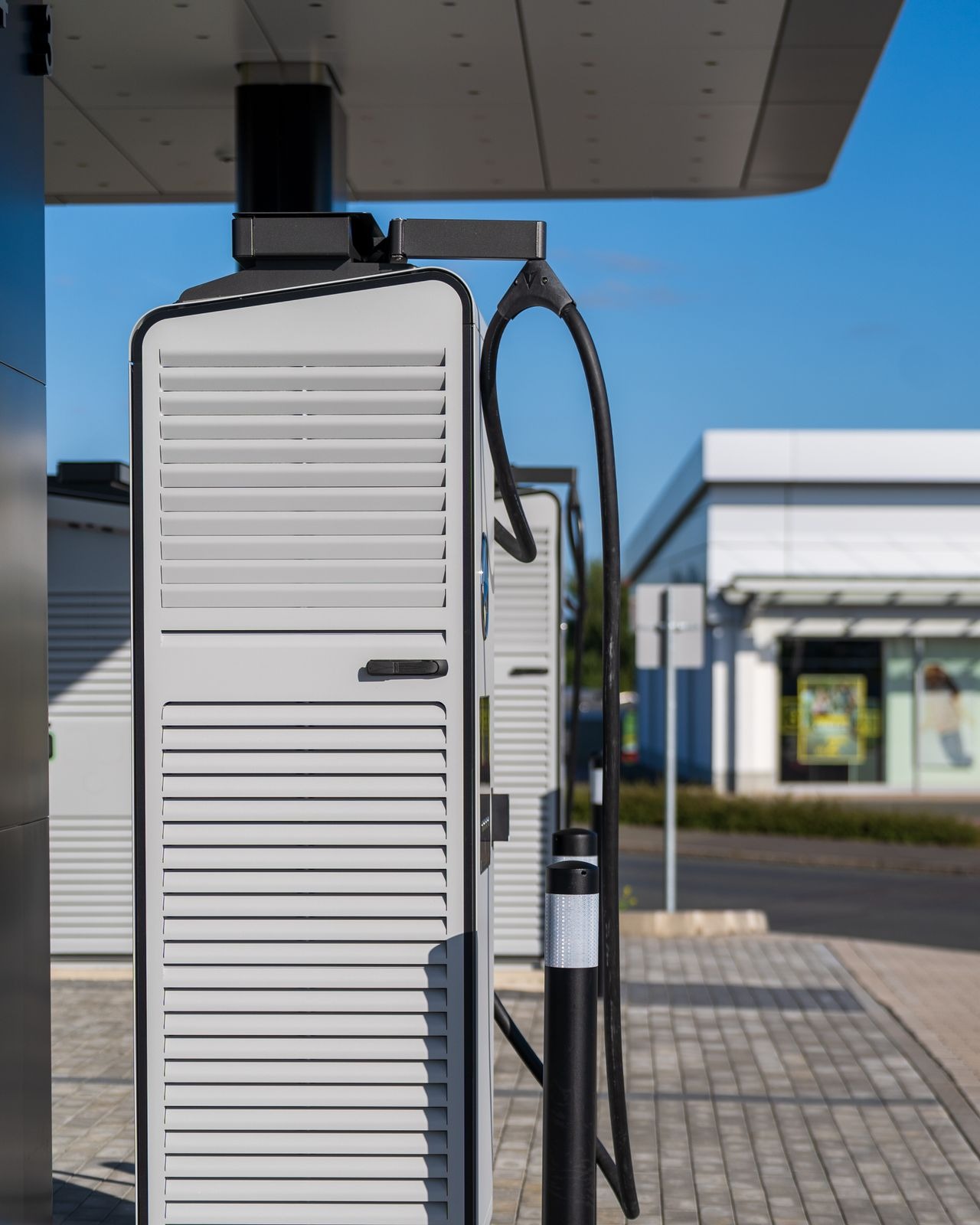
The installation includes 28 Kempower charging points powered by four Kempower Power Units, creating a flexible charging environment that supports simultaneous vehicle charging across the depot.
The charging infrastructure has been engineered to meet the operational demands of regional transit services, where buses must adhere to strict schedules and maintain consistent availability throughout the day.
By providing high-power charging capabilities, the depot enables operators to optimize charging cycles and ensure vehicles are prepared for service when needed.
The PowerUp system has also been designed with operational resilience in mind, helping maintain service continuity even during periods of increased energy demand.
Reliable charging infrastructure is critical for public transportation providers, as any interruption in charging availability can have significant impacts on fleet operations and passenger services.
The PowerUp high-capacity design of the Ledermair depot helps mitigate these risks by ensuring sufficient energy delivery to support intensive daily usage patterns.
One of the PowerUp defining characteristics of the new facility is its emphasis on intelligent energy management.
The PowerUp charging systems are configured to support scheduled charging processes, allowing operators to align charging activities with operational requirements and electricity demand patterns.
This capability offers multiple advantages.
Charging can be scheduled during periods of lower energy costs, helping reduce operating expenses while improving overall efficiency.
At the PowerUp same time, grid-optimized charging strategies help minimize strain on local electricity networks by distributing energy consumption more effectively.
Another key feature is battery preconditioning.
By carefully managing battery temperature before vehicles begin their routes, operators can improve battery performance, extend battery lifespan, and optimize energy consumption.
Battery preconditioning is particularly valuable in regions with varying seasonal temperatures, where environmental conditions can influence battery efficiency.
These intelligent charging capabilities contribute to lower total cost of ownership and enhance the long-term sustainability of electric fleet operations.
As transportation operators increasingly focus on lifecycle economics, technologies that improve efficiency and reduce operating costs are becoming increasingly important.
The PowerUp Ledermair depot demonstrates how smart charging systems can support both environmental objectives and business performance.
Scalability was a fundamental consideration during the planning and implementation of the depot.
The PowerUp charging infrastructure has been designed with future growth in mind, allowing Ledermair to expand its electric bus fleet as demand evolves.
Each Kempower Power Unit can be upgraded to provide up to 600 kilowatts of charging capacity.
This modular architecture ensures that additional charging requirements can be accommodated without extensive infrastructure redesign or replacement.
Furthermore, the charging network can be expanded from its current configuration of 28 charging points to a total of 32 charging points.
This flexibility provides a strong foundation for future fleet growth and enables Ledermair to adapt to changing operational needs over time.
Scalable infrastructure is increasingly viewed as a critical requirement for transportation electrification projects.
As fleet sizes increase and charging technologies continue to evolve, operators require systems capable of accommodating new vehicles, higher energy demands, and emerging operational models.
By investing in a modular platform, Ledermair has established a charging ecosystem that can evolve alongside advancements in electric mobility.
Efficient operation of large charging networks depends heavily on intelligent software platforms capable of coordinating energy distribution and monitoring system performance.
At the PowerUp Ledermair depot, these functions are managed through ChargEye, Kempower’s cloud-based charging management system.
ChargEye provides comprehensive oversight of charging operations, enabling operators to monitor charging sessions, allocate power dynamically, and optimize energy usage in real time.
Dynamic load distribution is one of the platform’s most important capabilities.
Rather than delivering equal power to every charging point regardless of demand, the system allocates available energy according to operational priorities and vehicle requirements.
This approach maximizes charging efficiency while ensuring available capacity is utilized effectively.
Cloud connectivity also enables operators to access detailed performance data, monitor system health, and make informed decisions regarding fleet operations.
As charging networks become increasingly sophisticated, digital management tools are playing a growing role in supporting efficient and reliable transportation systems.
The PowerUp integration of ChargEye helps transform the depot into a smart energy ecosystem capable of adapting to changing operational conditions and maximizing infrastructure performance.
According to Philipp Österle, Managing Director of vlotte vkw, the successful deployment of the charging infrastructure was made possible by Kempower’s highly adaptable hardware platform.
Many conventional charging solutions were not suitable for the specific physical characteristics and operational requirements of the Ledermair depot.
Space constraints and layout considerations required a charging system capable of accommodating unique installation parameters while maintaining high levels of functionality.
“Other market solutions were unsuitable for the specific spatial requirements at the depot, whereas the highly flexible Kempower hardware was ideal for us,” Österle explained.
He also highlighted the importance of implementation expertise in ensuring a smooth deployment process.
“Thanks to our experience in the field, we were able to install the systems quickly and without any problems,” he said.
The PowerUp ability to customize charging infrastructure for individual site conditions is becoming increasingly important as operators electrify existing depots rather than constructing entirely new facilities.
Flexible charging technologies allow infrastructure providers to address complex challenges while minimizing disruptions and reducing project timelines.
The PowerUp Ledermair project demonstrates how adaptable solutions can accelerate electrification efforts and support successful large-scale deployments.
For Ledermair, the electric bus depot represents a long-term investment in sustainable transportation and a clear commitment to reducing environmental impact.
The PowerUp company views electrification as a critical component of its future growth strategy and an opportunity to contribute positively to regional climate goals.
Managing Director Alexander Ledermair emphasized the importance of selecting technology partners capable of delivering dependable solutions that meet operational requirements.
“The PowerUp decision to go with Kempower was an easy one, as the systems impress with excellent safety features and uncompromising reliability,” he said.
He noted that the charging technology has already demonstrated strong performance in the marketplace and offers the adaptability required to support the company’s evolving transportation needs.
“The technology has proven itself in the market and provides us with precisely the adaptability we need here on site,” Ledermair explained.
“We are very satisfied. The charging systems are performing superbly in daily operation. Working together is seamless, and the successful installation represents a huge step into the future for us.”
These comments underscore the importance of reliability in public transportation environments.
Transit operators depend on charging systems that perform consistently under demanding conditions, ensuring vehicles remain available for service and passengers experience dependable transportation.
The positive operational experience reported by Ledermair suggests that the new facility is already delivering tangible benefits.
Across Europe, governments and transportation providers are pursuing ambitious strategies aimed at reducing greenhouse gas emissions and improving urban air quality.
Public transportation is widely recognized as a key area for intervention due to its significant role in regional mobility systems.
Electric buses have emerged as a practical and effective solution for addressing these challenges.
By replacing conventional diesel-powered vehicles with battery-electric alternatives, transit operators can substantially reduce emissions while creating quieter and more sustainable urban environments.
Infrastructure projects such as the Ledermair depot play an essential role in enabling this transition.
Charging networks provide the foundation upon which electric mobility ecosystems are built.
Without adequate charging capacity, operators face limitations in fleet deployment and route planning.
The investment made by Ledermair, Kempower, and vlotte vkw illustrates how infrastructure innovation can accelerate transportation electrification and support broader climate objectives.
As more regions adopt zero-emission transportation policies, similar projects are expected to become increasingly common.
Kempower continues to position itself as a leading provider of DC fast-charging solutions for electric mobility applications worldwide.
The company develops charging technologies designed to meet the needs of diverse transportation sectors, including passenger vehicles, commercial trucks, buses, industrial equipment, and marine applications.
Its charging systems emphasize modularity, scalability, and user-centric design.
Product development and manufacturing activities are carried out in Finland and the United States, with a strong focus on locally sourced materials and components.
Kempower’s solutions are designed by EV users for EV users, reflecting an understanding of practical operational requirements and customer expectations.
By delivering reliable charging experiences and advanced software capabilities, the company aims to make electric mobility more accessible and attractive across global markets.
Its participation in projects such as the Ledermair depot highlights the growing demand for flexible charging technologies capable of supporting large-scale fleet electrification initiatives.
The commissioning of Tyrol’s largest electric bus depot signals a new chapter for sustainable transportation in Austria.
Through collaboration among Ledermair, Kempower, and vlotte vkw, the project demonstrates how innovative charging infrastructure can support the transition toward cleaner mobility while maintaining operational excellence.
Combining high-power charging, intelligent energy management, future scalability, and seamless user experiences, the facility establishes a benchmark for modern electric bus depots.
As electric fleets continue to expand across Europe, projects like this are likely to serve as models for transportation providers seeking practical pathways toward decarbonization.
For Ledermair, the depot is more than a charging facility—it is a statement of intent.
It reflects a commitment to innovation, environmental responsibility, and the belief that sustainable mobility solutions will define the future of public transportation.
With advanced technology, reliable infrastructure, and a vision for long-term growth, the company is helping shape a cleaner and more connected transportation landscape for Tyrol and beyond.
Source link: https://kempower.com