
NVIDIA Showcases Cloud-to-Car AI at IAA Mobility: Driving the Future of Intelligent, Safe Vehicles
At this week’s IAA Mobility conference in Munich, NVIDIA Vice President of Automotive Ali Kani detailed how cloud-to-car AI platforms are revolutionizing mobility — transforming vehicles into AI-defined machines built as much in the data center as in the factory.
In his keynote, Kani emphasized a clear shift: cars are evolving from horsepower to compute power, and from mechanical systems to software stacks. This transformation is already underway globally, especially in Germany, as automakers and suppliers embrace NVIDIA’s end-to-end AI platform to build safer, smarter, and more efficient vehicles.
A Complete AI Stack for Autonomous Driving
NVIDIA remains the only company offering a full-stack compute platform for autonomous driving, which includes:
- NVIDIA DGX – trains AI models in data centers
- NVIDIA Omniverse and Cosmos – simulate environments and generate synthetic data for validation
- NVIDIA DRIVE AGX – in-vehicle compute platform for real-time sensor data processing
These components form a closed-loop development cycle — enabling fast iteration while keeping safety at the forefront.
Safety First: Introducing NVIDIA Halos
Safety was a central theme at IAA, with NVIDIA Halos taking the spotlight. Halos is a comprehensive safety platform that brings together vehicle architecture, AI models, chips, certified software (DriveOS), tools, and services.
It includes:
- Safety-assessed SoCs
- DriveOS (Safety-certified OS)
- DRIVE AGX Hyperion architecture
- Halos Certified Program and AI Systems Inspection Lab
With AI-driven workflows and high-fidelity simulations using Omniverse and Cosmos, automakers can safely validate vehicle performance — even in rare, hazardous, or complex scenarios not easily replicated in real-world tests.
Simulation continues to play a pivotal role. Popular simulator CARLA now integrates NVIDIA Cosmos Transfer and Omniverse NuRec, enabling high-fidelity, diverse scenarios in autonomous testing. Partners like Capgemini and TCS are already leveraging this to expand software-defined vehicle development.
Cloud-to-Car AI in Action: Global Automotive Leaders Step In
Several major automakers highlighted their next-gen vehicles powered by NVIDIA DRIVE AGX, Blackwell architecture, and DriveOS:
- Lucid showcased its all-electric Lucid Gravity SUV with advanced AI compute.
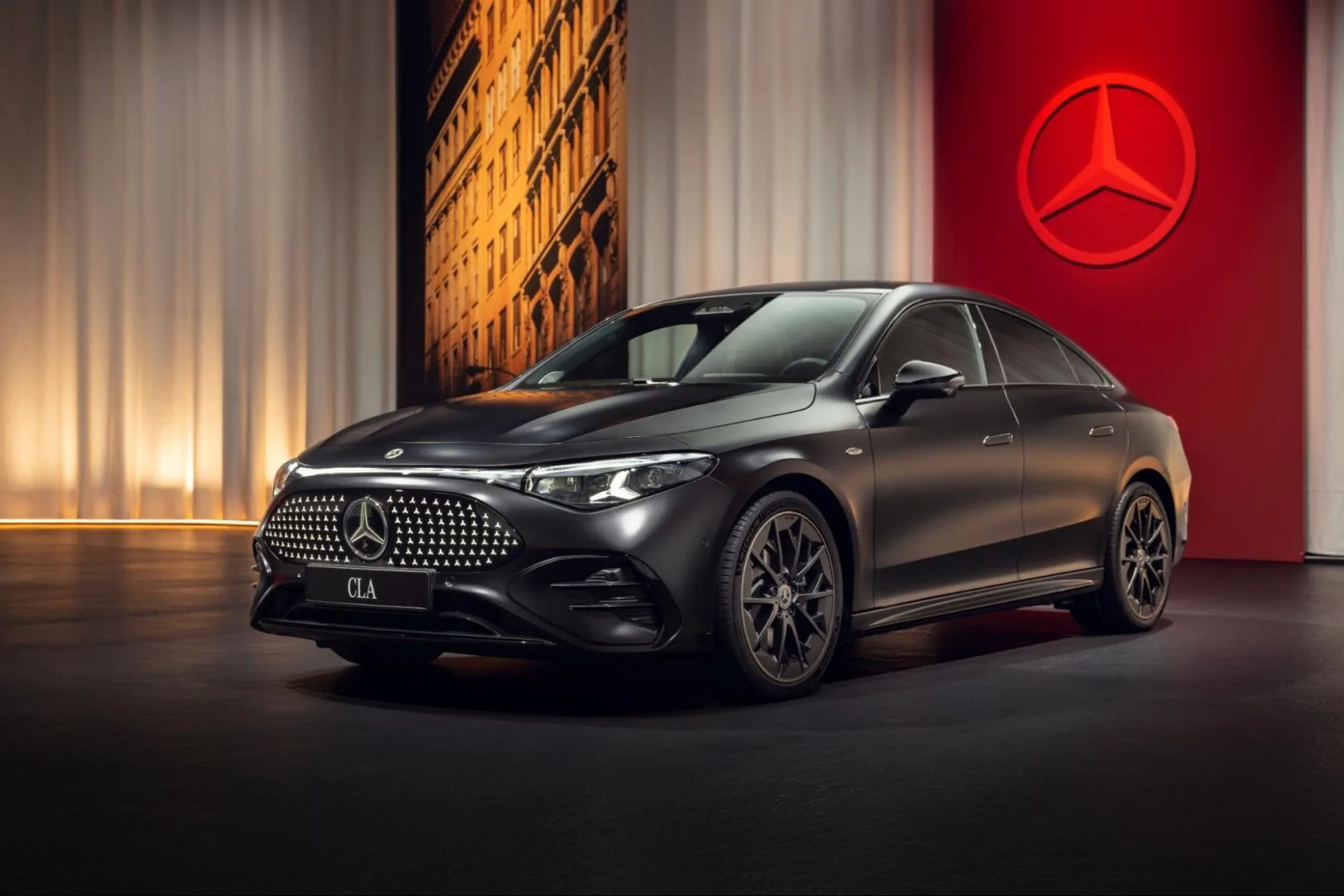
- Mercedes-Benz revealed its new GLC with EQ tech and its first fully electric shooting brake in the CLA family — all using NVIDIA AI.
- Volvo Cars featured the ES90 and EX90, emphasizing safety and driver assistance powered by DRIVE AGX.
- XPENG displayed its G6, G9, and X9 models with NVIDIA-powered XPILOT smart driving and intelligent cockpit features.
- ZYT demonstrated its autonomous driving software stack built on DRIVE AGX.
Technology Partners Drive the Software-Defined Vehicle Era
Beyond automakers, tech companies are tapping into NVIDIA’s platform to enable the future of software-defined vehicles:
- MediaTek integrates NVIDIA GPUs into Dimensity Auto Cockpit for intelligent in-car experiences.
- ThunderSoft introduced an AI Box powered by DRIVE AGX for smart cockpits, including copilots and safety monitoring.
- Cerence launched its xUI AI assistant, using NVIDIA NeMo Guardrails to deliver safe, context-aware voice interactions.
- ZF Group presented the ProAI supercomputer, unifying ADAS, automated driving, and chassis control — scalable up to full autonomy.
- RoboSense integrated its lidar tech with DRIVE AGX for enhanced perception.
- Desay SV revealed a DRIVE Thor-based domain controller for next-gen smart mobility.
- Magna showcased its scalable centralized ADAS platform, designed with NVIDIA DRIVE AGX Thor for future-ready flexibility.
The Road Ahead
From simulation to safety to real-time AI in the vehicle, NVIDIA is setting the standard for the next era of mobility. As Ali Kani stated, today’s vehicles are no longer just built — they are trained. And with cloud-to-car AI, they’re becoming smarter, safer, and more autonomous with every mile
source link