

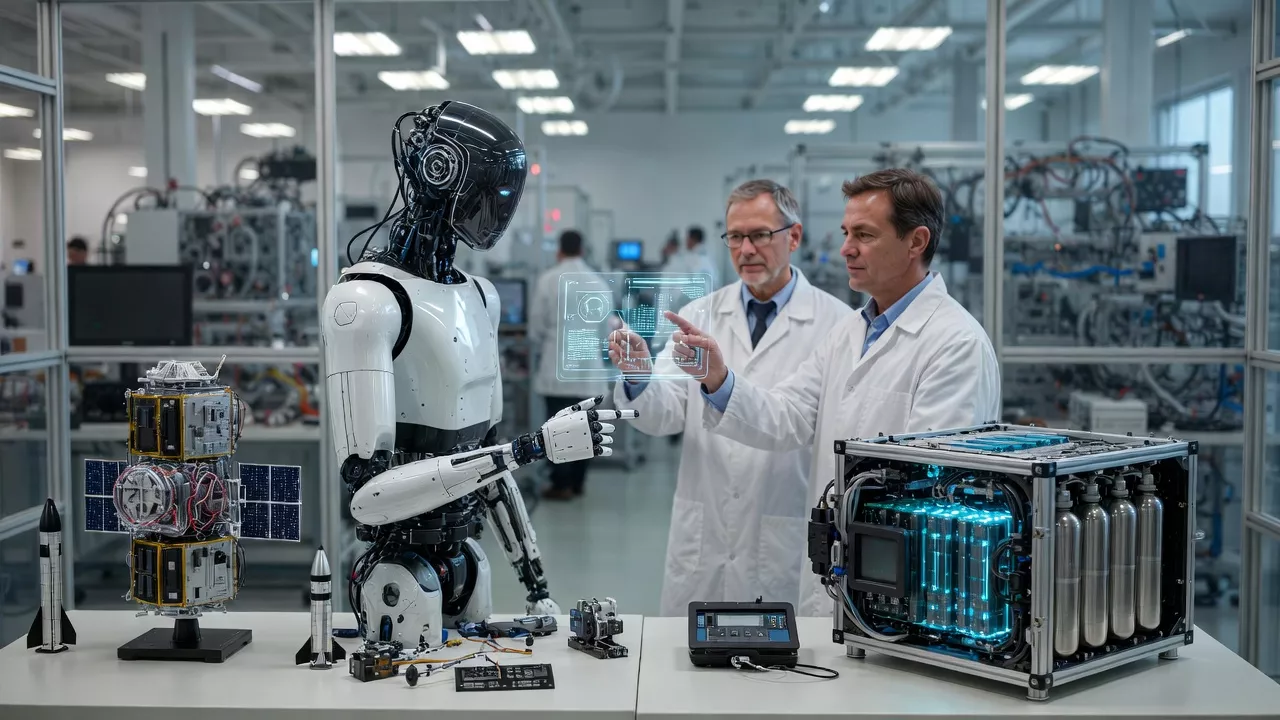
Showcasing breakthrough innovations in autonomous systems, space exploration, and next-generation energy solutions shaping the future of science and industry.
Southwest Research Institute (SwRI) marked an important milestone as its advisory trustees, board of directors, executive leadership, and invited guests convened at the organization’s headquarters in San Antonio for the Institute’s 78th Annual Meeting. The gathering offered a comprehensive look at SwRI’s latest technical achievements, emerging research priorities, and strategic initiatives that are shaping the Institute’s future as it approaches its 79th year of operations.
The annual meeting served as both a celebration of accomplishments and a forward-looking forum, highlighting the organization’s growing research volume, its expanding areas of expertise, and the continued evolution of its leadership structure. Throughout the day, SwRI staff presented updates on a wide range of projects, illustrating the Institute’s deep involvement in solving complex scientific and engineering challenges across industries and government sectors.
Expanding Robotics and Space Research
One of the key areas of focus at this year’s meeting was the Institute’s ongoing work in advanced robotics. SwRI engineers and scientists discussed their progress in developing robotic systems designed for demanding maritime environments and challenging space missions. These efforts reflect the growing need for autonomous and semi-autonomous technologies capable of operating in conditions that are dangerous or inaccessible for humans.
In maritime applications, robotics is playing an increasingly important role in inspection, maintenance, and exploration tasks. SwRI researchers are working on systems that can operate reliably in deep water, rough seas, and other harsh conditions, supporting industries such as offshore energy, shipping, and national defense.
In the space sector, SwRI continues to be a major contributor to scientific missions and technology development. The Institute’s robotics work is helping advance spacecraft operations, planetary exploration, and the automation of complex tasks in orbit and beyond. By combining robotics expertise with its long-standing leadership in space science, SwRI aims to support the next generation of missions across the solar system.
Machinery Innovation for High-Energy Fluids
Another major initiative highlighted at the meeting was the creation of a new Machinery Innovation Center for High-Energy Fluids. This center is designed to address the technical challenges associated with the handling and processing of high-energy fluid systems, which are critical in industries such as power generation, aerospace, and advanced manufacturing.
The center will focus on developing new technologies for turbomachinery, pumps, compressors, and other systems that must operate under extreme conditions. By bringing together experts in fluid dynamics, materials science, and mechanical engineering, SwRI hopes to drive innovations that improve efficiency, reliability, and safety across a wide range of applications.
This new facility is also expected to support industry partners by providing advanced testing capabilities and engineering solutions tailored to real-world challenges. As global demand for energy and advanced industrial processes continues to grow, the center represents a strategic investment in the future of high-performance machinery.
Addressing Infrastructure and Data Center Challenges
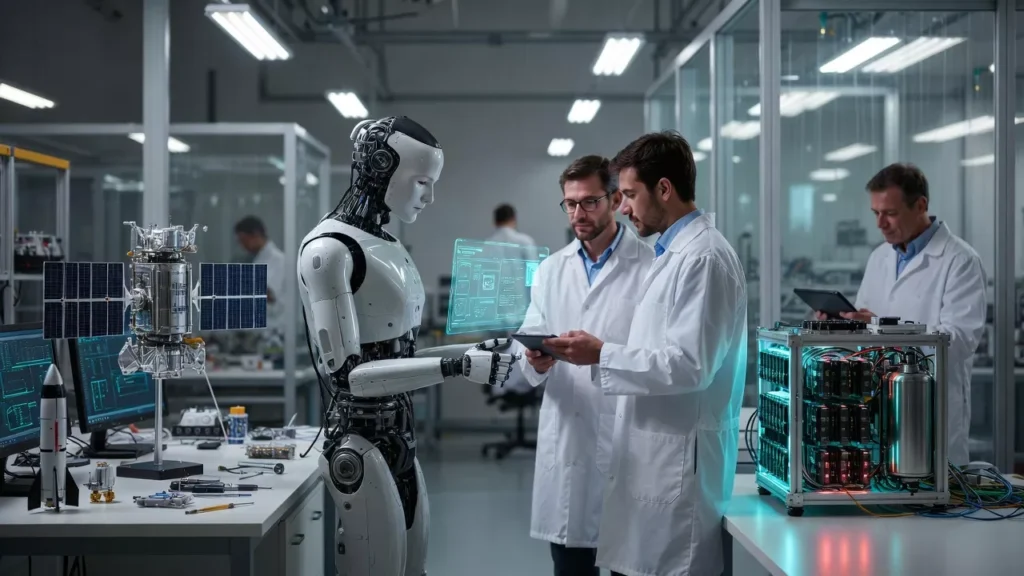
SwRI engineers also presented updates on their work addressing the growing infrastructure and energy demands associated with modern data centers. As the digital economy expands and artificial intelligence workloads increase, data centers are consuming more electricity and generating more heat than ever before.
To tackle these issues, SwRI researchers are developing new cooling technologies, energy-efficient systems, and advanced materials designed to improve performance while reducing environmental impact. These innovations aim to help operators meet rising demand without sacrificing reliability or sustainability.
The Institute’s work in this area underscores its role as a problem-solver for complex industrial challenges. By combining expertise in mechanical systems, power engineering, and advanced materials, SwRI is helping to shape the future of digital infrastructure.
Enhancing Aviation Safety with DARWIN®
Safety in aviation was another topic of discussion during the meeting. An SwRI analyst presented the Institute’s DARWIN® software, a probabilistic damage tolerance analysis tool designed to improve the safety and reliability of aircraft structures.
DARWIN® is used to assess the likelihood of structural failures caused by fatigue, cracks, or other forms of damage. By applying probabilistic methods, the software helps engineers better understand risks and make more informed decisions about design, maintenance, and inspection schedules.
This type of advanced analysis is particularly important in modern aviation, where aircraft are expected to operate safely for longer periods and under increasingly demanding conditions. Tools like DARWIN® allow manufacturers and regulators to improve safety standards while optimizing operational efficiency.
Exploring the Sun and the Outer Solar System
Space science remains one of SwRI’s most prominent areas of expertise, and the meeting featured updates on several major projects. Scientists discussed ongoing research into phenomena ranging from the Sun’s outer atmosphere to the chemistry of small bodies in the distant reaches of the solar system.
One of the Institute’s flagship missions is the NASA-led PUNCH (Polarimeter to Unify the Corona and Heliosphere) mission, which SwRI is leading. The mission is designed to study how the Sun’s outer atmosphere, known as the corona, transitions into the solar wind. By imaging large solar events as they travel through the inner solar system, the mission aims to improve understanding of space weather and its effects on Earth.
Space weather can have significant impacts on satellites, communication systems, and power grids. By improving the ability to predict solar storms, missions like PUNCH help protect critical infrastructure and support the safe operation of space-based technologies.
In addition to solar research, SwRI scientists are using the James Webb Space Telescope to investigate the chemical composition of small bodies in the outer solar system. These objects, which include comets and icy moons, hold important clues about the early history of the solar system and the processes that shaped planetary formation.
By analyzing the chemical signatures of these distant objects, researchers hope to gain new insights into how the solar system evolved and how the building blocks of planets and possibly life were distributed.
Leadership Perspectives and Organizational Growth
During the business portion of the meeting, SwRI President and CEO Adam Hamilton emphasized the Institute’s continued success and its ability to tackle some of the most difficult technical challenges facing society.
He highlighted the breadth and depth of the Institute’s staff, as well as the advanced research infrastructure located on the SwRI campus. According to Hamilton, these strengths are key drivers of the Institute’s long-term success as it continues to expand its capabilities and pursue new opportunities.
The meeting also marked leadership transitions within the organization’s board structure. Kim Lubel, former CEO of CST Brands Inc., is now serving her first term as Chair of the SwRI Board of Directors. Phil Green, Chairman and CEO of Cullen/Frost Bankers Inc., has begun his first term as Vice Chair.
Lubel expressed her enthusiasm for her new role, noting her long-standing relationship with the Institute. Having been affiliated with SwRI since 2014, she has served both as an Advisory Trustee and as a member of the Board of Directors. She praised the organization’s commitment to advancing science and technology in ways that benefit industry and the public.
According to Lubel, this is an exciting time to be part of the Institute, as it continues to push the boundaries of innovation and expand its impact across multiple sectors.
New Advisory Trustees and Record Research Volume
As part of the meeting, Hamilton introduced four newly elected Advisory Trustees, each of whom will serve a three-year term. The new trustees are Eric Brey, Ph.D.; Francisco Cigarroa, M.D.; Archie Holmes Jr., Ph.D.; and Lorie Logan.
The addition of these trustees reflects the Institute’s commitment to bringing diverse expertise and perspectives into its leadership structure. Advisory Trustees play an important role in guiding the organization’s strategic direction and ensuring that its work continues to align with industry needs and societal priorities.
The Institute also reported a record research volume of nearly $966 million for fiscal year 2025, underscoring its continued growth and relevance. This milestone highlights the strong demand for SwRI’s services and the increasing scope of its projects across government and commercial sectors.
In addition, the Board of Directors re-elected the Institute’s executive officers and vice presidents, ensuring continuity in leadership as SwRI moves forward into its next year of operations.
Looking Ahead to the Future
As the 78th Annual Meeting concluded, the overall message was clear: Southwest Research Institute is entering its next chapter from a position of strength. With record research volume, new leadership, and a broad portfolio of projects spanning robotics, energy, aviation, and space science, the Institute is well-positioned to continue addressing some of the world’s most pressing technical challenges.
From improving the safety of aircraft and infrastructure to exploring the farthest reaches of the solar system, SwRI’s work reflects a mission rooted in innovation, collaboration, and public benefit. As it approaches its 79th year, the organization continues to build on its legacy while preparing for the scientific and technological demands of the future.