
Westwater Resources, Inc. Sees Potential Boost in U.S. Natural Graphite Market Following Department of Commerce Final Duty Determination
Westwater Resources, Inc. (NYSE American: WWR), a leading energy technology company specializing in battery-grade natural graphite, announced a significant development in U.S. trade policy that could have major implications for the domestic graphite industry. The U.S. Department of Commerce (DOC) recently released its final determination in the anti-dumping and countervailing duty investigations concerning graphite-based anode materials imported from the People’s Republic of China. The determination imposes substantial tariffs and duties on Chinese imports, a move that Westwater believes could accelerate domestic demand for U.S.-produced graphite products.
Department of Commerce Final Determination
The DOC’s final ruling, issued on February 11, 2026, represents a decisive escalation from preliminary findings announced in 2025. Initially, the DOC had imposed countervailing and anti-dumping duties of 11.58% and 93.5%, respectively. In the final determination, the countervailing duty rate on Chinese graphite-based anode materials has been increased dramatically to 66.68%, while the anti-dumping duty rate remains at 93.5%. When combined with existing tariffs under various U.S. trade measures—including a 10% IEEPA tariff and 25% tariffs under both Section 301 and Section 232—the total duty burden on Chinese graphite imports is now estimated to be approximately 220%, according to Westwater Resources.
These tariffs reflect the DOC’s conclusion following a year-long investigation into alleged subsidization and unfair pricing practices by Chinese graphite anode producers. The investigation examined whether these practices negatively impacted the U.S. market by providing Chinese manufacturers with a competitive advantage over domestic suppliers. The DOC’s final determination represents one of the most significant trade enforcement actions in the graphite and lithium-ion battery supply chain in recent years.
Impact on the U.S. Graphite Market
The final determination could have profound implications for the U.S. natural graphite industry, particularly producers of battery-grade materials used in lithium-ion batteries. Graphite is a critical component in battery anodes, and high-quality natural graphite is especially important for applications in electric vehicles (EVs), battery energy storage systems (BESS), and defense applications. By imposing a total penalty of approximately 220% on Chinese imports, the DOC’s actions create a pricing and supply advantage for U.S.-produced graphite materials.
Westwater Resources has long emphasized the strategic importance of developing domestic sources of battery-grade natural graphite. The company’s flagship project, the Kellyton Graphite Processing Plant, located in east-central Alabama, is currently under construction and designed to produce high-quality graphite suitable for advanced battery applications. Additionally, Westwater’s Coosa Graphite Deposit, located in Coosa County, Alabama, is the largest and most advanced natural flake graphite deposit in the contiguous United States, spanning approximately 41,965 acres (around 17,000 hectares). These assets position Westwater as a key player in meeting the growing U.S. demand for battery materials.
Regulatory Next Steps
While the DOC has finalized its duty determinations, the tariffs are subject to a final affirmative injury determination by the U.S. International Trade Commission (ITC), expected in March 2026. The ITC will assess whether the domestic graphite industry has been materially injured or is threatened with injury as a result of imports from China. If the ITC issues a final affirmative ruling, the DOC duties will remain in place for a minimum of five years under U.S. trade law. This process ensures that trade measures are not only punitive but also aligned with protecting domestic industry interests.
In anticipation of a positive ITC decision, Westwater has expressed confidence that these trade measures will create favorable market conditions for U.S. producers. By effectively pricing Chinese graphite out of the U.S. market, domestic suppliers can capture market share in multiple high-growth sectors, including EV battery manufacturing, grid-scale energy storage, consumer electronics, and defense-related energy technologies.
Strategic Significance of Graphite in the Energy Transition
Graphite, particularly battery-grade natural graphite, has emerged as a critical material in the global transition toward cleaner energy. It serves as a primary component in the anode of lithium-ion batteries, which power electric vehicles, renewable energy storage systems, and portable electronics. The demand for graphite has surged in recent years as governments and industries worldwide accelerate decarbonization efforts.
The U.S. currently relies heavily on imported graphite, with a significant portion sourced from China, which dominates global graphite production. This reliance has raised concerns about supply chain security, particularly for industries critical to national energy infrastructure and defense. Westwater Resources’ development of domestic graphite supply chains aligns with broader U.S. policy objectives to strengthen energy security, reduce reliance on foreign suppliers, and support the domestic manufacturing base for critical battery materials.
Westwater’s Projects and Production Capacity
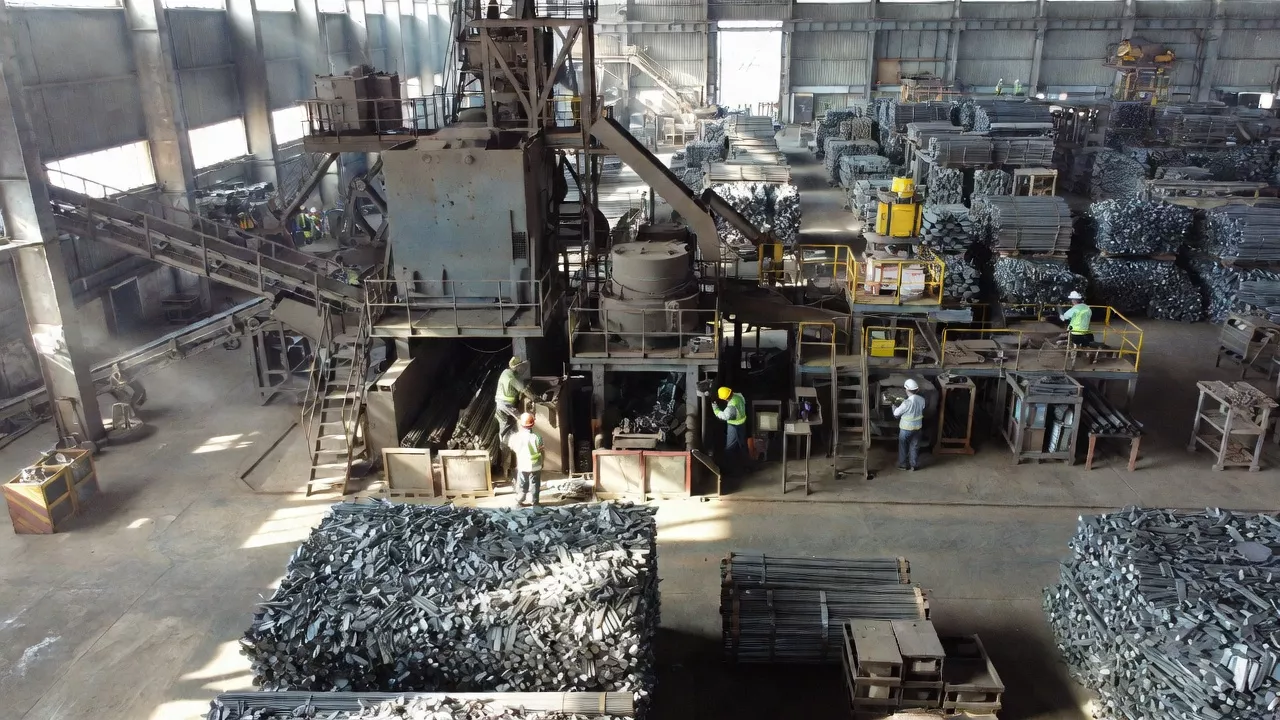
Westwater’s Kellyton Graphite Processing Plant represents a cornerstone of its growth strategy. Located in Alabama, the facility is designed to process high-quality natural flake graphite extracted from the Coosa Deposit into battery-grade material suitable for use in lithium-ion anodes. The plant will incorporate advanced processing technologies to ensure consistent particle size, purity, and performance characteristics necessary for high-performance batteries.
The Coosa Graphite Deposit itself is notable for its size, quality, and accessibility. As the largest natural flake graphite deposit in the contiguous United States, it provides Westwater with a long-term resource base capable of supporting sustained production for the growing battery market. By combining domestic extraction with advanced processing capabilities, Westwater is positioning itself to become a leading supplier of battery-grade graphite in North America.
Market Outlook and Industry Implications
Industry analysts have noted that the imposition of such substantial tariffs on Chinese graphite imports could reshape the competitive landscape. Companies that previously relied on lower-cost imports from China may seek domestic alternatives, accelerating investment in U.S.-based production and processing facilities. For Westwater, this represents a potential inflection point, as the company is among the few domestic producers capable of supplying battery-grade graphite at scale.
Furthermore, the tariffs may incentivize downstream manufacturers, including EV battery producers, to establish closer relationships with U.S. graphite suppliers. Such relationships can enhance supply chain resilience, reduce geopolitical risk, and align with federal initiatives aimed at supporting domestic critical minerals production.
Leadership Perspective
Westwater’s management has expressed optimism about the impact of the DOC’s final determination. The company views the combined trade measures as a validation of its long-term strategy to develop domestic graphite capabilities. By securing access to a reliable, U.S.-based supply of high-quality battery-grade graphite, Westwater is well-positioned to meet the increasing demand from multiple sectors.
Moreover, the company’s leadership emphasizes the broader strategic significance of the tariffs. Beyond immediate commercial benefits, the measures reinforce the U.S. commitment to strengthening domestic manufacturing of critical energy materials, supporting job creation, and reducing strategic vulnerabilities associated with dependence on foreign suppliers.
Conclusion
The U.S. Department of Commerce’s final determination in the anti-dumping and countervailing duty investigations represents a pivotal development for the U.S. natural graphite industry. By imposing total penalties of approximately 220% on Chinese graphite-based anode materials, the DOC has significantly altered the competitive landscape, creating potential opportunities for domestic producers such as Westwater Resources, Inc.
As the industry awaits the International Trade Commission’s final injury determination, Westwater remains focused on advancing its Kellyton Graphite Processing Plant and leveraging the Coosa Graphite Deposit to meet growing domestic and global demand. The combination of strategic location, resource quality, and advanced processing capabilities positions the company to benefit from heightened demand for U.S.-produced battery-grade graphite, particularly in the rapidly expanding electric vehicle, energy storage, and defense markets.
Ultimately, the DOC’s actions highlight the critical importance of domestic energy technology supply chains and reinforce Westwater’s role as a leading player in building a resilient and sustainable U.S. graphite industry. With the potential for long-term duties in place, the company is poised to capitalize on this unique market opportunity, contributing to both national energy security and the global transition toward clean, sustainable energy solutions.