


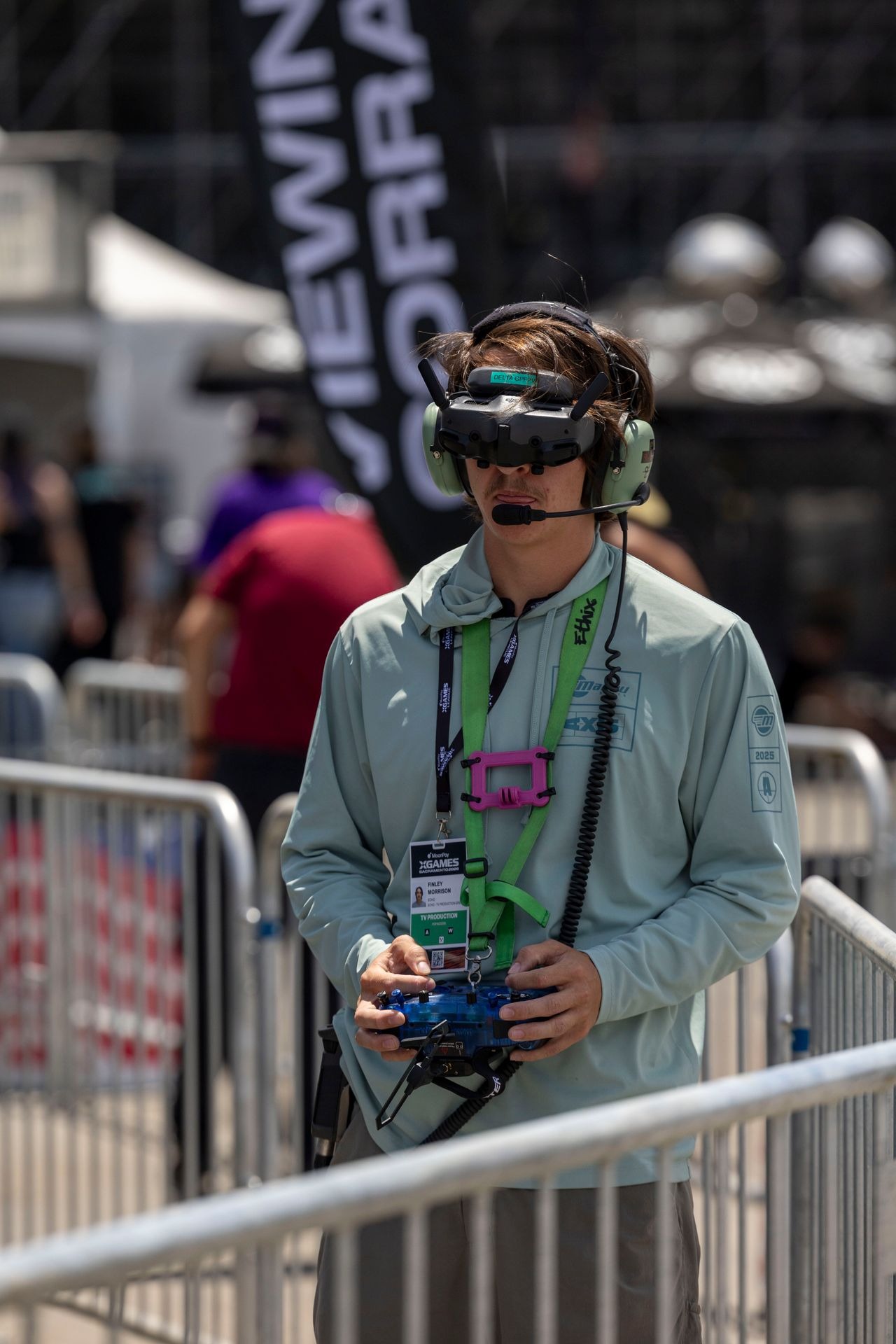
Kopin Corporation is strengthening its position within the rapidly evolving unmanned aerial systems market after receiving multiple prototype orders for its Sentinel first-person view (FPV) headset from industry partners participating in advanced drone initiatives for the U.S. military. The growing interest in the company’s technology reflects increasing demand for domestically manufactured solutions capable of supporting modern battlefield requirements, particularly as defense agencies seek to expand the production and deployment of tactical drone platforms.
The Sentinel FPV headset has been designed to provide operators with high-definition, ultra-low-latency imagery while maintaining situational awareness of their immediate surroundings. This combination of immersive visualization and environmental awareness addresses a critical requirement for military personnel operating drones in dynamic and complex operational environments.
The prototype orders arrive as several organizations evaluate technologies for inclusion in systems intended for the Pentagon’s Drone Dominance initiative, a major program aimed at accelerating domestic drone production, strengthening supply chain resilience, and reducing dependence on overseas suppliers.
As interest in small tactical unmanned aerial systems continues to grow across defense applications, Kopin’s Sentinel platform is emerging as a compelling option for manufacturers seeking advanced visualization capabilities, lightweight hardware, and secure American-made technology.
The U.S. Department of Defense has increasingly emphasized the strategic importance of unmanned aerial systems in modern warfare.
Small drones have demonstrated their effectiveness in reconnaissance, surveillance, logistics support, intelligence gathering, and precision strike missions.
Their relatively low cost, flexibility, and ability to operate in contested environments have made them indispensable tools across a wide range of military operations.
Recognizing the need to strengthen domestic production capabilities, the Pentagon launched the Drone Dominance program, an initiative valued at approximately $1 billion.
The program seeks to accelerate the development and manufacturing of small tactical drones within the United States while promoting innovation among domestic suppliers and technology providers.
One of the initiative’s primary objectives is to reduce reliance on foreign-made components and establish a more secure, resilient, and self-sufficient drone ecosystem.
This effort has become increasingly important amid growing geopolitical competition and concerns regarding supply chain vulnerabilities.
Companies participating in the program are actively evaluating technologies that can enhance the performance, reliability, and operational effectiveness of next-generation drone systems.
Kopin’s Sentinel headset is among the solutions currently being assessed for integration into future platforms.
First-person view systems play an increasingly significant role in drone operations.
By providing operators with a direct visual perspective from the aircraft, FPV technology enables precise maneuvering, enhanced navigation, and improved mission execution.
Traditional FPV systems, however, often present challenges related to user comfort, situational awareness, and operational flexibility.
Kopin developed Sentinel to address these concerns by combining immersive drone visualization with the ability for users to remain aware of their physical surroundings.
This capability is particularly valuable for military personnel who must maintain mobility and monitor nearby activities while simultaneously controlling unmanned systems.
The headset delivers high-definition imagery with extremely low latency, ensuring operators receive real-time visual feedback during flight.
Reducing transmission delays is essential in tactical environments where rapid decision-making can influence mission outcomes.
Latency can impact precision, responsiveness, and overall operator effectiveness.
By minimizing lag between drone movement and displayed imagery, Sentinel enables more intuitive control and supports demanding operational scenarios.
In addition to image quality and responsiveness, Sentinel emphasizes ergonomic design.
Its lightweight construction reduces user fatigue during extended missions and improves comfort during prolonged operational use.
Weight considerations are especially important for military personnel who frequently carry significant amounts of equipment in the field.
A compact, portable headset contributes to greater mobility and operational readiness.
One of Sentinel’s defining characteristics is its dual-situational-awareness architecture.
Unlike fully immersive systems that isolate users from their surroundings, Sentinel allows operators to retain awareness of nearby personnel, vehicles, and environmental conditions.
Maintaining situational awareness remains a fundamental requirement in military operations.
Drone operators may be required to move between locations, coordinate with team members, monitor threats, or react quickly to changing circumstances.
A system that enhances visual access to drone feeds without compromising environmental awareness provides a substantial tactical advantage.
The ability to remain mobile while operating drones is increasingly important as military organizations adopt decentralized operational concepts.
Distributed teams operating in contested environments require technologies that support flexibility, adaptability, and rapid response capabilities.
Sentinel’s design aligns with these evolving requirements.
By enabling operators to maintain visual contact with their surroundings while accessing critical drone imagery, the headset supports a more dynamic and resilient approach to unmanned system deployment.
This capability can prove particularly beneficial during reconnaissance missions, force protection activities, and expeditionary operations where operators cannot afford to become disconnected from their physical environment.

According to Kopin, several companies involved in the Drone Dominance initiative are evaluating Sentinel as part of their broader drone system offerings.
The assessment process includes examining various performance factors, including visual quality, latency, deployability, manufacturing readiness, and operational suitability.
Industry participants have reportedly expressed interest in several aspects of the Sentinel platform.
Its lightweight profile contributes to improved usability.
Its deployable design supports field operations.
Its American manufacturing base aligns with government priorities surrounding domestic production and supply chain security.
The defense sector increasingly favors technologies produced within the United States, particularly for mission-critical applications.
Domestic manufacturing offers multiple benefits, including greater control over quality standards, reduced geopolitical risk, and enhanced protection of sensitive technologies.
For companies competing within government procurement programs, access to trusted U.S.-based suppliers can represent a significant competitive advantage.
Kopin’s established presence in defense-oriented display technologies positions the company favorably within this environment.
The growing number of prototype orders suggests increasing confidence among industry partners regarding Sentinel’s capabilities and potential role in future drone deployments.
While current orders remain at the prototype stage, Kopin believes the Drone Dominance initiative could create substantial long-term demand for FPV headsets.
If participating drone systems progress from evaluation phases into full-scale production programs, requirements for operator equipment could increase significantly.
The company estimates that demand could eventually reach tens of thousands of FPV devices.
Such volumes would represent a meaningful growth opportunity for Kopin and underscore the expanding importance of human-machine interface technologies within the unmanned systems sector.
FPV headsets are becoming increasingly essential components within tactical drone ecosystems.
As drones become more capable and mission profiles more complex, operators require advanced visualization tools capable of supporting precision control and effective decision-making.
Kopin anticipates that customer evaluations and contract award decisions may lead to volume production orders beginning as early as late August.
Should these expectations materialize, Sentinel could transition rapidly from prototype evaluation to broader deployment across multiple defense programs.
The progression from testing to production would further validate the technology’s relevance within next-generation military applications.
The interest surrounding Sentinel reflects broader trends shaping the unmanned systems industry.
Governments worldwide continue to invest heavily in drone capabilities as they seek to modernize defense forces and adapt to emerging operational requirements.
Recent conflicts have demonstrated the effectiveness of low-cost unmanned systems in achieving strategic and tactical objectives.
As a result, military organizations are placing increased emphasis on scalability, affordability, and rapid deployment.
Small drones equipped with advanced navigation systems, artificial intelligence capabilities, and real-time communications technologies are becoming integral components of defense strategies.
Operator interfaces must evolve alongside these platforms.
Modern users require systems that provide intuitive controls, enhanced visualization, and seamless integration into broader operational networks.
FPV technologies are expected to play a critical role in enabling these capabilities.
In addition to one-way attack drones, advanced visualization systems may find applications in surveillance operations, logistics support, intelligence gathering, border security missions, and autonomous vehicle management.
The versatility of such technologies expands their potential market opportunities beyond a single defense program.
Another important aspect of Sentinel’s appeal is its status as a U.S.-manufactured solution.
The defense sector increasingly prioritizes domestic sourcing initiatives to strengthen national industrial capabilities and reduce exposure to external supply chain disruptions.
Building resilient manufacturing ecosystems has become a central objective for policymakers and military planners.
Advanced electronics, display technologies, sensors, and communication systems are all areas receiving increased attention as governments seek to secure critical technology supply chains.
Kopin’s commitment to producing defense-ready solutions within the United States aligns closely with these strategic priorities.
Domestic manufacturing not only supports national security objectives but also contributes to economic development through investment in engineering expertise, production facilities, and skilled labor.
Programs such as Drone Dominance are designed in part to stimulate innovation among American companies while ensuring access to technologies essential for future military readiness.
By positioning Sentinel as an American-made solution, Kopin strengthens its ability to participate in these initiatives and address evolving customer requirements.
Commenting on the company’s recent momentum, Kopin Chief Executive Officer Michael Murray highlighted growing customer interest in Sentinel and the broader opportunities emerging within the drone sector.
“We’re seeing tremendous momentum as multiple customers—including several competing in the Drone Dominance Program—turn to Kopin’s U.S.-made Sentinel FPV product for next-generation drone systems,” Murray said.
He noted that the prototype orders serve as validation of the company’s design philosophy and long-term commitment to supporting defense customers with reliable technologies.
“These new prototype orders validate the strength of our dual-situational-awareness design and our commitment to building trusted, defense-ready solutions here in the United States,” he added.
Murray’s remarks reflect confidence in Sentinel’s market potential and underscore the importance of developing solutions tailored specifically for defense applications.
As drone technologies continue to advance, companies capable of delivering highly specialized components and operator systems are expected to play increasingly important roles within the defense ecosystem.
The coming months are likely to be significant for Kopin as industry participants complete evaluations and prepare for procurement decisions associated with the Drone Dominance initiative.
Positive outcomes could lead to expanded partnerships, increased production activity, and broader adoption of Sentinel across a range of tactical drone platforms.
More broadly, the company’s progress highlights how innovations in visualization technologies are becoming critical enablers of unmanned operations.
The effectiveness of drones depends not only on airframe design and propulsion systems but also on the quality of interfaces that connect human operators with autonomous platforms.
Sentinel represents an example of how advanced display technologies can enhance operational effectiveness, improve situational awareness, and support mission success in increasingly demanding environments.
As military organizations continue to embrace unmanned systems as core components of future force structures, demand for sophisticated FPV solutions is expected to grow.
With multiple prototype programs underway and increasing recognition from industry partners, Kopin appears well positioned to capitalize on this evolving landscape and contribute to the next generation of drone-enabled capabilities for the United States defense community.
Source link: https://dronefront.com