


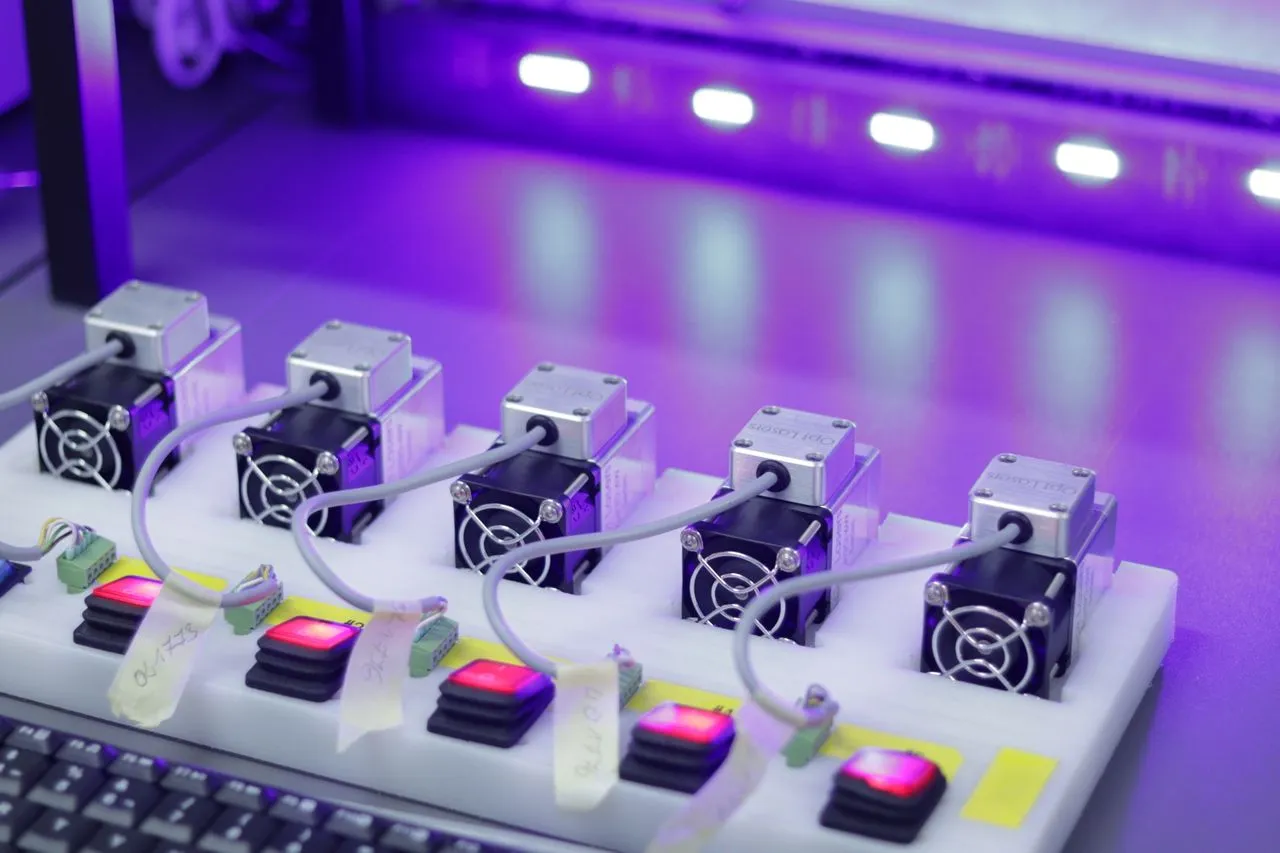
Gigaphoton Inc., a Japan-based manufacturer of light sources for semiconductor lithography, has announced the development of hTGM for ArF, a new on-site neon gas recycling system designed for argon fluoride (ArF) excimer lasers used in semiconductor manufacturing.
The new system is intended to help semiconductor manufacturers reduce neon gas consumption, improve the stability of laser operations and address growing concerns over the availability and supply of rare gases. As semiconductor production becomes increasingly dependent on advanced lithography technologies, maintaining a stable supply of critical materials such as neon has become an important consideration for manufacturers.
Based in Oyama, Tochigi, Japan, Gigaphoton develops excimer laser light sources used in semiconductor lithography processes. The company’s latest development expands its existing gas-recycling technologies from krypton fluoride (KrF) excimer lasers to ArF systems, supporting manufacturers operating advanced semiconductor production lines.
ArF lithography plays an important role in the production of advanced semiconductor devices. Excimer lasers are used as light sources in lithography equipment, where precise patterns are transferred onto semiconductor wafers during the chip manufacturing process.
The reliability and stability of the laser light source are critical to maintaining consistent production. At the same time, excimer laser systems consume rare gases during operation, creating an ongoing need for efficient gas management.
Neon is particularly important in excimer laser applications. However, the global supply-demand balance for neon has become increasingly uncertain in recent years. Geopolitical developments and disruptions to international supply chains have contributed to concerns about the availability and procurement of rare gases.
For semiconductor manufacturers, fluctuations in the availability or cost of neon can create additional challenges in maintaining stable production. Gigaphoton has therefore been developing technologies designed to reduce gas consumption and recycle used gases, helping customers make more efficient use of available resources.
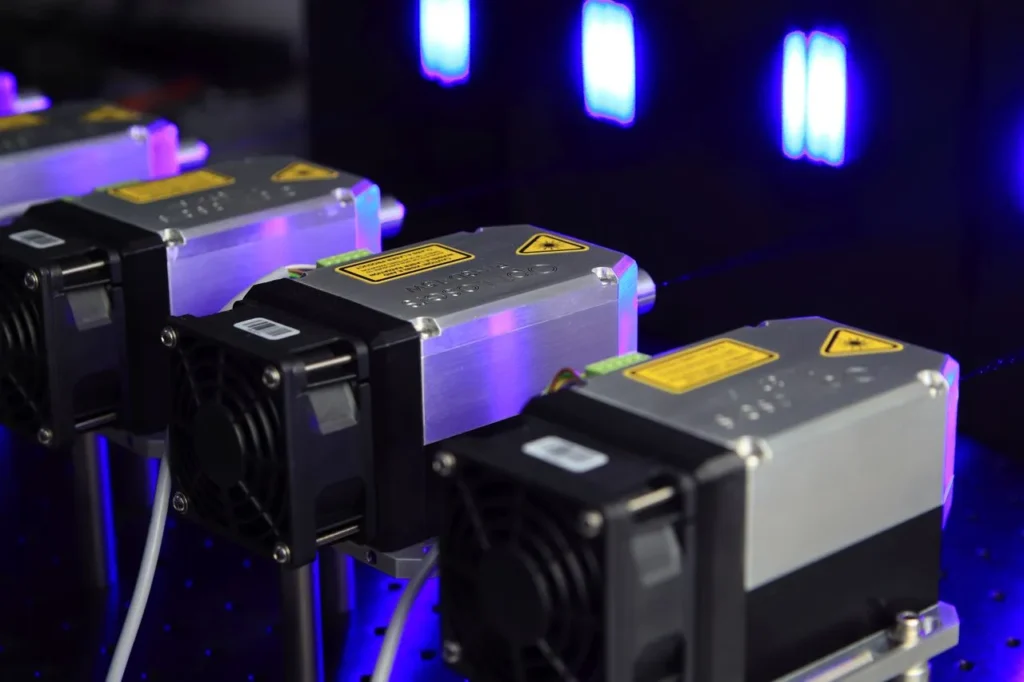
The newly developed hTGM for ArF is designed to collect and recycle used gas directly within semiconductor fabrication facilities, commonly known as fabs.
Rather than allowing used gas to be discarded after operation, the system captures and processes the gas so that it can be reused. This on-site recycling approach is intended to reduce overall neon consumption while supporting stable operation of ArF excimer laser systems.
According to Gigaphoton, a single hTGM for ArF unit can reduce gas consumption by up to 470 kiloliters per year. The system can also be connected to as many as five ArF lasers, allowing manufacturers to integrate the technology across multiple laser systems within a fab.
The ability to connect multiple lasers to one recycling system could make the solution suitable for semiconductor production environments where numerous lithography tools operate simultaneously. Centralizing gas recycling can also simplify the management of gas resources within the manufacturing facility.
The benefits of gas recycling extend beyond supply security. Resource efficiency is becoming an increasingly important consideration across semiconductor manufacturing.
Modern semiconductor fabs consume significant quantities of materials, gases, water and electricity. As global demand for semiconductors increases, manufacturers are exploring technologies that can reduce resource consumption without compromising production quality.
Neon recycling represents one approach to improving resource efficiency. Recovering and reusing gas that would otherwise be consumed can reduce the requirement for newly supplied material.
Gigaphoton’s hTGM for ArF is therefore positioned as both a gas-management technology and a resource-efficiency solution. The company says its broader objective is to combine laser technologies that reduce gas consumption with systems capable of recycling gases on-site.
Gigaphoton Inc., a Japan-based manufacturer of light sources for semiconductor lithography, has announced the development of hTGM for ArF, a new on-site neon gas recycling system designed for ArF excimer lasers used in semiconductor manufacturing.
The new system is aimed at helping semiconductor manufacturers reduce their consumption of neon gas while maintaining stable laser performance and improving the efficiency of critical resources used in chip production. The development comes as semiconductor manufacturers face increasing pressure to secure reliable supplies of specialty gases and strengthen the resilience of their production operations.
Gigaphoton has developed hTGM for ArF using hardware commonality with its existing hTGM for KrF system.
This commonality is intended to support efficient production ramp-up and build on technologies that have already been developed for gas recycling applications.
Using common hardware platforms can also help streamline manufacturing processes and potentially simplify the expansion of Gigaphoton’s gas-recycling portfolio.
The company has already supported customers with gas-reduction technologies and recycling systems for KrF excimer lasers. By applying its experience to ArF systems, Gigaphoton is extending its resource-efficiency strategy to another important category of semiconductor lithography equipment.
Gigaphoton has previously supported semiconductor manufacturers with technologies aimed at reducing gas consumption and recycling gases used in KrF excimer lasers.
The introduction of hTGM for ArF extends this approach to ArF lithography, allowing manufacturers using ArF laser systems to apply similar gas-recycling capabilities.
The company has also designed the new system with hardware commonality with its existing hTGM for KrF technology. This commonality is intended to facilitate efficient production ramp-up and help streamline the manufacturing and deployment of the new ArF system.
Source Link: https://www.businesswire.com/