

Toshiba Electronic Devices & Storage Corporation has announced the start of mass production of its TXZ+™ Family Entry-Class M4H Group of standard microcontrollers. Designed around an Arm® Cortex®-M4 core with a floating-point unit (FPU), the new microcontrollers are aimed at small-scale system control applications across consumer products and industrial equipment.
The M4H Group is designed to address applications that require dependable real-time performance, stable operation, flexible system configurations, and ease of development without the need for highly specialized or application-specific processing capabilities. Target applications include consumer products such as air conditioners and washing machines, as well as industrial equipment, multifunction printers, factory automation systems, and other office and commercial equipment.
As consumer and industrial products become increasingly sophisticated, system designers face growing demands for microcontrollers that can deliver reliable control performance while remaining straightforward to integrate into existing and new product designs. Many applications do not require highly advanced, specialized functions. Instead, they need essential control capabilities that can support a wide variety of system architectures and remain suitable for long-term product development.
Toshiba has developed the TXZ+ Family Entry-Class M4H Group with these requirements in mind. The new microcontrollers combine essential system control functions with a high-performance Arm Cortex-M4 core, providing a balance between processing capability, versatility, and ease of use.
Although positioned as entry-class microcontrollers, the M4H Group incorporates an Arm Cortex-M4 core with an FPU and supports operating speeds of up to 120MHz. This processing capability is designed to provide the real-time responsiveness required for a broad range of system control tasks.
The microcontrollers can support fundamental functions such as control logic, interface processing, and timing management. These capabilities make the devices suitable for systems where dependable and responsive control is important but highly specialized computing performance is not required.
The integration of an FPU further supports applications that require floating-point calculations, while the Cortex-M4 architecture provides a familiar platform for developers working within the Arm ecosystem.
One of the key characteristics of the M4H Group is its wide 2.7V to 5.5V supply voltage range. This allows the microcontrollers to be incorporated into both 3V and 5V system designs, giving engineers greater flexibility when developing or updating equipment.
The devices also feature a high-speed internal oscillator with ±1% accuracy. By providing an accurate internal clock source, the oscillator can help reduce the need for additional external components, potentially simplifying system design and providing greater flexibility when laying out hardware.
This combination of voltage flexibility and integrated clock functionality allows the M4H Group to support a range of configurations, including derivative development based on existing equipment and entirely new system designs.
The Toshiba M4H Group integrates a selection of peripheral functions commonly required in system control applications. These include a 12-bit analog-to-digital converter (ADC), timers, UART, SPI, I²C, and direct memory access (DMA).
The integrated 12-bit ADC can support applications that need to process analog signals, while the various communication interfaces provide connectivity with sensors, peripheral devices, displays, memory components, and other system elements.
Timers can be used for timing-related control tasks, while DMA helps manage data transfers between memory and peripherals with reduced processor intervention. Together, these functions provide a practical set of capabilities for embedded system developers.
The Toshiba microcontrollers also incorporate an Advanced Programmable Motor Control circuit (A-PMD) designed to support brushless DC motor control. This feature expands the potential application range of the M4H Group, particularly in equipment where motor-driven functions form part of the overall control architecture.
The flexibility of the M4H Group is intended to benefit manufacturers developing both new products and updated versions of existing equipment. Standard microcontrollers are designed to emphasize versatility rather than being optimized for only one specific application.
This Toshiba approach can be particularly useful for manufacturers that manage multiple product variants or need to adapt control systems to different power supply conditions and peripheral requirements.
The Toshiba M4H Group also provides 256KB of code flash memory and 18KB of RAM, offering memory resources for embedded control applications. The devices incorporate a memory protection unit (MPU) as part of the Cortex-M4 architecture and include self-diagnosis functions intended to support functional safety requirements.
Toshiba is also offering three package types, allowing customers to select an option based on available mounting space and assembly requirements. This provides additional flexibility for products with different board layouts and mechanical constraints.
To help customers move from initial evaluation to production, Toshiba is providing a range of development resources for the new microcontrollers. These include product documentation, sample software, and driver software for peripheral functions.
The company also plans to progressively introduce evaluation boards and development environments in cooperation with Arm ecosystem partners. These resources are intended to help engineers evaluate the devices, develop applications, test system configurations, and prepare designs for mass-production ramp-up.
By combining the M4H hardware with development and software support, Toshiba aims to make the transition from device evaluation to final product development more straightforward.
The TXZ+ Family Entry-Class M4H Group is designed for a broad range of system control applications. In the consumer market, potential applications include system control units for home appliances and other consumer products, where reliable control of functions, interfaces, timing, and motors is required.
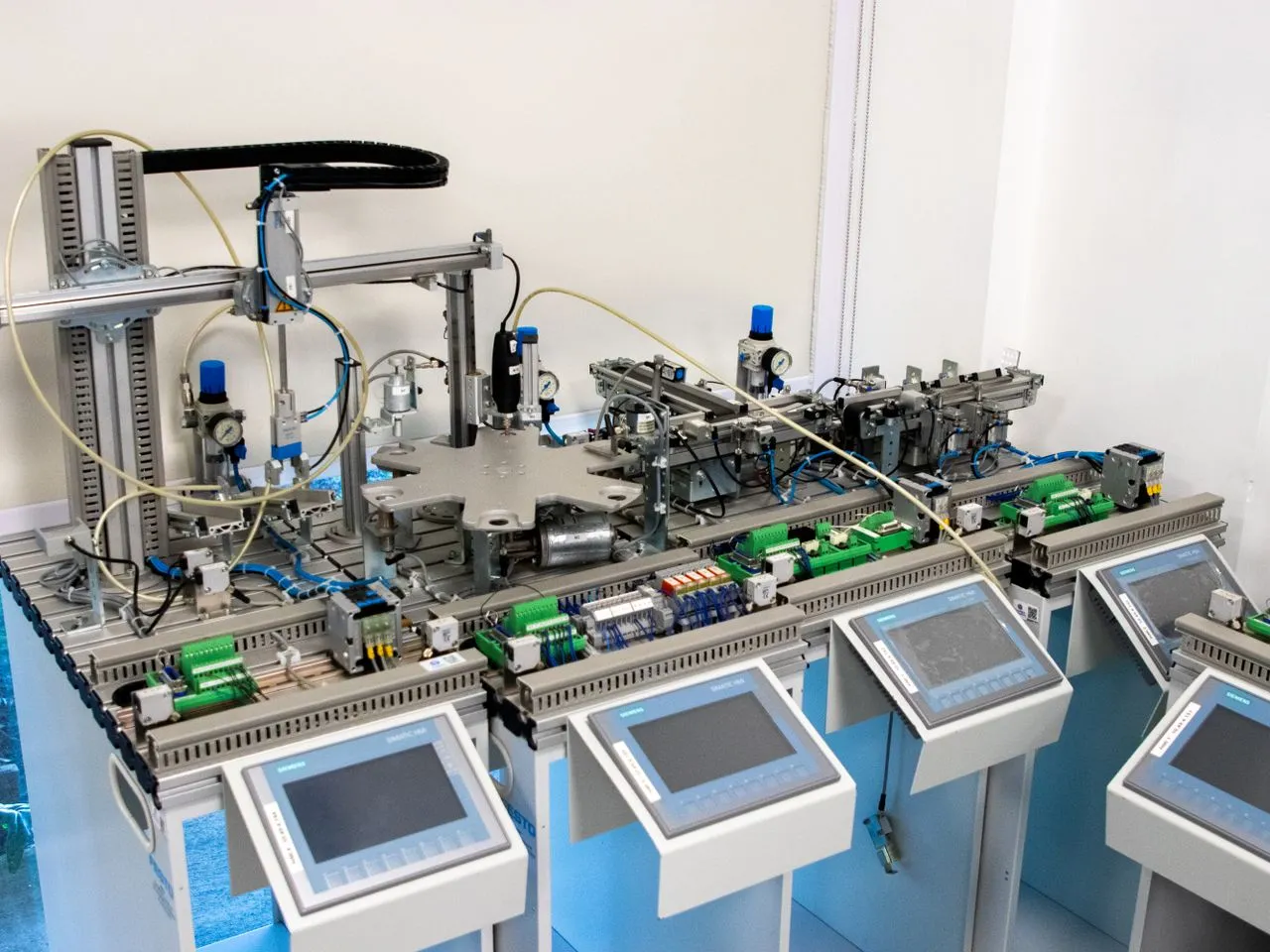
In industrial environments, the microcontrollers can support industrial equipment and factory automation systems, while their integrated peripherals and flexible power supply range can also make them suitable for office and commercial equipment.
The combination of processing performance, integrated peripherals, motor-control capabilities, flexible voltage operation, and development support gives system designers a versatile platform for implementing essential embedded control functions.
With the start of mass production, Toshiba is expanding its portfolio of microcontrollers aimed at system control applications. The company says it will continue developing design-support resources and enhancing its lineup of microcontroller products for consumer and industrial equipment.
The TXZ+ Family Entry-Class M4H Group is positioned as a standard, versatile microcontroller solution for applications where essential control functions, dependable real-time performance, and ease of system integration are priorities.
By combining an Arm Cortex-M4 core with FPU, operation at up to 120MHz, a 2.7V to 5.5V supply range, accurate internal clocking, multiple communication interfaces, analog and timing functions, DMA, and motor-control capabilities, the M4H Group is designed to provide a flexible foundation for a wide variety of embedded system designs.
The new devices are now entering mass production as Toshiba continues to focus on providing microcontroller solutions that can support both current system requirements and future product development across consumer, industrial, office, and commercial applications.
Source Link: https://www.businesswire.com/