



Open Science When COVID-19 emerged, researchers had an important advantage: decades of scientific work on coronaviruses had already provided a foundation for understanding the virus and its critical proteins. That accumulated knowledge helped scientists move quickly toward vaccines and other countermeasures.
The Open Science next pandemic, however, may involve a virus that scientists know far less about.
To help researchers prepare before the next outbreak occurs, NVIDIA is collaborating with a global group of research organizations, including Google DeepMind and the European Molecular Biology Laboratory’s European Bioinformatics Institute (EMBL-EBI), to make predicted 3D structures of viral protein complexes openly available to scientists around the world.
The Open Science new dataset contains predicted structures for protein complexes from more than 2,800 viruses. The information is being made available through the AlphaFold Database, giving researchers a new resource for studying viruses and their biological mechanisms before those pathogens become urgent public-health threats.
The project reflects a broader principle: pandemic preparedness can begin long before an outbreak. By making foundational biological information openly accessible, researchers can potentially reduce the time needed to understand an unfamiliar virus when a crisis emerges.
The Open Science newly released structures were predicted using AlphaFold2, Google DeepMind’s artificial intelligence model for predicting how proteins fold into three-dimensional structures. NVIDIA helped optimize the computational workflow using the NVIDIA BioNeMo Inference Runtime, enabling the team to scale the process across thousands of viral proteomes.
Rather than predicting only individual proteins, the project focused on complexes — groups of proteins that interact with one another and often play important roles in biological processes.
“Our ambition with the AlphaFold Database has always been to democratize access to foundational biology at scale,” said Risha Patel, life sciences partnerships manager at Google DeepMind. She said the collaboration will provide scientists with structural insights that can support research aimed at preparing for future outbreaks.
NVIDIA is also making the BioNeMo Structure Prediction Pipeline openly available. The GPU-accelerated workflow allows researchers to move from a protein sequence to a predicted 3D structure for their own targets, giving the scientific community access not only to the resulting dataset but also to tools that can support additional research.
The Open Science need for such preparation is significant. An analysis by the Center for Global Development estimates that there is roughly a 50% chance of the world experiencing a pandemic as severe as COVID-19 by 2050.
Joe Grove, professor of molecular virology at the Medical Research Council-University of Glasgow Centre for Virus Research and a collaborator on the project, emphasized the value of building knowledge before an emergency begins.
“When the Open Science next pandemic happens, there may be something that comes out of the blue, and we’ll be lacking the knowledge we had for COVID,” Grove said. “What we’re trying to do is stockpile some of that knowledge ahead of time.”
Proteins rarely function in isolation. Many biological processes depend on groups of proteins interacting to perform specific functions, and these interactions can be critical targets for medicines and vaccines.
The Open Science spike protein of SARS-CoV-2, the virus responsible for COVID-19, is one example of why structural biology matters. Understanding its three-dimensional shape and how it interacts with other molecules provided researchers with valuable information for developing vaccines and other countermeasures.
For thousands of other viruses, comparable structural knowledge remains limited or unavailable.
The Open Science new dataset aims to help close some of that gap by providing predicted structures for protein complexes from viral families known to infect humans. The work spans viruses associated with familiar illnesses, including common colds, as well as emerging threats such as Mpox.
Approximately 30% of the predicted protein interactions included in the dataset are completely new to science. Their predicted structures have not previously been documented in the Protein Data Bank, the major repository of experimentally determined protein structures.
These previously undocumented interactions could give scientists new questions to investigate and provide starting points for future experimental research.
“This Open Science database is an engine for hypothesis generation,” said Chris Dallago, applied research science team lead in digital biology at NVIDIA. He explained that the resource enables researchers to study proteins not only as individual molecules but also as interacting complexes.
Traditionally, determining the three-dimensional structure of a protein can be a lengthy and resource-intensive process. Experimental approaches such as protein crystallization and X-ray analysis can require substantial time and financial resources.
AI-based structure prediction offers another approach.
AlphaFold2 can predict protein structures computationally in minutes, making it possible to analyze large numbers of proteins in a way that would be impractical using experimental methods alone. NVIDIA’s GPU-accelerated BioNeMo technologies help researchers run these workloads efficiently at scale.
Predicted structures do not replace laboratory experiments. Instead, they can provide scientists with a starting point for further investigation, allowing researchers to identify promising structures and interactions for experimental validation.
The Open Science ability to process thousands of viral proteins systematically is particularly valuable for pandemic preparedness. Rather than waiting for an unfamiliar pathogen to emerge before beginning structural analysis, scientists can build a library of potential biological information in advance.
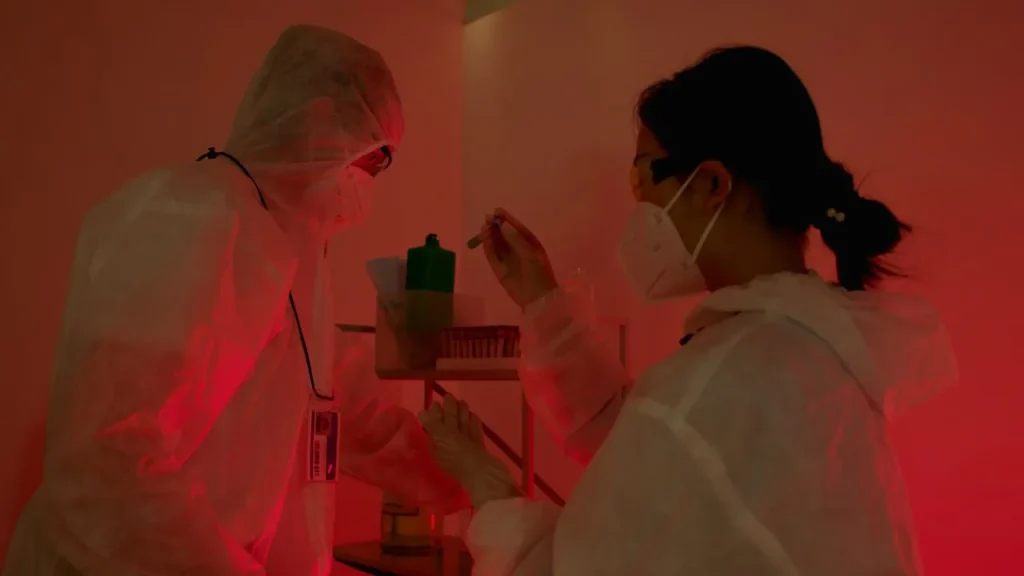
The project brings together organizations from across the global scientific community, including the Coalition for Epidemic Preparedness Innovations, EMBL-EBI, Google DeepMind, NVIDIA, Seoul National University, Sungkyunkwan University, the Swiss Institute of Bioinformatics and the University of Glasgow.
The new dataset contributes to the AlphaFold Database, which now contains more than 260 million predicted protein and protein-complex structures covering nearly every cataloged protein known to science.
Making the viral data openly available is a key part of the initiative. Researchers can access the information regardless of where they work, potentially helping scientists at institutions with fewer resources conduct advanced structural research.
“Making this data open is critical for understanding viral diagnostics and developing treatments and vaccines,” said Jo McEntyre, interim director of EMBL-EBI. She also highlighted the importance of including lesser-studied viruses and lowering barriers for scientists working in regions where outbreaks may occur.
The Open Science predictions are labeled according to their confidence levels, allowing researchers to assess how much trust to place in individual structural predictions and helping guide decisions about which findings may warrant further investigation.
The Open Science broader goal of the project is not to predict exactly which virus will cause the next pandemic. Instead, it is about reducing the amount of uncertainty scientists may face when a new threat emerges.
By making structural information available in advance, researchers can begin an outbreak with a larger scientific knowledge base. Instead of starting from scratch, they may be able to use existing predictions to identify potential protein interactions, understand biological mechanisms and prioritize laboratory experiments.
For researchers such as Grove, that represents a significant change from the experience of earlier generations of scientists.
“When I did my Ph.D., there were no structures for any of the proteins we were investigating. It was like working in the dark — we had to guess what was going on,” he said.
Today, AI-powered structural prediction is helping change that landscape. Open datasets and accessible computational tools can give researchers a clearer view of biological systems before they encounter them in an emergency.
The Open Science viral protein complex dataset is therefore more than a collection of predicted structures. It represents an effort to make scientific knowledge available before it is urgently needed — giving researchers around the world a stronger foundation for investigating viruses, developing hypotheses and accelerating future work on diagnostics, treatments and vaccines.
By combining artificial intelligence, high-performance computing and open science, the collaboration aims to ensure that when the next unfamiliar virus emerges, scientists have more information to work with from the very beginning.
Source Link: https://blogs.nvidia.com/