

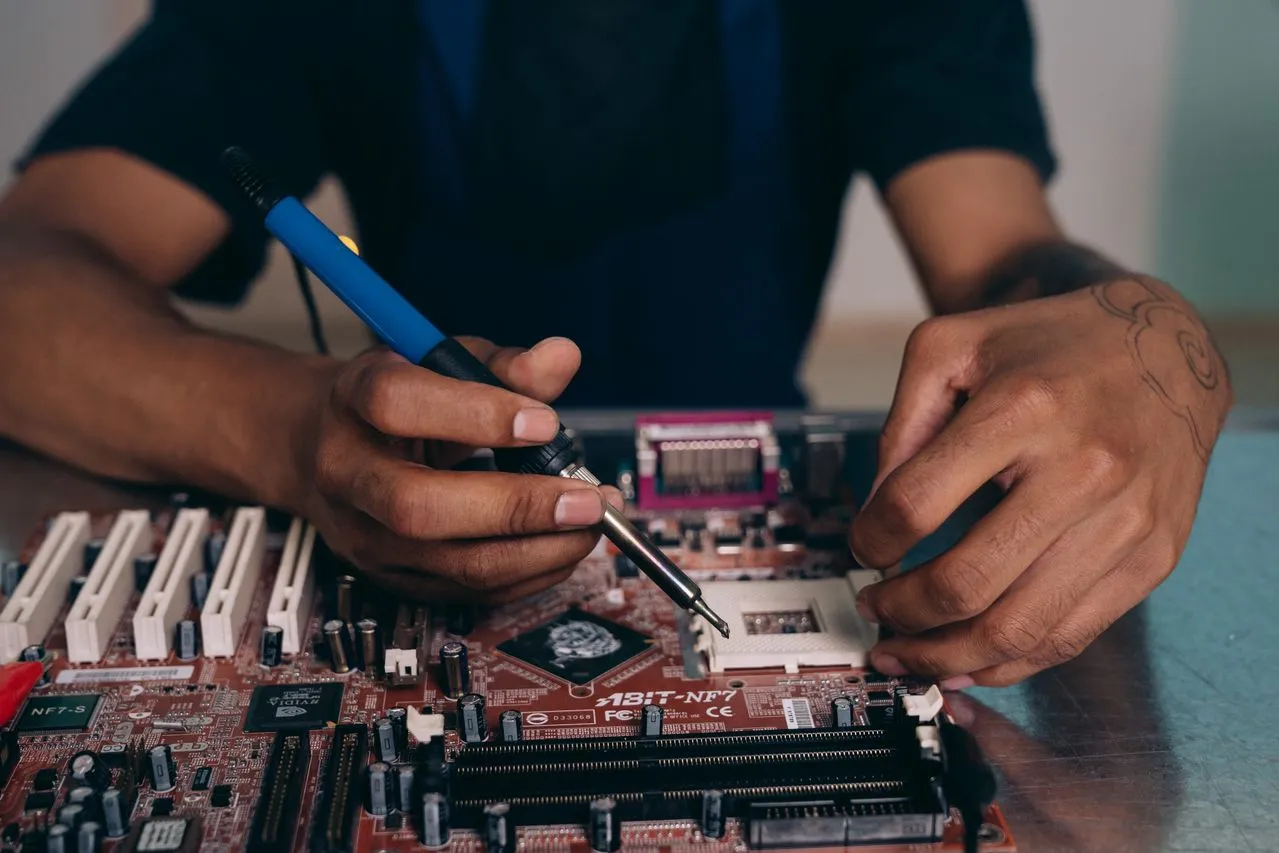
Sakeena Fiza, working as a validation engineer at NVIDIA is less about simply testing hardware and more about solving mysteries. Her role requires engineers to look for the smallest signs of failure, investigate unexpected behavior and push systems to their limits before they ever reach customers.
“Validation engineers look in the shadows and shine a light into every corner,” Fiza said. “Every time we get a system, our first thought is: how can it break?”
When something does go wrong, she approaches the problem as a puzzle waiting to be solved.
“I always like to think of it as a mystery to solve,” she said.
At Sakeena NVIDIA, the systems Fiza and her colleagues investigate in the data center systems engineering lab are the infrastructure behind the AI era. Their work begins long before a product reaches the market. In many cases, it starts the moment a new system receives power for the first time.
Sakeena Engineers bring individual components online, integrate boards, coordinate with firmware and software teams, and monitor the system for its earliest signs of operation. It is a collaborative process in which every successful step can represent a major milestone.
One of Fiza’s most memorable moments at NVIDIA came when she saw the NVIDIA Rubin GPU operate at the system level for the first time.
“It literally just said, ‘NVIDIA Corporation Device,’” she recalled. “And everyone’s cheering and celebrating because it’s the first time in the world that a Rubin GPU enumerated at a system level.”
That moment of excitement, however, is only the beginning of the validation journey. Once a system powers on and demonstrates that its components can work together, engineers must ensure it can remain reliable under demanding conditions and at increasingly large scales.
The Sakeena system must progress from an individual tray to a rack, from a rack to a cluster, and eventually through production and deployment into a customer’s AI factory.
Fiza describes validation as a process in which engineers effectively become a product’s first customers. Before systems enter mass production, validation teams put hardware through extensive testing designed to expose problems under real-world conditions.
The Sakeena objective is straightforward: identify and resolve issues before customers encounter them.
“The Sakeena goal is to always catch issues before customers catch it,” Fiza said.
That responsibility requires engineers to think beyond individual components. A system can contain thousands of interacting parts, each of which must perform correctly while also working seamlessly with the others.
For Fiza, this is one of the most compelling aspects of her job. Validation sits at the intersection of multiple engineering disciplines, including hardware, firmware, software, mechanical design, thermal management, manufacturing and customer experience.
“I get to be a mechanical engineer when I want to be,” she said. “I get to be an electrical engineer when I want to be. I get to be a firmware engineer when I want to be.”
The problems she encounters can range from highly complex system-level failures to seemingly insignificant physical details.
A rack-scale problem could involve high-speed signaling, thermal limits or power integrity. In other situations, the cause might be something as simple as a screw that was tightened too much or environmental factors such as dust inside a customer facility.
“The solution can be elusive,” Fiza said. “We have to follow the clues, ignore the red herrings and know where to look.”
When engineers discover a failure in a system log, identifying the symptom is only the first step. Fiza’s role is to determine the underlying cause.
That can mean reproducing the failure, changing operating conditions and testing different configurations to determine which variables affect the outcome. Engineers may examine firmware behavior, eliminate mechanical factors, probe electrical signals, analyze oscilloscope captures and systematically narrow the list of possible causes.
The Sakeena scale of modern AI hardware makes the challenge even greater.
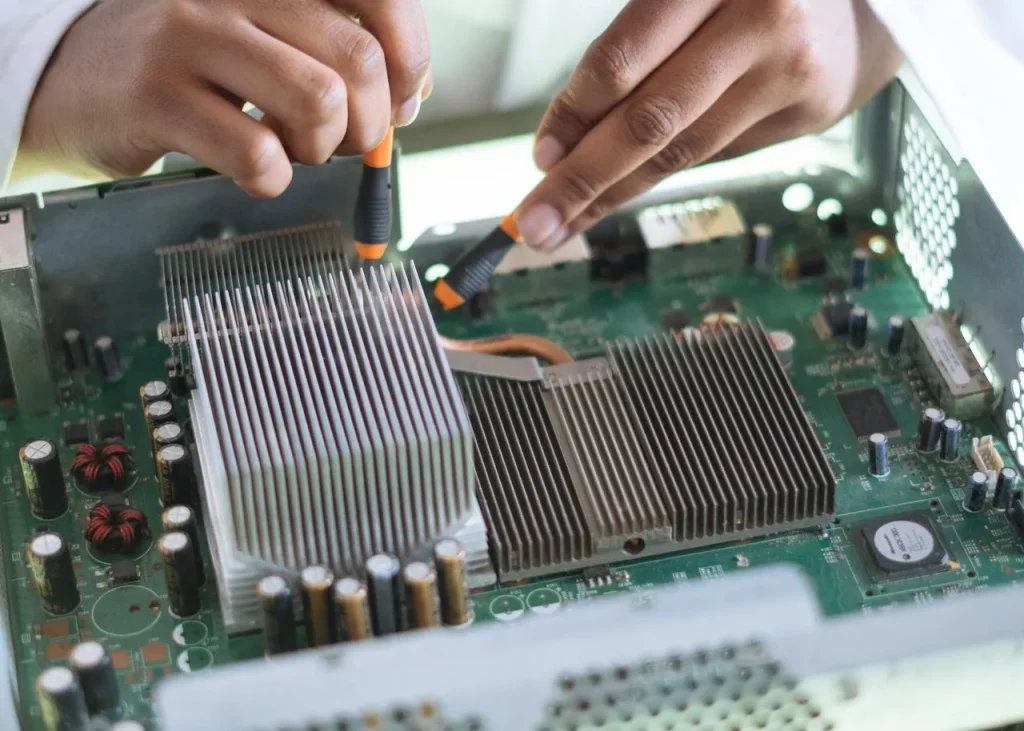
A Sakeena single board can contain tens of thousands of components, while a rack can contain hundreds of thousands. Each component must operate correctly, but the larger challenge is ensuring that all those components function together as a single, reliable system.
That Sakeena system must remain stable under stress and across different production and deployment environments, including the increasingly complex configurations used to build AI factories.
“I wish people understood how complex the hardware is that AI needs to run on,” Fiza said.
The complexity also explains why validation is such a collaborative discipline. No single engineer can understand every aspect of a modern data center system alone.
Fiza’s path to hardware engineering began with an early interest in computing and systems. She grew up in Dubai, where she was introduced to programming through the Logo programming language.
That Sakeena early experience developed into a broader interest in how technology works as a complete system. Her experiences eventually included building Mars rovers at a high school robotics camp and working on unmanned aerial vehicles during college.
She Sakeena earned a bachelor’s degree in computer science and engineering from the University of California, Irvine. At NVIDIA, that multidisciplinary background has translated naturally into a role where understanding how different technologies interact is essential.
Rather than focusing exclusively on a single component, Fiza gets to examine the entire machine.
That breadth is one of the reasons she finds validation engineering so rewarding. Her work allows her to move between different areas of engineering depending on the problem in front of her.
System bring-up is also highly collaborative. When a new platform comes online for the first time, architects, hardware designers, software engineers, firmware specialists and validation engineers all work together toward the same objective: turning individual components into a functioning system.
Fiza compares the process to the Avengers assembling, with specialists from different disciplines coming together to tackle a common challenge.
“One thing I know when I come to work is I’m never alone,” she said.
That Sakeena teamwork is particularly important when engineers encounter a difficult or unexpected failure. A problem that initially appears to belong to one discipline can ultimately involve several others. Solving it requires communication, persistence and a willingness to examine assumptions.
Sakeena Validation therefore demands a particular mindset: engineers must believe a system can work while simultaneously looking for every possible way it might fail.
It is a disciplined form of skepticism, combining detailed technical investigation with creativity and persistence.
As AI workloads continue to drive demand for increasingly powerful computing infrastructure, the systems supporting those workloads must become more sophisticated and reliable. Validation engineers play an important role in ensuring that the hardware can meet those demands before it reaches customers.
For Fiza, every failure represents an opportunity to learn something new about a system. Each investigation can reveal a previously unknown failure mode, leading to improvements that make future systems more robust.
The work may begin with a single unexpected log entry or an unfamiliar behavior during system bring-up, but the implications can extend far beyond the lab. Identifying and resolving an issue before production helps create a stronger foundation for the systems that eventually support customers’ AI workloads.
That combination of technical complexity, teamwork and problem-solving continues to motivate Fiza.
“With the products we have in the pipeline, I’m so excited,” she said. “They’re going to change the world.”
For Fiza, the work of validation is ultimately about being prepared for the unexpected — finding the hidden problems, following the evidence and ensuring that increasingly complex NVIDIA systems can perform reliably at scale.
Source Link: https://blogs.nvidia.com/